
FAQs
149 answers on acoustic panels, our products, Australian compliance and ordering. Search below, or jump to a section. Get in touch if it isn't here.
Acoustic Panel Basics
What's the difference between acoustic panels and soundproofing?+
Acoustic panels absorb sound inside a room — they reduce echo, reverberation, and excessive sound reflection. Soundproofing is different: it stops sound from travelling between rooms, which requires changes to walls, doors, ceilings, glazing, and other building elements. If a room feels harsh or echoey, you need acoustic panels. If conversations are leaking between rooms, you need soundproofing.
Where should acoustic panels be installed in a commercial interior?+
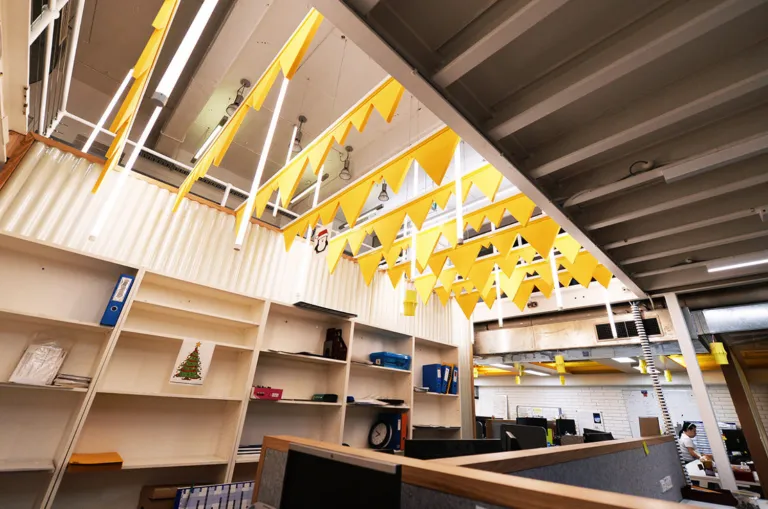
The best location depends on where sound is reflecting and what surfaces are available. Wall panels work well in meeting rooms and classrooms where speech clarity matters. Ceiling panels, rafts, and clouds are highly effective because ceilings are often the largest available surface. Suspended baffles and acoustic fins are useful in spaces with high ceilings or limited wall area.
Does the thickness of an acoustic panel affect its performance?+
Yes. Thicker panels can absorb a broader range of frequencies — thin panels help with higher frequencies, while thicker panels improve performance across mid and lower frequencies. Material density, installation method (an air gap behind the panel can boost performance), and coverage area also matter just as much as thickness alone.
What is an NRC rating and what should I look for?+
NRC (Noise Reduction Coefficient) is a single number between 0 and 1 that describes how much sound a panel absorbs, averaged across speech frequencies. NRC 0.85 or higher is considered high-performance. For mid-range commercial applications, NRC 0.6–0.85 typically suits offices, schools and hospitality. Always check the test method (mounting type A vs E-400) and frequency-band performance, not just the single NRC number.
Do acoustic panels work for outdoor spaces?+
Standard acoustic panels are designed for interior use and may degrade outdoors. For external applications — courtyards, balconies, pool areas — you need weather-rated acoustic products designed for UV and moisture exposure. We can advise on the right solution for outdoor or semi-exposed spaces during your specification.
Our Products & Ranges
What product ranges do you offer?+
We have four ranges: Aus Range (decorative panels, baffles, dowels, fins, perforated, slats — our flagship line), Quattro Range (modular acoustic tiles, panels, screens and grooves), Instant Panels (slat-wood feature walls), and Red Earth Echoes (Indigenous artwork acoustic panels by First Nations artist Tyrown Waigana). Each range covers different design intents while maintaining the same fire compliance and quality standards.
What materials are your panels made from?+
Our panels use a range of materials depending on the product: polyester fibre (often with recycled PET content), fabric-wrapped acoustic cores, slotted or perforated timber faces with acoustic backing, and mineral fibre for technical applications. Material selection is driven by performance requirements, design intent, and the project's compliance needs.
Can panels be customised?+
Yes. Most products can be customised by colour, finish, perforation pattern, slot width, panel size, and edge detail. We work closely with architects and designers to match the design intent. The Red Earth Echoes range supports printed artwork, and the Aus range includes bespoke artwork-printed options.
Can I see samples before ordering?+
Yes. Order samples directly from any product page to evaluate finish, colour, and texture in your space before committing to a full order. Most samples ship within a few business days.
What's the difference between the Aus and Quattro ranges?+
The Aus Range is our flagship decorative line — broader product variety including panels, baffles, dowels, fins, slats, and perforated systems. The Quattro Range is modular and install-focused — acoustic tiles, panels, screens, and grooves designed for fast, repeatable commercial fit-outs.
Compliance & Australian Standards
Do acoustic panels need to meet fire ratings for Australian commercial projects?+
Yes — fire performance is an important part of product selection for Australian commercial projects. The required rating depends on project type, location, and building requirements (Group 1 compliance to ISO 9705-2003 is common for high-occupancy public spaces). Always check the product documentation supports the specific project's needs before specifying.
Are all your panels Group 1 fire rated?+
Yes — every panel in our range meets Australian Standard ISO 9705-2003 Group 1, suitable for commercial offices, healthcare, education, hospitality, and high-occupancy public spaces without spec compromise.
Do your products meet NCC requirements?+
Yes. Our acoustic panels comply with the National Construction Code (NCC) requirements relevant to commercial fit-outs. We provide the fire-test documentation, performance data, and installation details needed for project submissions.
What technical documentation can you provide for specifications?+
We supply tested acoustic absorption data (NRC, frequency-band performance, test conditions, mounting method), fire-test certificates (ISO 9705-2003 Group 1), product datasheets, installation guides, and sustainability documentation where available. All documentation is suitable for architectural specification packages.
Process, Lead Times & Delivery
How long does it take to get a quote?+
We respond to all enquiries within 1 business day with product options, lead times, and indicative pricing. Detailed quotes follow once we have your room dimensions, finishes, and any specific compliance requirements.
What are your typical lead times?+
Most products ship within 2–4 weeks of order confirmation. Custom colours, printed artwork, and bespoke panel configurations may take longer — we'll confirm specific timing during specification.
Where do you deliver?+
Australia-wide. Our manufacturing facility is in Thomastown, Victoria, with a Perth office at Level 28, AMP Tower. We deliver to any commercial address Australia-wide.
Do you provide installation services?+
We focus on manufacture and supply, but can recommend trusted installers in your state. For most products we provide detailed installation guides so your existing contractor or fit-out team can install confidently.
What's the minimum order quantity?+
Minimum order quantities vary by product and customisation level. Standard catalogue products typically have no MOQ, while custom prints and bespoke colour matches may require a minimum run. We'll confirm during quoting.
From our blog
Questions answered in more depth in the articles they came from.
What is a lay-in mesh acoustic tile?+
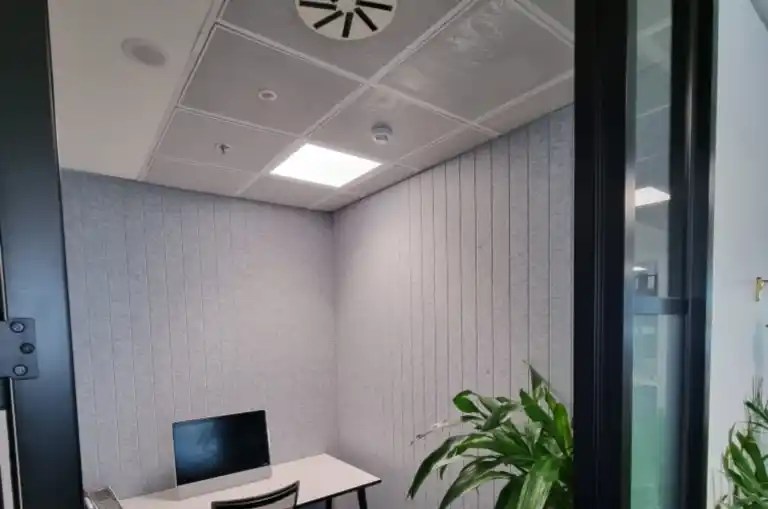
A lay-in ceiling uses a suspended grid that supports individual tiles, which sit in the grid rather than being fixed permanently to the structure — so tiles can generally be lifted when access is needed to services above. AUS Mesh takes that familiar format and gives it a different architectural character: instead of a conventional flat tile surface, it combines a mesh face with acoustic backing. The mesh becomes the visible design element while the material behind it contributes the sound absorption.
What does the coloured acoustic backing do?+
It works in two ways at once. Acoustically, the backing behind the mesh is what provides the absorption, so the tile contributes to controlling reverberation rather than simply closing off the ceiling. Visually, seeing colour through the mesh creates depth, texture and contrast overhead, which makes the ceiling an active part of the interior palette rather than a neutral background.
Can AUS Mesh be retrofitted into an existing ceiling grid?+
Yes — it is designed around the standard lay-in format, so it can be incorporated into a new fit-out or considered as an upgrade to an existing compatible grid. For a retrofit, start by documenting the existing ceiling: grid module and tile dimensions, ceiling height, existing tile size, condition of the grid, lighting layout, air-conditioning outlets, sprinklers, speakers, access requirements, room dimensions and existing finishes. Photos and reflected ceiling plans help establish how the new tiles will interact with the layout. Don't assume every suspended ceiling uses the same configuration — confirming these details before ordering prevents installation problems later.
Do you need to replace every ceiling tile?+
Not necessarily. Depending on the acoustic requirements and design intent, AUS Mesh may form a broader ceiling treatment or be incorporated strategically within the layout. Appropriate coverage depends on room size, ceiling height, existing finishes, current ceiling performance, the amount of glazing, occupancy, room use, the required acoustic conditions and the performance of the selected system. A large open-plan office with extensive hard surfaces has different requirements from a smaller meeting or reception area, so quantity should follow the room and the acoustic outcome rather than an arbitrary number of tiles.
How does AUS Mesh differ from suspended acoustic baffles?+
Both introduce absorption at ceiling level, but they suit different conditions. Suspended baffles hang below the ceiling or structure and are particularly useful for open and exposed ceilings. AUS Mesh is designed around the lay-in grid format, which makes it relevant where a suspended grid already exists or is specified for the fit-out, where access above the ceiling needs to be maintained, where the project wants a more integrated ceiling plane, or where a decorative mesh appearance suits the design. The choice should respond to the architecture of the space rather than comparing acoustic products in isolation.
What should be confirmed before specifying AUS Mesh?+
Acoustic performance should still drive the specification rather than appearance alone. Confirm the acoustic conditions the room needs, the backing and configuration proposed, how the system interacts with the existing or specified grid, what fire performance the project requires, and whether there is a specific reverberation target. Checking these together ensures the system is selected for both its acoustic function and its architectural contribution.
Why do dance and rehearsal studios echo so much?+
These rooms are built from the hardest surfaces in a building. Large mirrors, a sprung timber floor, plasterboard walls, high ceilings and very little soft furnishing give sound almost nothing to absorb, so it reflects repeatedly around the room. The result is a long reverberation time that blurs music and makes spoken instruction harder to follow — which matters in a room where an instructor is competing with a sound system.
Where do you put acoustic panels when the walls are covered in mirrors?+
Above mirror height is usually the most available surface, and treating the upper wall areas addresses reflections without interfering with how the room is used. The wall opposite the mirrors is also valuable, as are the side and rear walls where they are free. Treatment should stay out of active zones — away from barres, circulation and anywhere dancers may make contact with the wall — and the ceiling becomes especially important where wall space is limited.
How much acoustic treatment does a studio need?+
There isn't one number of panels that works for every studio. It depends on room volume, ceiling height, floor area, how much mirror coverage there is, existing wall and ceiling finishes, the type of music, the speaker system, the number of occupants, intended use and the performance of the panels selected. A small studio used for individual instruction has different requirements from a large group rehearsal space with amplified music. Establish the acoustic condition the room needs first, then work out how much treatment achieves it.
Does it matter where the panels are distributed?+
Yes. If all the available absorption is concentrated in one small section while the rest of the surfaces stay highly reflective, the result may not be well balanced. Where practical, distribute absorption across upper wall areas, rear walls, side walls, the ceiling and suspended ceiling elements, so reflections from different directions are controlled. The exact arrangement should respond to the room geometry and available surfaces rather than following a purely decorative pattern.
How do you handle low frequencies from amplified music?+
Standard thin absorptive treatments tend to work better at middle and high frequencies than at low ones, which matters in rooms with bass guitar, kick drum, electronic music, subwoofers or amplified instruments. Where stronger low-frequency absorption is needed, thicker treatment and appropriate mounting configurations perform better than thin panels alone. It is also why NRC shouldn't be the only number considered — it summarises overall absorption but not how a panel performs at individual frequencies, so for music-focused spaces review the octave-band data.
Will acoustic panels stop music escaping into neighbouring spaces?+
No — this distinction matters particularly for rehearsal studios. Acoustic panels control sound reflections inside the room; they don't prevent amplified music travelling into neighbouring rooms or buildings. If music can be clearly heard through adjacent walls, floors, ceilings or doors, that is a sound-isolation problem involving wall and ceiling construction, floor systems, doors and seals, glazing, service penetrations, mechanical systems or structural transmission. A studio can have good internal treatment and still transmit substantial sound next door, so where isolation is critical, specialist acoustic advice is needed alongside absorptive treatment.
Which acoustic panel is best for a commercial office?+
There isn't one panel that is automatically the best choice for every office. A panel that works well across a large open-plan workplace may not suit a boardroom, reception area or collaboration zone. The best office acoustic panel is the one that balances sound absorption, fire performance, durability, appearance and placement for that particular space. For many offices PET acoustic panels are a practical starting point because they absorb effectively, come in a wide range of colours and work on both walls and ceilings — but they are not the only option.
How do PET, fabric and timber-look acoustic panels compare?+
Often the answer is more than one of them. A commercial office doesn't need the same panel everywhere. PET panels may provide broad treatment across open-plan work areas; fabric panels may suit meeting and boardroom walls; architectural timber-look systems may be used in reception and client-facing spaces; and suspended baffles may provide absorption below exposed ceilings. That creates a coordinated acoustic strategy while letting each space keep its own design character.
How much acoustic treatment does an office need?+
There is no universal coverage percentage. The amount of absorption required depends on room volume, ceiling height, floor area, existing finishes, the amount of glazing, occupancy, furniture, intended use, panel performance and the required reverberation conditions. This is why specifying "20 acoustic panels" isn't a meaningful acoustic brief without understanding the room. A better approach is to establish the required acoustic outcome first, then determine how much appropriately performing treatment is needed to support it.
What does AS/NZS 2107 mean for office acoustics?+
AS/NZS 2107 provides guidance on recommended internal acoustic conditions for different types of occupied spaces. That is useful on office projects because not every area has the same requirement — an open-plan workplace, a meeting room and a conference room have different functions. Reverberation targets let a project team move past subjective instructions like "make the office less echoey" and work towards an appropriate measurable condition, with panel thickness, performance, treatment area and placement selected to support it. Complex workplaces or projects with specific acoustic criteria may need an acoustic consultant to develop and verify the design.
What fire performance is required for acoustic panels in an office?+
Commercial office buildings commonly fall within Class 5 under the National Construction Code, although the classification and applicable requirements should always be confirmed for the particular project. Acoustic panels used as internal wall and ceiling linings need to satisfy the applicable fire-performance requirements, and where Group 1 is required the system needs evidence supporting that classification for the actual configuration specified. A fire classification shouldn't be assumed to apply to every thickness, finish, substrate or configuration in a product family. Check the building classification, required performance, product configuration, location, test documentation and any limitations of the tested system with the building surveyor or certifier.
Can acoustic panels be used with an exposed ceiling?+
Yes. Exposed services ceilings are common in contemporary office design, and they remove a surface that would otherwise carry absorption. Suspended acoustic baffles can introduce absorption below an exposed ceiling, so the ceiling zone still contributes to the acoustic strategy while the services stay visible and accessible. This is usually combined with wall treatment elsewhere in the workplace rather than used on its own.
Why do meeting rooms sound unclear?+
Many modern meeting rooms are visually clean but acoustically reflective. Glass partitions, painted plasterboard, a hard floor, a large table, display screens, whiteboards and minimal soft furnishings all provide little meaningful sound absorption. When someone speaks, sound travels to the other people in the room and also towards those surfaces, which reflect it back. Without enough absorption those reflections persist after the original sound — reverberation — and reflections from one syllable can still be in the room as the next is spoken, so words overlap acoustically.
Why do video calls make poor meeting room acoustics more obvious?+
A person in the room can compensate without noticing: they can see who is speaking and naturally focus on them. A remote participant only hears whatever reaches the room's microphone, which captures direct speech along with reflections from walls, ceiling and table, HVAC noise and movement. In a reverberant room the microphone picks up both the speaker and the acoustic tail the room creates, so voices sound distant or hollow. Turning the microphone up does not solve it — in some cases it simply raises the level of both the speech and the unwanted room sound.
How do acoustic panels improve speech clarity?+
Acoustic panels absorb a portion of the sound energy that reaches them, so less reflects back off a hard wall or ceiling into the room. As appropriate absorption is introduced, reverberation can be shortened. That can mean clearer in-room conversation, better speech intelligibility, less noticeable echo, more controlled room sound, improved conditions for microphones and more comfortable meetings. The objective is not to eliminate every reflection but to control excessive ones so direct speech stays dominant.
Where should acoustic panels go in a meeting room?+
A small meeting room usually doesn't need every surface covered — strategic placement makes better use of the available area. Walls are often simplest, particularly large uninterrupted plasterboard walls that would otherwise reflect strongly: behind participants, on side walls, on the wall opposite glazing, around the video conferencing area, or as part of a feature wall. Where a room is extensively glazed on one side, treating an available solid wall helps balance that reflectivity. The ceiling is valuable too, especially where wall space is limited by glass partitions, screens, whiteboards, joinery or doors.
How much acoustic panel coverage is enough?+
There isn't a single percentage that is correct for every meeting room. The amount depends on room dimensions, ceiling height, existing finishes, the amount of glazing, floor finish, furniture, number of occupants, intended use and the acoustic performance of the selected panel. A small room with carpet and curtains may need less additional treatment than a similar room surrounded by glass and hard surfaces. Treatment doesn't have to cover every wall before it becomes useful — even partial coverage can noticeably reduce reverberation when it is appropriately selected and positioned.
Will acoustic panels stop people overhearing conversations in the next room?+
Not on their own. Speech clarity and speech privacy are related but separate problems. Acoustic panels primarily control sound reflections within a room; they are not automatically a solution for sound travelling through walls, doors, ceilings or other building elements into adjacent spaces. If confidential conversations can be heard outside the room, the issue may involve wall construction, door seals, gaps around services, ceiling paths, glazing or mechanical services, and additional sound isolation measures may be required. A room can have excellent internal speech clarity and still have poor privacy, or the reverse.
Can you supply replacement or matching acoustic panels for an existing installation?+
In many cases, yes. Because our panels are manufactured in Australia, existing products, profiles and finishes can often be reordered or closely matched for extensions, repairs and later project stages. The first step is identifying what was originally installed — the product name, colour and dimensions if you have them, or photographs, project details or a physical sample if you don't.
What information do you need to match our panels?+
Five things help most: the original product name (from specifications, schedules, quotations, purchase orders or handover documentation); the colour or finish reference; panel dimensions including length, width, thickness, profile and spacing; project information such as the project name, installation date, builder and order reference; and photographs or a physical sample — ideally the whole wall or ceiling, a close-up of the surface, the edge or profile, and the installation method.
What if we don't know which product was originally installed?+
That happens often, particularly when a new builder, contractor or facility manager inherits a space. You don't need to know the original product before contacting us. Good photographs can reveal panel construction, surface texture, perforation or groove pattern, edge detail, thickness, profile and installation arrangement, and approximate dimensions plus the age of the fit-out help narrow it down further.
Can an existing acoustic panel be matched exactly?+
Sometimes an exact reorder is possible; in other cases the best solution is the closest current match. Installed panels change over time through light and UV exposure, cleaning, general wear, environmental conditions and ageing of the finish. There are also natural variations between manufacturing batches, especially with timber, and product ranges evolve. A newly made panel may not look identical to one installed several years ago even when the original specification is still available, so we recommend reviewing the existing installation before confirming.
What should be considered when extending an existing installation?+
Extending takes more planning than replacing one damaged panel. The new panels need to work visually with what is installed, so consider panel orientation, joint positions, pattern continuity, dimensions, existing spacing, edge details, fixing method and the transition between old and new areas. For patterned products the starting position of the new panels affects whether the extension reads as continuous — best resolved before ordering rather than on site.
How can we make future replacements easier?+
Retain accurate product information at project handover: product name, colour and finish, panel dimensions, approved shop drawings, product specification, installation drawings, fixing information and the original quotation or order details. On larger commercial projects, including this in the facility management or handover documentation saves considerable time years later — particularly for workplaces, education facilities and interiors likely to be altered during their lifetime.
What does a Group 1 fire rating mean?+
Group 1 is the highest level of fire performance for wall and ceiling lining materials under the National Construction Code. In the room corner test, a Group 1 lining does not reach flashover at any point during the test — it contributes the least to fire growth and smoke development. Groups 2, 3 and 4 reach flashover progressively faster, with Group 4 the lowest classification and generally unsuitable for many commercial lining applications.
How does the AS/NZS ISO 9705:2003 room corner test work?+
The product is installed on the walls and ceiling of a full-scale test room and a controlled burner is placed in one corner to simulate the early stages of a developing fire. Rather than measuring simply whether the material burns, the test examines how the lining contributes to fire growth over time — heat release, fire growth, smoke development and flame spread — and those measurements determine the Group Number under the NCC.
Where is Group 1 required?+
Group 1 products are commonly specified for commercial offices, education facilities, healthcare buildings, hotels, hospitality venues, public buildings, assembly spaces and other high-occupancy environments. In many other commercial applications Group 1 is considered best practice even where another classification would technically satisfy the code. The required Group Number should always be confirmed against the building classification, NCC provisions, fire engineering advice and the certifier's requirements.
Do overseas fire test reports demonstrate Australian compliance?+
Not automatically. Many overseas manufacturers test to international standards that use different test methods and classification systems, and products may differ in construction, manufacturing process, material substitutions or installation method. Two products that look visually identical can perform differently if the substrates, adhesives, finishes or coatings differ. Australian specifiers should confirm the fire performance information relates to the actual product being supplied.
What should I ask a supplier before specifying a Group 1 product?+
Five checks: Has the product been tested to AS/NZS ISO 9705:2003? Is the Group Number based on the product actually being supplied, in that construction and finish? Can the supplier provide the fire test documentation? Does the tested configuration match the intended installation? And has the specification been reviewed against the NCC for your building? Fire compliance should be verified rather than assumed.
Why does installation affect fire compliance?+
Compliance depends on three elements staying consistent: the independent test report, the product as supplied matching the tested construction and materials, and the installed system — installation method, substrates and fixing systems — aligning with the tested configuration. Change any one of them and the original fire performance can no longer be relied upon, which is why a test report alone is not proof of compliance.
What does NRC measure?+
NRC (Noise Reduction Coefficient) is a single-number rating describing a material's average sound absorption across a selected range of frequencies. It indicates how much sound energy a material absorbs rather than reflects — 0.00 is almost no absorption, 0.50 is roughly half, 1.00 is very high. It does not tell you how much reverberation time will drop, how much speech clarity will improve, or how many decibels noise will fall by; those depend on the whole room.
How is NRC calculated?+
NRC is not measured directly. Products are tested in a reverberation chamber: the empty chamber's reverberation time is measured, the specimen is installed in a defined mounting configuration, and the reverberation time is measured again. The difference gives sound absorption coefficients at each frequency, and the NRC is the average of the coefficients at 250 Hz, 500 Hz, 1000 Hz and 2000 Hz, rounded per the test method.
Is a higher NRC always better?+
No. A panel rated NRC 0.85 is not automatically a better choice than one rated 0.75. The higher-rated panel may absorb strongly at 1000 Hz and 2000 Hz while offering little at lower frequencies, whereas the lower-rated panel may give more balanced absorption across the frequencies that matter in your room. The right product depends on the sound you are trying to control.
What is a sound absorption coefficient, and why ask for octave band data?+
The absorption coefficient describes the proportion of sound energy absorbed at one particular frequency, rather than an average. Octave or one-third-octave band data (typically 125, 250, 500, 1000, 2000 and 4000 Hz) shows where a product's absorption actually occurs, which is what an acoustic consultant needs to model reverberation time accurately instead of entering a single generic NRC value.
Why does mounting condition change the NRC?+
Absorption depends on panel thickness, density, substrate, air gap, mounting system, coverage and orientation. A panel fixed directly to a rigid wall performs differently from the same panel installed with a cavity behind it — an air gap often improves low-frequency absorption. If a product was tested with a 100 mm air gap but your project fixes it directly to plasterboard, the quoted NRC may not represent the installed performance. This is a common reason lab data and real-world results diverge.
What should I ask a supplier who only provides an NRC number?+
Two questions. First, can you provide the full frequency absorption data — octave band coefficients, the test report, product thickness and the tested mounting condition? Second, does the test configuration match my installation? If the laboratory arrangement differs significantly from the project, the result may overstate or understate real performance — particularly for ceiling rafts, suspended baffles, direct-fixed panels, panels over battens, and products with significant air cavities.
What does an acoustic consultant actually do?+
An acoustic consultant is an independent specialist who analyses how sound behaves within and around buildings. Beyond recommending panels, they carry out acoustic modelling, reverberation time calculations, environmental and building-services noise assessments, speech intelligibility studies, compliance reporting, performance specifications and post-installation testing — often as part of the wider design team alongside architects, mechanical engineers and fire consultants.
When is an acoustic consultant essential?+
Four situations call for independent acoustic engineering: projects that must demonstrate formal compliance with Australian Standards or planning requirements (schools, hospitals, residential and mixed-use developments); complex commercial buildings with multiple acoustic challenges at once; projects with strict measurable targets such as reverberation time, speech privacy, NC criteria, Green Star or WELL; and any project involving environmental noise like traffic, aircraft, rail or plant noise, which acoustic panels do not solve.
When is manufacturer technical support enough?+
For straightforward fit-outs where the goal is reducing reverberation or improving speech clarity — standard offices, boardrooms, meeting rooms, reception areas, restaurants, cafés, retail, and hospitality, education or community refurbishments — experienced manufacturer support can usually provide all the guidance needed without the cost of independent consultancy.
What help does Acoustic Panels Australia provide at no additional cost?+
For suitable commercial projects, our team can assist with product recommendations, preliminary acoustic advice, site walk-throughs, panel layout suggestions, NRC guidance, octave band performance data, product comparisons, fire compliance information, material samples and specification assistance. Where a project genuinely needs independent engineering, we work alongside the appointed acoustic consultant.
When should an acoustic consultant be brought into a project?+
During the schematic design stage, before major decisions are finalised. Early involvement lets acoustics be coordinated with ceiling design, mechanical services, lighting, room layouts, finishes and partition construction. Waiting until construction is complete limits the available options, and retrofitting treatment after occupants start complaining is almost always more expensive than designing it in from the outset.
What should a brief for an acoustic consultant include?+
Building type, intended room functions, architectural drawings, ceiling heights, wall and floor finishes, occupancy numbers, mechanical services information, performance objectives, relevant compliance requirements and the project programme. The more information available early, the more accurate and efficient the acoustic advice will be.
What are AUS Fins™?+
AUS Fins is an architectural acoustic panel system from Acoustic Panels Australia that combines solid projecting fins with acoustic treatment behind them. The fins create a three-dimensional geometric surface with rhythm, depth and shadow, while the acoustic component absorbs reflected sound and helps control reverberation — design feature and acoustic treatment in one system.
What designs and fin profiles are available?+
The range includes 10 standard designs, AF-1 through AF-10, and eight fin profiles: Chamfer, V Groove, Flute, Cove, Round Nose, Rebate, Bullnose and Square. Custom patterns can also be developed to suit a project's interior concept or branding, with fin pattern, spacing, orientation, panel dimensions and materials all adjustable.
Where do AUS Fins work best?+
AUS Fins suit internal walls and ceilings where the acoustic treatment will be highly visible: reception areas and lobbies, premium office fit-outs such as boardrooms and client-facing areas, feature walls, hospitality interiors, and education, healthcare and other commercial spaces where acoustics should form part of the architectural finish.
What materials and finishes can AUS Fins be made from?+
Base material options include MDF Colour Core, Standard Raw, regular and FR melamine-faced board, veneer and plywood. Fin options include solid timber, plywood, veneer, regular and FR melamine-faced board, and MDF Colour Core. Physical samples are recommended for colour-critical projects, as digital representations can differ from the actual material.
What fire rating do AUS Fins have?+
AUS Fins configurations are available with Group 1, Group 2 and Group 3 fire classifications under Australian Standard ISO 9705-2003. The classification depends on the selected configuration and substrate, so fire performance should be confirmed for the actual product configuration being specified rather than assumed from appearance.
What is the lead time for AUS Fins?+
The indicative lead time for a standard AUS Fins product is 3–5 weeks, subject to availability and demand. Custom colours and sizes are quoted per project, and material samples typically have a shorter lead time. AUS Fins is manufactured and assembled in Australia; confirm current lead times when requesting a quote.
What is AUS Groove™?+
AUS Groove is a modular grooved acoustic panel system from Acoustic Panels Australia, designed for commercial wall and ceiling applications. A repeating grooved surface gives the finished installation clean linear detailing, while the acoustic treatment behind it absorbs reflected sound and helps control reverberation — so one panel provides both the architectural finish and the acoustic performance.
Where is AUS Groove typically used?+
AUS Groove suits commercial interiors where acoustic treatment needs to sit comfortably with the architecture: offices and workplaces, meeting and conference rooms, education spaces, corridors and shared areas, and hospitality, retail and public spaces. Its restrained pattern means it can be repeated across large wall or ceiling areas without overwhelming the room.
Should AUS Groove go on the wall or the ceiling?+
Either, and sometimes both. Walls work well where large uninterrupted areas are available or an architectural lining is wanted. Ceilings are useful when wall space is taken up by glazing, joinery or displays, or when absorption needs to be distributed across the room. The decision should follow the acoustic requirement and room layout rather than appearance alone.
How much AUS Groove does a room need?+
It depends on room volume, ceiling height, existing finishes, occupancy and the intended use. A meeting room, classroom and open-plan office may all use grooved panels but rarely need the same coverage. Let the acoustic strategy set the quantity first, then develop the panel layout around it — a small feature panel may look good without providing enough absorption.
What finishes and configurations are available?+
Material and finish selection lets AUS Groove respond to the wider interior palette. Design teams can consider surface finish, colour, panel thickness, groove configuration, panel size, orientation and acoustic backing. Natural and timber-look finishes bring warmth, while other finishes give a cleaner, more understated result. Physical samples are recommended when coordinating with joinery, flooring and furniture.
What is the lead time for AUS Groove?+
A standard AUS Groove order typically has a 3–6 week lead time, depending on the selected material, finish, quantity and current production requirements. AUS Groove is manufactured in Australia; for programme-sensitive projects, confirm lead times when requesting pricing.
Why do indoor sports centres get so loud?+
They are large, tall and dominated by hard surfaces — concrete or timber sports floors, blockwork walls, large glazed areas, steel structures and high metal ceilings — with very little furniture or soft finishing to absorb sound. Whistles, bouncing balls, squeaking shoes, crowd noise and PA announcements all reflect off those surfaces and overlap.
Which acoustic products work best in a sports hall?+
Ceiling-based treatment usually does most of the acoustic work. Acoustic ceiling panels and suspended baffles face the entire room, are generally free from ball impact and cover one of the largest continuous hard surfaces in the building. Upper-wall absorption can then be added where impact risk is low.
Can acoustic panels be installed on sports hall walls?+
Lower wall areas are frequently exposed to balls, equipment, trolleys and general contact, and may also need to stay durable or washable, so a standard decorative acoustic wall panel may not be appropriate in every location. A better strategy is usually to keep the lower wall zone robust and concentrate absorption in the ceiling, suspended baffles, upper walls and spectator areas.
What fire requirements apply to acoustic panels in a sports centre?+
Indoor sports centres, gymnasiums and assembly spaces commonly fall under Class 9b of the National Construction Code, and Group 1 fire-rated linings are commonly specified for many Class 9b applications. Because acoustic products can cover large areas, verify that the fire classification, test report, product construction and mounting method relate to the product and installation actually proposed.
Why are airports and transport terminals so reverberant?+
Terminals are large in volume, high-ceilinged, open-plan, heavily glazed and finished with hard flooring and reflective metal and plasterboard surfaces. Those materials are durable and practical but absorb very little sound, so every conversation, suitcase wheel, boarding announcement and service noise reflects off the surrounding surfaces.
How do acoustic panels improve announcement clarity?+
Acoustic panels absorb sound energy before it can continue bouncing around the terminal, which reduces reverberation so announcements are not blurred by reflections of earlier sounds. Simply increasing the PA volume is not always the answer, because louder announcements add more sound energy to an already reflective environment.
Where should acoustic treatment go in a terminal?+
The ceiling usually delivers the greatest benefit per square metre because it faces the entire occupied area and is less interrupted by doors, glazing and passenger circulation. Priority zones include check-in halls, security queues, boarding gates, baggage claim, main concourses, waiting lounges and platform halls, with selected upper-wall areas adding further absorption.
What fire requirements apply to acoustic linings in a terminal?+
Airports and major transport terminals are generally treated as Class 9b buildings under the National Construction Code, and Group 1 fire-rated linings are commonly specified. Project teams should verify the fire classification, test report, product construction, mounting configuration and certifier requirements, and confirm the product tested corresponds with the product actually supplied and installed.
Can acoustic panels reduce data centre noise?+
Acoustic panels and suspended baffles absorb reflected sound and reduce reverberant build-up in occupied areas such as control rooms, monitoring rooms, staff workspaces and corridors. They improve comfort and speech clarity around equipment halls, but they do not stop noise being generated at the source.
Which areas of a data centre should be treated first?+
Usually not the equipment hall itself. Prioritise the areas where people spend the most time — network operations centres, control rooms, monitoring stations, security rooms, staff offices, meeting rooms, entry corridors and breakout areas. Treating those zones first gives an immediate improvement in comfort and communication and avoids interfering with equipment access, airflow or maintenance.
Do acoustic panels replace equipment noise control?+
No. Source control addresses where the noise starts and may involve quieter equipment selection, enclosures, duct attenuation, vibration isolation, acoustic barriers, silencers or mechanical system modifications, typically assessed by an acoustic consultant or mechanical engineer. Acoustic absorption addresses what happens after the sound enters the room. Both may be required.
Are acoustic panels a substitute for hearing protection?+
No. Where data centre noise reaches levels at which occupational exposure becomes a concern, acoustic panels are not a substitute for noise exposure assessment, engineering controls, safe work procedures, hearing protection or occupational health requirements. Acoustic treatment forms only one part of a broader noise-control strategy.
What are AUS Dowels™?+
AUS Dowels is an architectural acoustic panel system made from timber dowels mounted onto an acoustic backing panel. The dowels project outward from the backing to create a three-dimensional surface with depth, repetition and shadow, while the backing absorbs reflected sound and helps control reverberation.
How are AUS Dowels different from flat acoustic panels?+
A standard flat panel introduces absorption without making much of an architectural statement. The projecting timber elements in AUS Dowels create a sculptural surface that changes with viewing angle, lighting and configuration — so instead of specifying decorative timber and acoustic treatment separately, both functions sit within one system.
Do the timber dowels absorb the sound?+
The absorption comes from the acoustic backing behind the dowels. The timber provides the visible architectural character while the acoustic material behind it delivers the primary sound-absorbing function, which means designers can achieve a timber aesthetic without relying on a purely reflective timber lining.
Can AUS Dowels be used on ceilings as well as walls?+
Yes. Ceilings are another major reflective surface in commercial interiors, and using AUS Dowels overhead introduces visual depth while adding absorption to the room. It is particularly useful where wall space is limited. As with any ceiling system, installation should be coordinated with lighting, HVAC, sprinklers and other building services during the design stage.
Do fixings and installation hardware come with acoustic panels?+
It depends on the product, fixing system, mounting surface and installation method. An order may involve mechanical fixings, adhesives, mounting tracks, clips or brackets, suspension components or other product-specific hardware — or panels can be supplied without certain hardware where the contractor intends to use their own approved fixing method. Confirm the inclusions for the specific product and project during quoting.
Why does the mounting surface matter?+
A fixing suitable for plasterboard may not be appropriate for concrete, masonry, timber, an existing ceiling system or structural framing. The condition of the substrate matters too: a direct adhesive installation requires an appropriate surface, while heavier or suspended products may need mechanical support capable of carrying the required load.
Can acoustic panels be ordered supply-only?+
Yes. Supply-only arrangements can be appropriate where the builder or acoustic installer prefers to organise installation hardware themselves — commercial contractors often have preferred fixing products, established installation methods and other trades to coordinate with. If hardware is being supplied by others, establish that during quoting so everyone understands the scope before the order is placed.
What should the contractor check before installation?+
Substrate condition, panel positions, spacing and orientation, whether lighting, power, HVAC, sprinklers or other services affect installation, safe access to the fixing locations, whether the delivered hardware matches the documented installation method, and whether actual site measurements correspond with the approved layout. These checks matter particularly on refurbishment projects, where existing construction may differ from drawings.
Why is my restaurant so loud?+
Hard surfaces — polished concrete, glass, exposed ceilings and minimal soft furnishings — reflect sound around the dining room. As the space fills, the 'Lombard effect' makes everyone speak louder to be heard, so noise builds rapidly during busy service.
How can I reduce restaurant noise without changing the design?+
Add acoustic ceiling panels, wall panels or suspended baffles to absorb reflections. These can be integrated discreetly or used as design features, so you improve speech clarity and dining comfort without compromising the interior.
Do acoustic panels for restaurants need to be fire-rated?+
Yes. Hospitality venues have fire-performance requirements, so choose acoustic products with appropriate tested fire performance for commercial interiors.
Where should acoustic treatment go in a restaurant?+
Where noise builds up — the ceiling offers a large reflective area to treat, and walls near hard surfaces help control horizontal reflections. The best combination depends on the room's shape, finishes and volume.
Why do open-plan offices echo?+
Modern offices use hard finishes — polished concrete floors, exposed ceilings, glass partitions and plasterboard walls — that reflect sound. Conversations, phone calls, keyboards and equipment combine and reverberate, making it harder to concentrate.
How do I reduce echo in an open-plan office?+
Introduce sound-absorbing treatment: acoustic wall panels, ceiling panels and suspended baffles all cut reverberation. The most effective mix depends on the size of the space, its ceiling height and existing finishes.
How much acoustic treatment does an office need?+
It varies with room size, ceiling height, finishes and the number of occupants. Acoustic consultants often work to reverberation-time targets such as those in AS/NZS 2107 to determine the quantity and placement of treatment.
Do acoustic panels stop noise travelling between areas?+
No — that is soundproofing, a different approach. Acoustic panels absorb reflections to reduce echo and improve speech clarity within a space; blocking sound transmission between rooms requires isolation and mass, not absorption.
What is Aus Design?+
Aus Design is an Australian-made range of 2D and 3D decorative acoustic wall and ceiling panels. It combines architectural profiles with acoustic performance, turning ordinary walls and ceilings into striking design features that also reduce reverberation and improve speech clarity.
Can decorative panels actually improve acoustics?+
Yes. Unlike most decorative wall finishes that offer little acoustic benefit, Aus Design panels are engineered to absorb sound while delivering a decorative finish — so you get both aesthetics and acoustic performance rather than compromising on one.
Where are decorative acoustic panels typically used?+
In corporate offices, receptions, boardrooms, hospitality venues, education facilities and commercial fit-outs — anywhere a feature finish and a comfortable acoustic environment are both required.
Are Aus Design panels customisable and fire-rated?+
Aus Design offers a choice of substrate, colour and finish, with fire-rated substrate options available for projects that need to meet compliance requirements.
Why do school halls echo so much?+
Halls are built from hard materials — concrete, brick, glass and timber — that reflect sound rather than absorb it. Speech, music and noise bounce between the surfaces and overlap, creating long reverberation. The larger the room and the higher the ceiling, the more pronounced the effect.
How many acoustic panels does a school hall need?+
It depends on the room's dimensions, ceiling height, existing finishes, occupancy and how the space is used. Too few panels make little difference, while too much treatment can leave a room sounding unnaturally 'dead'. An acoustic assessment — often against the reverberation-time guidance in AS/NZS 2107 — sets the right quantity.
What is the best acoustic treatment for a school hall?+
Usually a combination: acoustic wall panels absorb horizontal reflections, ceiling panels or rafts help where wall space is limited, and suspended baffles suit exposed or very high ceilings and sports halls. Large multipurpose halls often use all three together.
Do acoustic panels for schools need to be fire-rated?+
Yes. Products should meet the relevant requirements of the National Construction Code and applicable Australian Standards. Acoustic Panels Australia's range includes products with tested fire performance suitable for education environments.
How do I order acoustic panel samples in Australia?+
Review the ranges on apacoustics.com.au, identify the finishes and materials suited to your project, and request the samples you need. Samples let you assess colour, texture, edge detail and finish quality before committing to a full order.
How many acoustic samples can I order?+
Up to five, and they typically ship within one to two weeks.
Do samples show acoustic performance?+
No. A small sample cannot represent the acoustic performance of a completed installation, which depends on panel size, thickness, density, placement, coverage, mounting and the room itself. Use samples to confirm finish and appearance, and technical data for performance.
What should I check when a sample arrives?+
Colour and tone under the project's real lighting, texture and surface finish, thickness and feel, edge treatment, visual quality, and how it sits against the other finishes in the scheme — flooring, joinery, paint, glazing and furniture.
What are Quattro Baffles™?+
Quattro Baffles™ are suspended acoustic baffles that hang vertically from the ceiling. Because both faces are exposed, they absorb direct sound from the source as well as sound reflected off the ceiling, which makes them efficient in large-volume spaces.
When are baffles better than wall panels?+
When wall space is limited or unavailable — taken up by glazing, joinery, doors, storage, whiteboards, shelving or equipment — or when the walls sit too far from the main sound activity to be effective. Baffles move the treatment into the ceiling zone.
Where are acoustic baffles used?+
Offices, sporting venues, libraries, auditoriums and other large interiors with open or exposed ceilings, high ceilings, large floor areas, hard finishes and busy occupancy.
Do baffles work with open and exposed ceilings?+
Yes — that is their main advantage. They deliver acoustic absorption while preserving the open-ceiling architectural look, rather than closing it in with a suspended ceiling system.
What is the best acoustic panel material?+
There is no universally best material — only the best material for the brief, the room, the compliance requirements and how the space will be used. Fabric-wrapped, timber slat, PET felt, perforated MDF and foam each have strengths and limitations.
Are timber slat panels good for acoustics?+
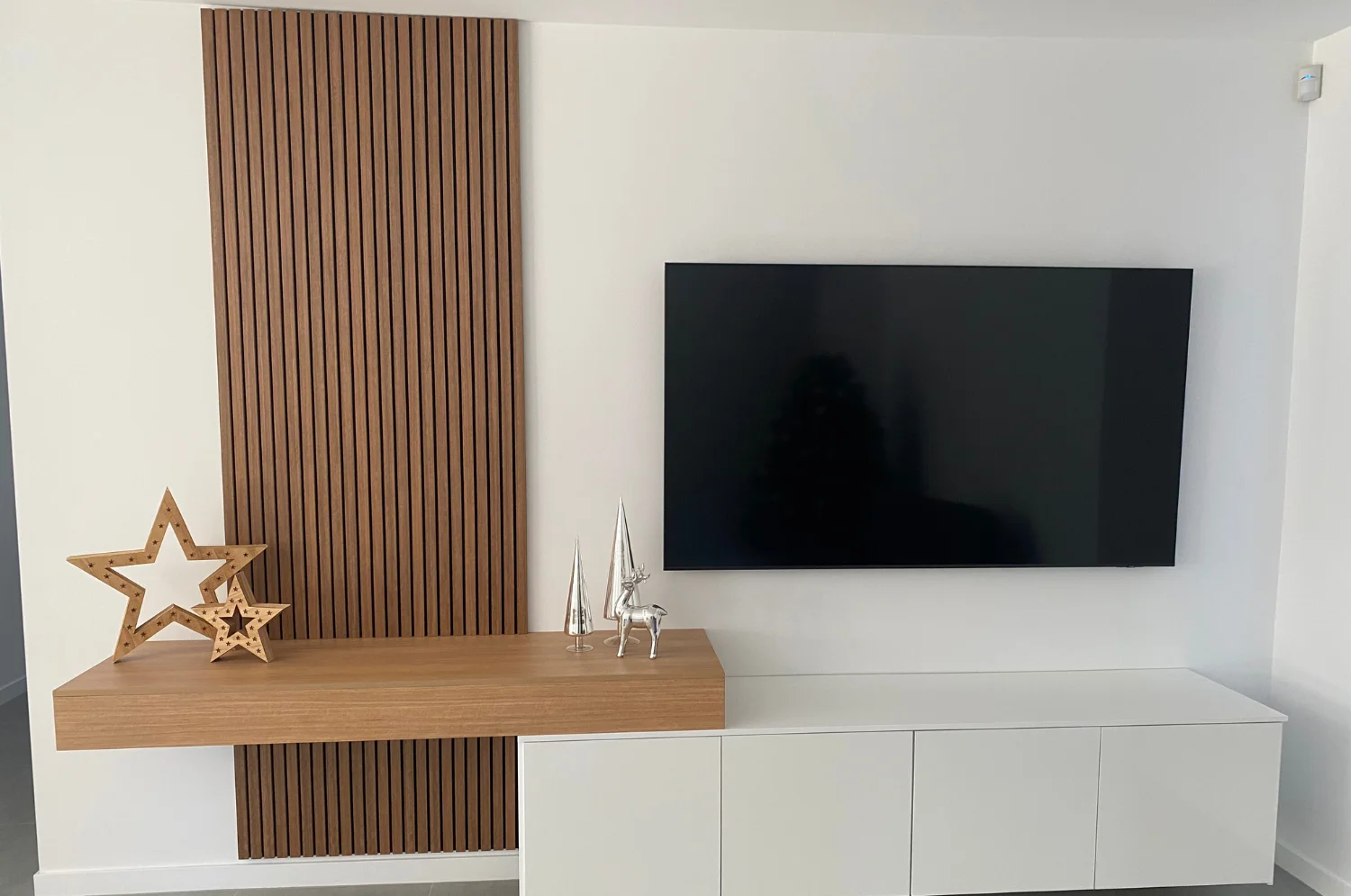
They can be, but performance depends on what sits behind them. A timber slat panel backed with the right acoustic absorber performs well; used mainly as a decorative surface, it offers much less control.
Is PET felt a good acoustic panel material?+
PET felt suits lightweight workspace applications well, but it will not satisfy every impact, fire or finish requirement. Check the project's compliance and durability needs before specifying it.
Does the material alone determine acoustic performance?+
No. Thickness, density, backing material, air gap, perforation pattern, mounting method and location all affect performance. Two panels of the same material can perform very differently.
How much do acoustic panels cost in Australia?+
There is no single price. Cost depends on material, finish, size, thickness, fire rating, performance requirements, quantity, fixing method, customisation, delivery, documentation and installation. Most suppliers price commercial projects from the brief rather than a shelf rate.
Why can't suppliers give one price per panel?+
Because commercial projects rarely use panels the same way. A small meeting room with standard wall panels is a very different scope from a multi-level education project with ceiling baffles, custom colours, fire-rated documentation and staged delivery.
What drives acoustic panel cost up the most?+
Customisation. Special colours, printed surfaces, veneer finishes, routed patterns, custom shapes, curves and cut-outs all add design coordination, manufacturing time and installation planning.
How do I get an accurate acoustic panel quote?+
Provide the brief: room type and use, drawings and dimensions, target acoustic outcome, finish preferences, any fire or compliance requirements, quantities and the delivery programme. The more defined the scope, the more useful the quote.
Where should acoustic panels be placed for the best results?+
Start with the ceiling. In most commercial interiors the ceiling is the largest uninterrupted surface and the one sound reflects off before returning to the occupied zone. After the ceiling, treat first reflection points on walls and the surfaces closest to the main sound sources. Placement usually matters more than panel count.
Is it better to add more acoustic panels or move them?+
Moving them. Two rooms with the same number of panels can perform very differently depending on placement. The useful question is not how many panels fit, but where each square metre of absorption produces the greatest acoustic return.
Do acoustic feature walls work?+
A decorative feature wall rarely solves the acoustic problem on its own. It can look impressive while leaving the ceiling and first reflection points untreated, which is where most of the reverberation is generated.
What are first reflection points?+
They are the surfaces where sound from a source bounces once before reaching the listener. Treating them improves speech clarity and intelligibility, which is why they matter in meeting rooms, classrooms and offices.
What is the difference between acoustic panels and soundproofing?+
Acoustic panels absorb sound inside a room to reduce echo and reverberation, making speech clearer and the space more comfortable. Soundproofing reduces sound transfer between spaces, stopping noise passing through walls, floors, ceilings, doors and glazing. One controls sound within a room; the other controls sound moving between rooms.
Do acoustic panels stop noise travelling between rooms?+
Not usually. Acoustic panels are designed to absorb reflections inside a room, not to block sound moving to adjacent spaces. If conversations or noise are passing to the next room, that is a sound-isolation problem that typically requires changes to walls, doors, glazing or ceilings.
Are “soundproofing panels” a real product?+
The term is often used loosely. Most wall- or ceiling-mounted panels are acoustic absorption products that improve sound quality inside a room. True soundproofing usually relies on construction methods — insulation, acoustic-rated systems, seals and isolation details — rather than a single panel.
Which one does my commercial project need?+
Ask what the sound is doing. If sound is bouncing around inside the same room (echo, poor speech clarity), you likely need acoustic panels. If sound is passing from one room to another, you likely need soundproofing. Some spaces, such as meeting rooms, need both.
Can acoustic panels be added after a space is built?+
Often, yes. Because they are usually installed on visible surfaces such as walls and ceilings, acoustic panels can frequently be retrofitted. Soundproofing is harder to add later because it may involve changes to the building fabric, so it is best planned early in the project.
When should I involve an acoustic consultant?+
Consider specialist input when sound is travelling between rooms, privacy or confidentiality matters, noise affects neighbouring tenancies, the project involves apartments, hotels, healthcare or education, there are compliance requirements, or previous acoustic treatments have not solved the issue.
What's the difference between acoustic panels and soundproofing?+
Acoustic panels absorb sound inside a room — they reduce echo, reverberation, and excessive sound reflection. Soundproofing is different: it stops sound from travelling between rooms, which requires changes to walls, doors, ceilings, glazing, and other building elements. If a room feels harsh or echoey, you need acoustic panels. If conversations are leaking between rooms, you need soundproofing.
Where should acoustic panels be installed in a commercial interior?+
The best location depends on where sound is reflecting and what surfaces are available. Wall panels work well in meeting rooms and classrooms where speech clarity matters. Ceiling panels, rafts, and clouds are highly effective because ceilings are often the largest available surface. Suspended baffles and acoustic fins are useful in spaces with high ceilings or limited wall area.
Do acoustic panels need to meet fire ratings for Australian commercial projects?+
Yes — fire performance is an important part of product selection for Australian commercial projects. The required rating depends on project type, location, and building requirements (Group 1 compliance to ISO 9705-2003 is common for high-occupancy public spaces). Always check the product documentation supports the specific project's needs before specifying.
Does the thickness of an acoustic panel affect its performance?+
Yes. Thicker panels can absorb a broader range of frequencies — thin panels help with higher frequencies, while thicker panels improve performance across mid and lower frequencies. Material density, installation method (an air gap behind the panel can boost performance), and coverage area also matter just as much as thickness alone.

Experience the difference.
Order samples or speak with our team about how our panels can elevate your next project.