Acoustic Panels for an Airport or Transport Terminal
Learn which acoustic panels suit airports and transport terminals, how ceiling baffles improve announcement clarity, and what to consider for Class 9b fire compliance.
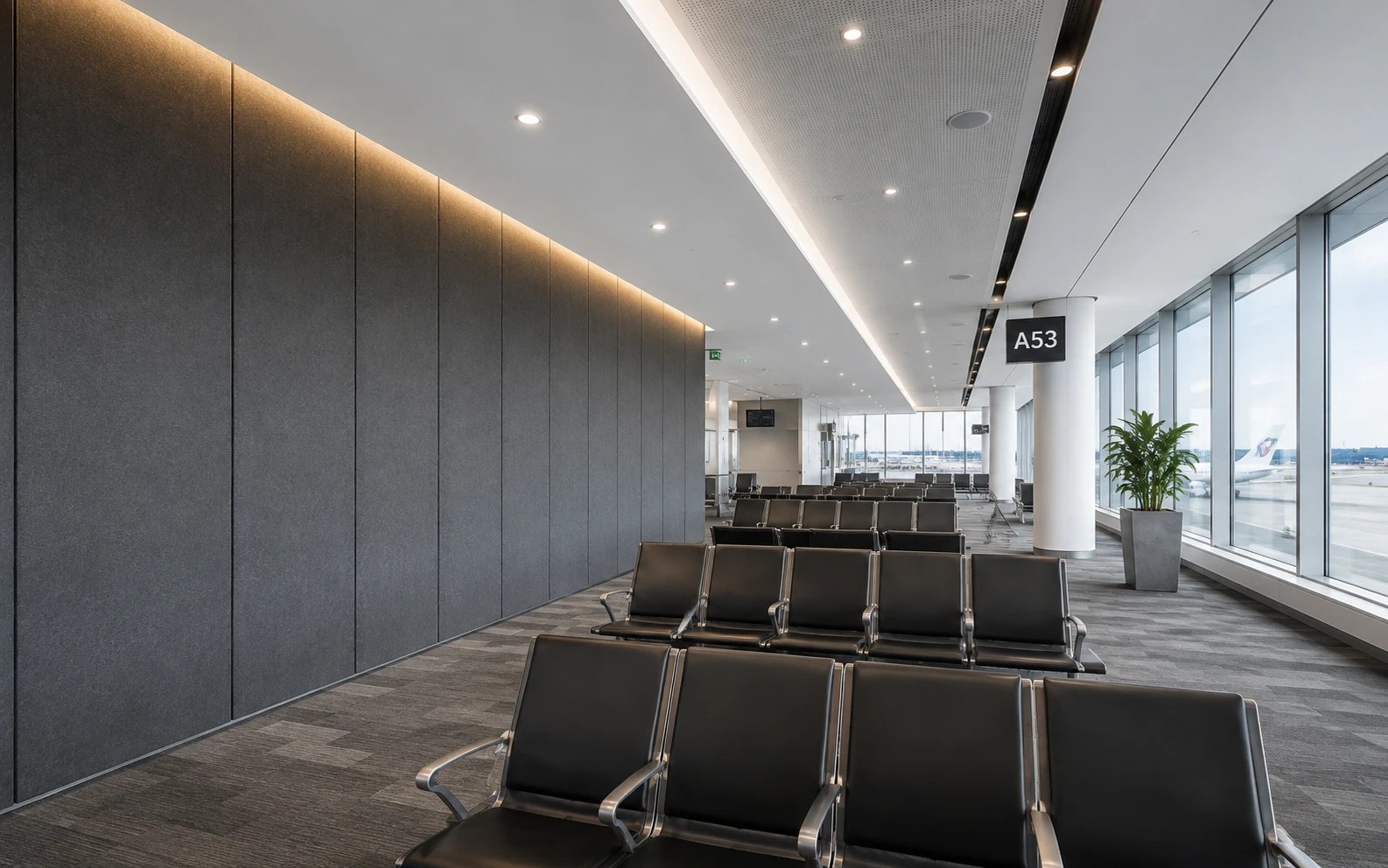
Airports and transport terminals are among the most demanding public spaces from an acoustic perspective.
They are large, highly reflective environments filled with constant activity. Passenger conversations, rolling luggage, retail noise, mechanical systems and public-address announcements all compete within the same space.
Without enough sound absorption, this noise builds quickly.
The result is excessive reverberation, reduced speech intelligibility and an environment that can feel stressful and overwhelming for travellers. More importantly, poor acoustics can make wayfinding and safety announcements harder to understand.
For these spaces, the most effective acoustic strategy is usually to focus on ceiling-mounted panels, suspended acoustic baffles and other overhead treatments. Because terminals are vast and usable wall space is limited, the ceiling often provides the best opportunity to introduce meaningful sound absorption.
For Australian projects, fire performance also needs careful consideration. Airports and transport terminals are typically treated as Class 9b public buildings under the National Construction Code, so wall and ceiling linings need to meet the relevant fire requirements for the project.
Why Do Airports and Transport Terminals Get So Loud?
Transport terminals combine nearly every acoustic challenge in one place.
They are usually:
- Large in volume
- High-ceilinged
- Open-plan
- Heavily glazed
- Finished with hard flooring
- Filled with reflective metal and plasterboard surfaces
- Busy for long periods of the day
These materials are durable and practical, but they absorb very little sound.
Every conversation, suitcase wheel, boarding announcement and service noise reflects from the surrounding surfaces. In a large terminal, these reflections can continue travelling for a considerable distance before fading.
As passenger numbers increase, the problem becomes more noticeable.
The space does not simply become louder because more people are present. It also becomes more reverberant because all of those sounds overlap.
This can create a noisy background that makes important announcements less distinct.
Why Good Acoustics Matter in Transport Environments
Acoustic comfort matters in any commercial interior, but in an airport or transport terminal it also supports communication and wayfinding.
Passengers need to hear:
- Boarding announcements
- Platform changes
- Gate information
- Security messages
- Emergency instructions
- Service disruptions
- General wayfinding information
If the room is highly reverberant, amplified speech can become blurred.
Increasing the volume of the PA system is not always the solution. Louder announcements can simply add more sound energy to an already reflective environment.
Reducing reverberation improves the clarity of the original announcement.
Better acoustics can also make the terminal feel calmer and more controlled, particularly during peak travel periods.
How Acoustic Panels Improve Announcement Clarity
Acoustic panels absorb sound energy before it can continue bouncing throughout the terminal.
When sound reaches an absorptive surface, part of that energy is captured instead of reflected back into the space.
This helps:
- Reduce reverberation
- Improve speech intelligibility
- Increase PA clarity
- Reduce background noise build-up
- Create a calmer passenger environment
Acoustic treatment does not eliminate the natural activity of a transport terminal.
Instead, it controls excessive reflections so individual sounds remain more distinct.
This is especially valuable around boarding areas, check-in halls and busy concourses where clear communication is essential.
Which Acoustic Products Work Best?
Large transport terminals usually have limited wall area available for acoustic treatment.
Walls may already be occupied by:
- Glass façades
- Retail fronts
- Advertising
- Digital displays
- Signage
- Security infrastructure
- Doors and circulation routes
That makes overhead acoustic treatment especially important.
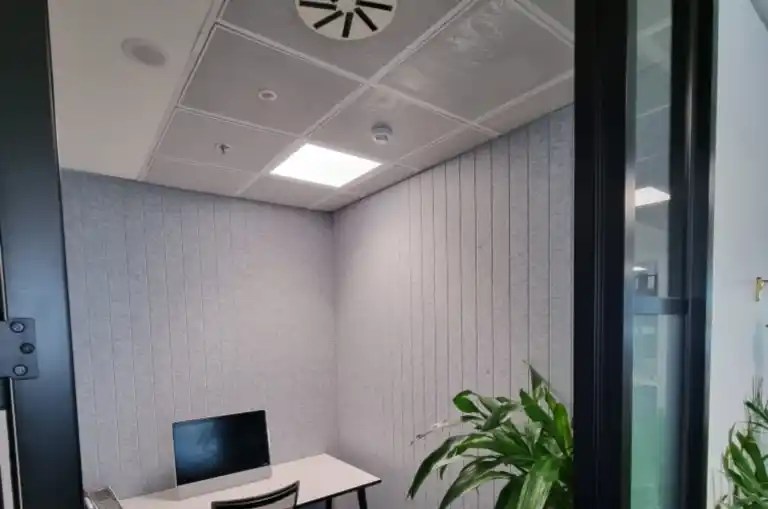
Acoustic Ceiling Panels

The ceiling is often the largest available surface in a terminal.
Adding sound absorption overhead can make a significant difference because the ceiling is exposed to sound generated across the entire concourse.
Acoustic ceiling panels can help control reflections from:
- Passenger conversations
- PA systems
- Retail areas
- Check-in counters
- Baggage handling zones
They can also be integrated into the architectural ceiling design rather than appearing as an additional treatment.
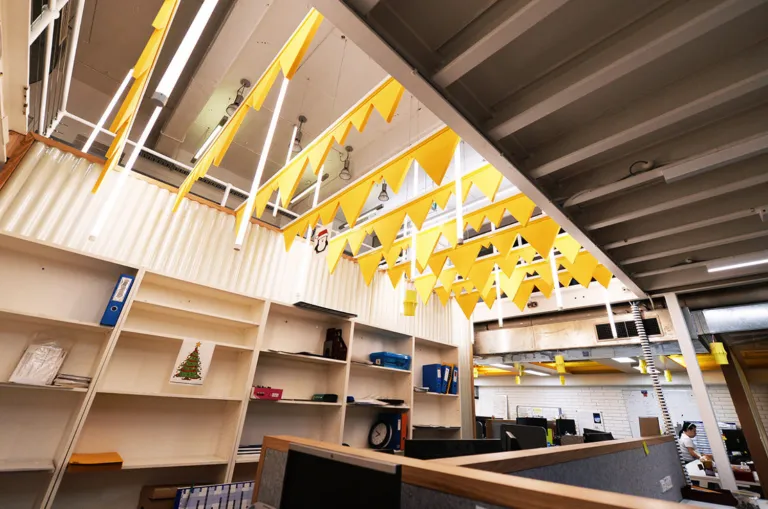
Suspended Acoustic Baffles
Suspended baffles are particularly useful in large-volume terminals with high or exposed ceilings.
Because both faces of each baffle are exposed, they provide a large amount of acoustic surface area without requiring a continuous ceiling system.
They can also be coordinated around:
- Lighting
- Mechanical services
- Sprinklers
- Structural elements
- Digital signage
This makes baffles a flexible option for both new terminals and refurbishment projects.
Why the Ceiling Usually Does Most of the Work
In airports and transport terminals, the ceiling often delivers the greatest acoustic benefit per square metre.
There are several reasons for this.
First, it faces the entire occupied area.
Second, ceiling space is usually less interrupted by doors, glazing and passenger circulation.
Third, overhead treatment can absorb sound from many different directions without competing with wayfinding or retail functions.
This is why the busiest concourses are often the first areas to consider.
Priority zones may include:
- Check-in halls
- Security queues
- Boarding gates
- Baggage claim areas
- Main concourses
- Waiting lounges
- Platform halls
By treating the areas with the highest passenger density first, project teams can often achieve the most meaningful improvement.
Working With Limited Wall Space

Wall-mounted acoustic treatment can still contribute to the overall strategy, but placement needs to be carefully considered.
In terminals, walls often serve critical operational functions.
Rather than forcing acoustic panels into unsuitable areas, project teams can look for:
- Upper-wall zones
- Areas above retail fronts
- Waiting lounges
- Back walls behind seating
- Service corridors
- Non-glazed feature walls
These locations can provide additional absorption without interfering with signage, circulation or access.
In many cases, a combination of ceiling treatment and selected upper-wall panels provides the best balance.
How Much Acoustic Treatment Does a Terminal Need?
There is no universal amount of acoustic coverage that suits every airport or station.
The quantity required depends on:
- Terminal volume
- Ceiling height
- Passenger capacity
- Existing finishes
- PA system design
- Retail activity
- Mechanical noise
- Intended reverberation targets
A small regional terminal and a major international airport will require very different acoustic strategies.
In very large spaces, treating only a small ceiling section may provide little noticeable improvement.
This is why large transport projects should consider acoustic performance as part of the overall building design rather than as an isolated finish selection.
Understanding Reverberation in Large Public Spaces
Reverberation time is one of the most useful indicators of acoustic performance in a transport terminal.
It describes how long sound continues to remain in the space after the original source has stopped.
When reverberation time is too long, new announcements overlap with reflections from previous sounds.
This can reduce speech intelligibility even when the PA system itself is powerful.
Reducing reverberation creates clearer separation between sounds and allows announcements to be understood more easily.
For major terminal projects, acoustic consultants may model reverberation and speech transmission to determine the most appropriate quantity and location of absorptive treatment.
Fire Performance for Airports and Transport Terminals
Fire performance is critical in high-occupancy public buildings.
Airports and major transport terminals are generally treated as Class 9b buildings under the National Construction Code.
Internal wall and ceiling linings must therefore meet the relevant fire requirements for the building and location in which they are installed.
For many Class 9b applications, Group 1 fire-rated linings are commonly specified.
Because acoustic products may cover large ceiling areas, project teams should verify:
- Fire classification
- Relevant test report
- Product construction
- Mounting configuration
- NCC requirements
- Fire engineer or certifier requirements
The product tested should also correspond with the product actually supplied and installed.
Common Mistakes When Treating Terminal Acoustics
A few common mistakes can reduce the effectiveness of an acoustic strategy.
These include:
- Relying on louder PA systems rather than reducing reverberation
- Treating only small isolated areas
- Ignoring the ceiling
- Installing products without considering services coordination
- Using products without suitable fire documentation
- Leaving acoustics until late in the project
- Focusing only on visual design
In large public buildings, acoustic performance works best when it is integrated into the architectural and services design from the beginning.
Choosing the Right Acoustic Solution
Every airport and transport terminal has different operational requirements.
The most effective strategy may combine:
- Acoustic ceiling panels
- Suspended baffles
- Upper-wall acoustic panels
- Architectural acoustic systems
The design should also account for:
- Passenger circulation
- Wayfinding
- Retail areas
- Security
- Building services
- Maintenance access
- Fire compliance
The goal is not simply to add acoustic panels wherever space is available.
It is to introduce enough absorption, in the right locations, to support clearer communication and a more comfortable passenger environment.
Why Choose Acoustic Panels Australia?

Acoustic Panels Australia works with architects, builders, designers and consultants to deliver acoustic solutions for large commercial and public spaces.
Our Australian-made range includes acoustic ceiling panels, suspended baffles, wall-mounted products and architectural acoustic systems suitable for transport, education, hospitality and other high-occupancy environments.
Our team can assist with:
- Product selection
- Acoustic performance data
- Ceiling and baffle layouts
- Fire documentation
- Specification support
- Coordination with project consultants
For large or complex terminals, we can also support the acoustic consultant with product-specific technical information required for modelling and specification.
Create a Calmer, Clearer Passenger Environment
Airports and transport terminals will always be busy places, but they do not need to feel acoustically chaotic.
By reducing excessive reverberation, acoustic ceiling panels and suspended baffles can improve announcement clarity, support wayfinding and make large public spaces more comfortable for travellers.
In most terminals, the best starting point is the ceiling—particularly above the busiest concourses and passenger waiting areas.
Contact Acoustic Panels Australia today to discuss the acoustic requirements of your airport or transport terminal project.