Acoustic Panels vs Soundproofing: What’s the Difference and Which One Do You Actually Need?
Acoustic panels and soundproofing solve different problems. Learn the difference, how to tell which one your commercial project actually needs, and why getting the brief right early saves budget and frustration.
“We need this space to be quieter.”
It sounds like a simple brief. But in commercial design, “quieter” can mean two very different things.
Sometimes, the room itself feels loud. Conversations bounce around, speech is hard to follow, and the space feels busy even when there are only a few people in it. That is usually an acoustic absorption problem.
Other times, the issue is sound travelling where it should not. Meeting room conversations can be heard outside. Noise from a corridor enters a classroom. A plant room disrupts nearby work areas. That is usually a soundproofing problem.
The difference matters because acoustic panels and soundproofing are not the same thing. They solve different problems, use different products, and often sit in different parts of the construction process.
This guide explains the difference between acoustic panels and soundproofing, how to identify which one your project needs, and why getting the brief right early can save time, budget, and frustration.
Two Different Versions of “Quieter”
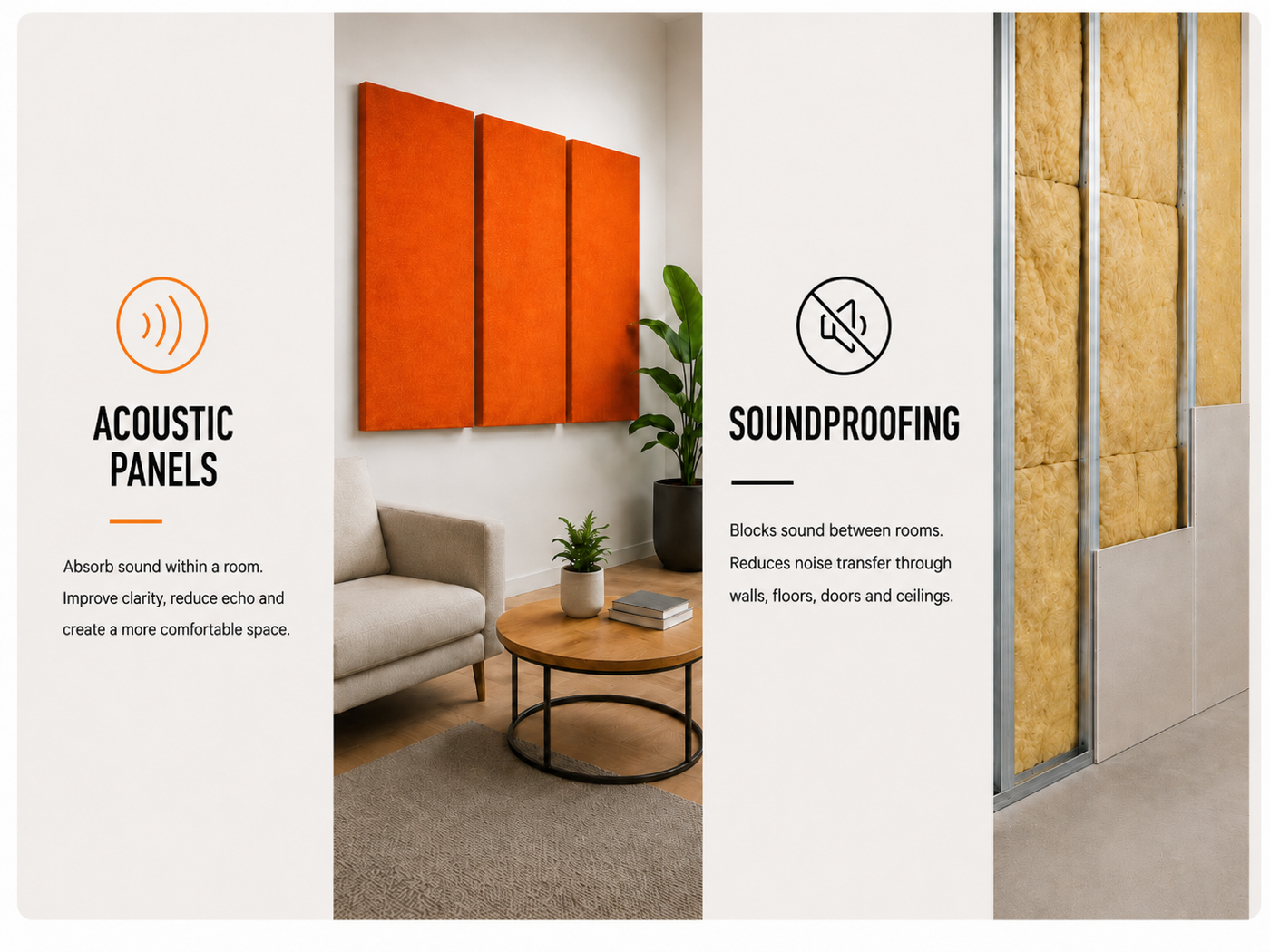
When someone says a room needs to be quieter, the first question should be:
Quieter inside the room, or quieter between rooms?
That distinction is the key to understanding acoustic panels vs soundproofing.
If the room feels echoey, harsh, or difficult to speak in, the problem is usually caused by sound reflecting inside the space. This often happens in interiors with hard surfaces such as glass, concrete, plasterboard, tiles, metal, or timber.
In this case, the goal is to reduce reverberation and improve clarity. Acoustic panels are often part of the solution.
If the problem is noise passing through walls, ceilings, floors, doors, windows, or service penetrations, then the issue is sound transfer. In this case, the goal is to block, reduce, or isolate sound movement from one area to another. That is where soundproofing belongs.
Both problems can make a space feel noisy, but they are not fixed in the same way.
A room can have excellent acoustic panels and still leak sound into the next room. A room can also be well soundproofed but still feel echoey and uncomfortable inside.
That is why the right solution starts with identifying the actual problem.
What Acoustic Panels Do — Absorbing Sound Inside a Room
Acoustic panels are designed to absorb sound within a space.
When sound is created in a room, it travels outward until it reaches a surface. Hard surfaces reflect much of that sound back into the room. When there are too many reflections, sound builds up and lingers. This is called reverberation.
Acoustic panels reduce the amount of sound that reflects back into the space.
They do this by allowing sound energy to enter the material. Inside the panel, the sound energy moves through fibres, pores, or internal structures. Some of that energy is converted into a very small amount of heat through friction, which reduces the reflected sound.
The result is a room that feels more controlled.
Acoustic panels can help improve:
- Speech clarity
- Listening comfort
- Focus in workspaces
- Noise control in shared areas
- Comfort in hospitality venues
- Learning conditions in education spaces
- Meeting room usability
They are commonly used in offices, meeting rooms, classrooms, restaurants, healthcare facilities, community buildings, libraries, reception areas, and other commercial interiors.
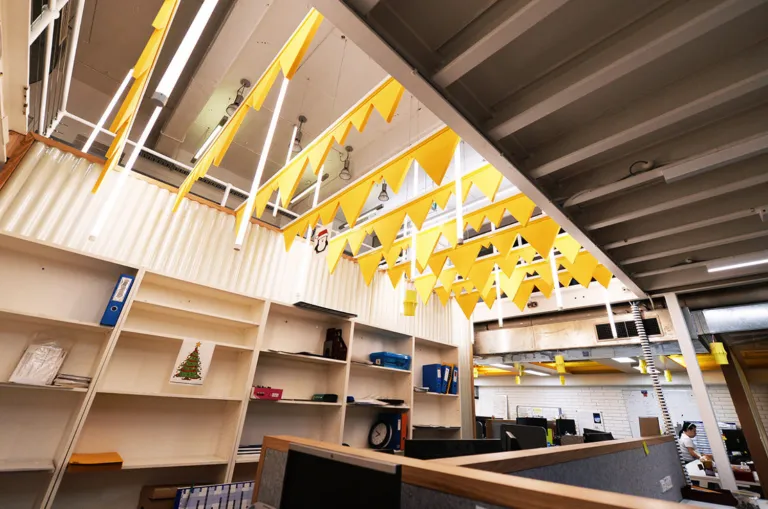
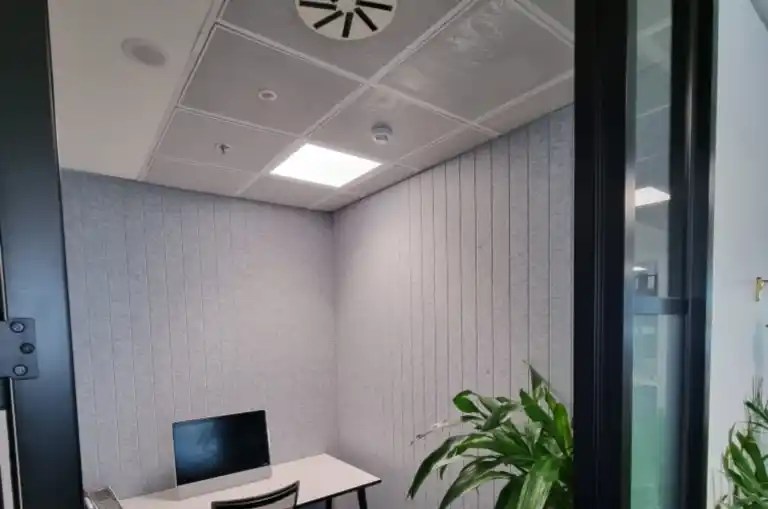
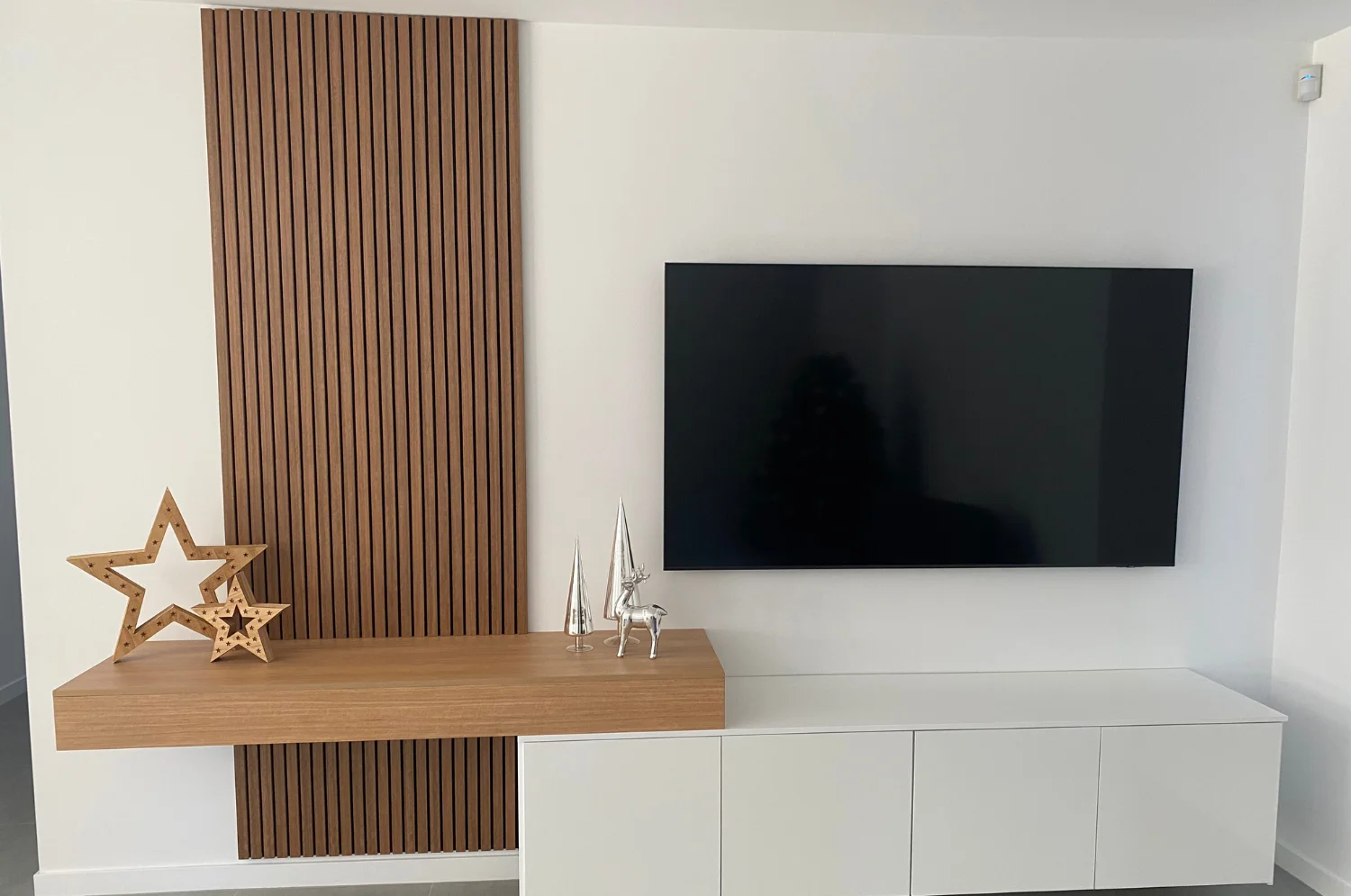
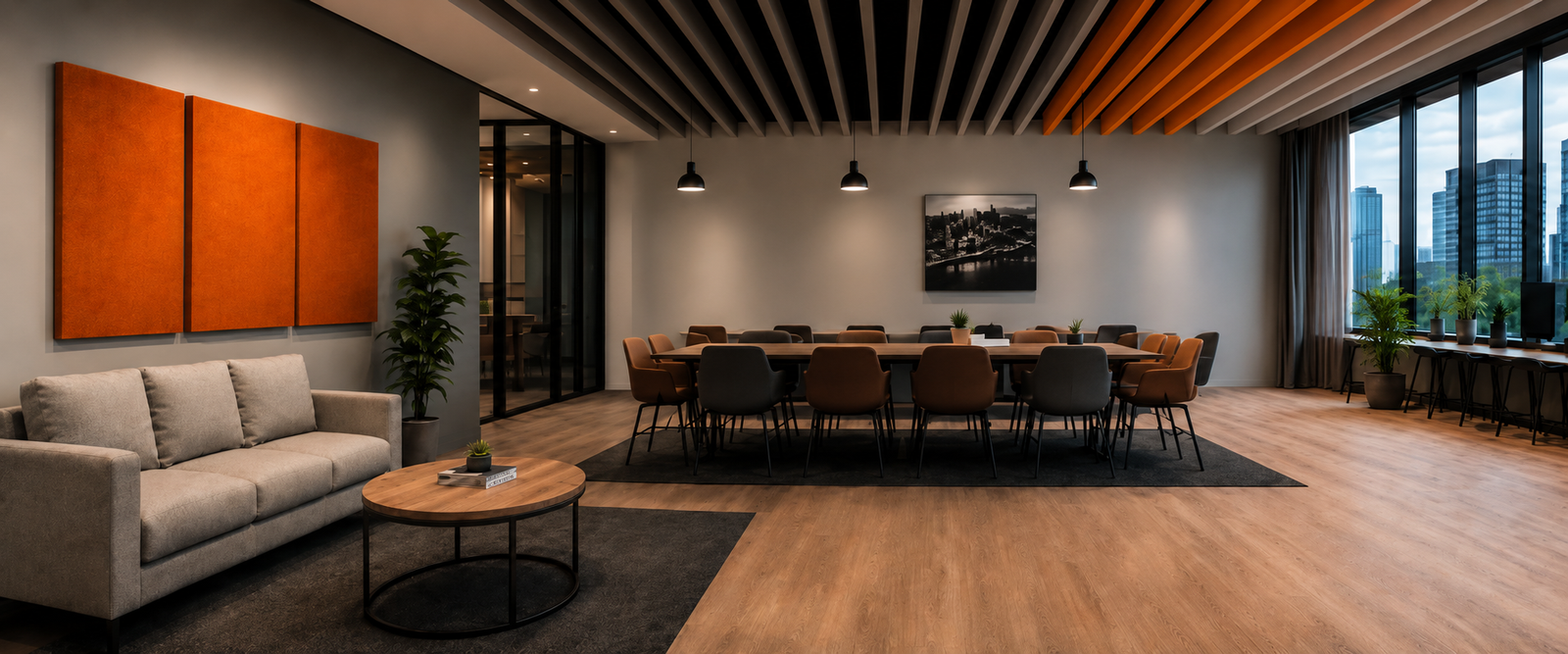
Acoustic panels may be installed as wall panels, ceiling panels, suspended baffles, ceiling rafts, acoustic fins, screens, or integrated design features.
Their job is not to make a room silent. Their job is to manage reflections so the space sounds clearer, calmer, and more usable.
What Soundproofing Does — Blocking Sound Between Rooms
Soundproofing is different.
Soundproofing is about reducing sound transfer from one space to another. It is less about the sound quality inside a room and more about stopping unwanted noise from entering or leaving.
This can include sound travelling through:
- Walls
- Ceilings
- Floors
- Doors
- Windows
- Glazing systems
- Ductwork
- Service penetrations
- Gaps and junctions
Soundproofing usually relies on construction methods, not just surface finishes.
A soundproofing strategy may include acoustic-rated wall systems, insulation within cavities, multiple plasterboard layers, resilient mounts, acoustic seals, solid-core or acoustic-rated doors, upgraded glazing, floor isolation, and careful detailing around penetrations.
The goal is to increase sound isolation.
For example, if a confidential meeting room is leaking conversations into the open-plan office outside, acoustic panels inside the meeting room may reduce echo, but they will not necessarily stop people outside from hearing what is being said.
That issue may require better door seals, improved wall construction, acoustic-rated glazing, or treatment of ceiling paths.
This is why soundproofing is usually considered earlier in the construction or fit-out process. It often affects walls, ceilings, doors, services, and structural details.
Why the Distinction Changes Budget and Outcome
Confusing acoustic panels with soundproofing can lead to poor results.
If a client asks for “soundproofing panels” because people can hear noise from the next room, installing acoustic panels on the wall may not solve the issue. The panels may make the room feel better internally, but the sound transfer problem can remain.
That creates frustration because the product may have done what it was designed to do, but it was specified for the wrong problem.
The budget impact can also be significant.
Acoustic panels are usually easier to add to a space because they are often installed on visible surfaces such as walls and ceilings. They can sometimes be retrofitted after a room is built.
Soundproofing, on the other hand, may require changes to the building fabric. That can mean opening walls, upgrading doors, sealing gaps, modifying ceiling systems, or coordinating with mechanical and electrical services.
In other words, acoustic absorption is often a surface-level room treatment. Soundproofing is often a construction-level intervention.
The earlier the distinction is made, the easier it is to plan the right scope.
For commercial projects, this affects:
- Budget planning
- Product selection
- Construction sequencing
- Consultant involvement
- Compliance requirements
- Client expectations
- Final acoustic performance
Getting the language right in the brief is not just a technical detail. It helps the whole project team understand what success actually looks like.
When You Need Both — And When You Only Need One
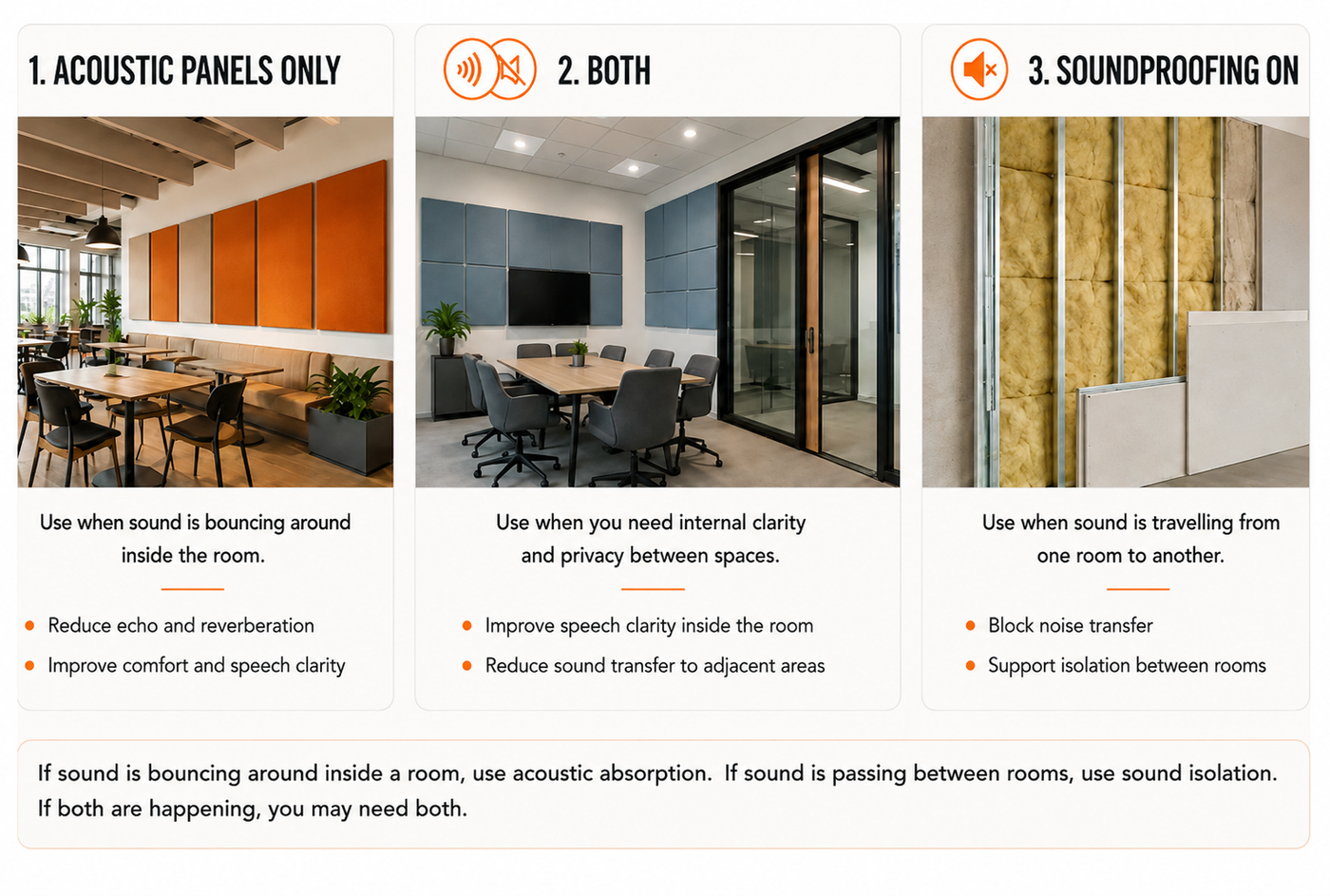
Some projects need acoustic panels. Some need soundproofing. Some need both.
A meeting room, for example, may need acoustic panels to improve speech clarity inside the room and soundproofing measures to prevent confidential conversations from travelling outside.
A classroom may need sound absorption to reduce reverberation and support learning, but it may also need sound isolation if it sits beside a music room, sports hall, or busy corridor.
A restaurant may mainly need acoustic panels or ceiling baffles to reduce internal noise build-up. Soundproofing may only become necessary if noise is disturbing neighbouring tenancies or residential spaces.
An open-plan office may need acoustic panels, screens, ceiling treatments, or baffles to improve comfort, but not necessarily full soundproofing between every zone.
A plant room or equipment area may require soundproofing and vibration control more than decorative acoustic panels.
The simplest way to decide is to ask what the sound is doing.
If sound is bouncing around inside the same room, look at acoustic absorption.
If sound is passing from one room to another, look at sound isolation.
If both are happening, both may need to be addressed.
How to Brief Acoustic Absorption Properly
A good acoustic absorption brief should describe the room, the problem, and the desired outcome clearly.
Instead of saying “we need soundproofing panels,” a better brief might say:
“We need to reduce reverberation and improve speech clarity inside the meeting room.”
That tells the product supplier, architect, designer, or acoustic consultant that the issue is internal sound control.
A good acoustic absorption brief should consider:
Room Use
The acoustic requirements of a boardroom, classroom, restaurant, library, and open-plan workplace are all different.
The way people use the room should guide the acoustic treatment.
Surface Finishes
Hard surfaces increase reflections. If the space has glass walls, polished concrete, exposed ceilings, or minimal soft furnishings, acoustic absorption may need to work harder.
Occupancy
The number of people using the space affects sound levels. A room used by 4 people will behave differently from a room used by 80.
Location of Treatment
Acoustic panels can be installed on walls, ceilings, as baffles, fins, rafts, or screens. The best location depends on the room shape, available surfaces, and design intent.
Performance Data
A well-specified product should have clear acoustic performance data. For commercial projects, avoid relying on vague claims such as “reduces noise” without supporting documentation.
Design Integration
Acoustic treatments are often visible, so they should be selected with both performance and appearance in mind. Colour, finish, shape, thickness, edge detail, and mounting method all affect the final result.
A clear brief helps ensure the selected product is solving the right problem.
When to Call a Soundproofing Specialist
Soundproofing often needs specialist input because sound transfer can be complex.
Noise may not be travelling through the most obvious path. It can move through walls, ceilings, floors, ducts, glazing, gaps, or structural junctions.
You should consider involving a soundproofing or acoustic consultant when:
- Sound is travelling between rooms
- Privacy or confidentiality is important
- Noise is affecting neighbouring tenancies
- The space is close to plant equipment or mechanical services
- The project involves apartments, hotels, healthcare, education, or performance spaces
- There are compliance or certification requirements
- Previous acoustic treatments have not solved the issue
A specialist can help identify the actual sound path and recommend construction-level solutions.
This is especially important in commercial projects where the cost of fixing sound transfer after construction can be much higher than addressing it during design.
Summary: Acoustic Panels vs Soundproofing
Acoustic panels and soundproofing are often discussed together, but they are not the same thing.
Acoustic panels absorb sound inside a room. They help reduce echo, reverberation, and unwanted reflections. They are used to make a space feel clearer, calmer, and more comfortable.
Soundproofing reduces sound transfer between spaces. It is used to stop noise entering or leaving a room and usually involves construction systems, seals, doors, glazing, insulation, or isolation details.
The right solution depends on the problem.
If the issue is poor sound quality inside the room, acoustic panels may be the answer.
If the issue is sound travelling between rooms, soundproofing is likely required.
If the space needs both internal clarity and privacy, then both acoustic absorption and sound isolation may need to be considered together.
For commercial projects, the best outcome starts with a clear brief. Before specifying any product, define what “quieter” really means.
Need Help Choosing the Right Acoustic Solution?
If you are working on a commercial project and are unsure whether you need acoustic panels, soundproofing, or both, speak with an acoustic product specialist early in the design process.
The right advice at the start can help you avoid the wrong product, protect the project budget, and create a space that performs the way it needs to.