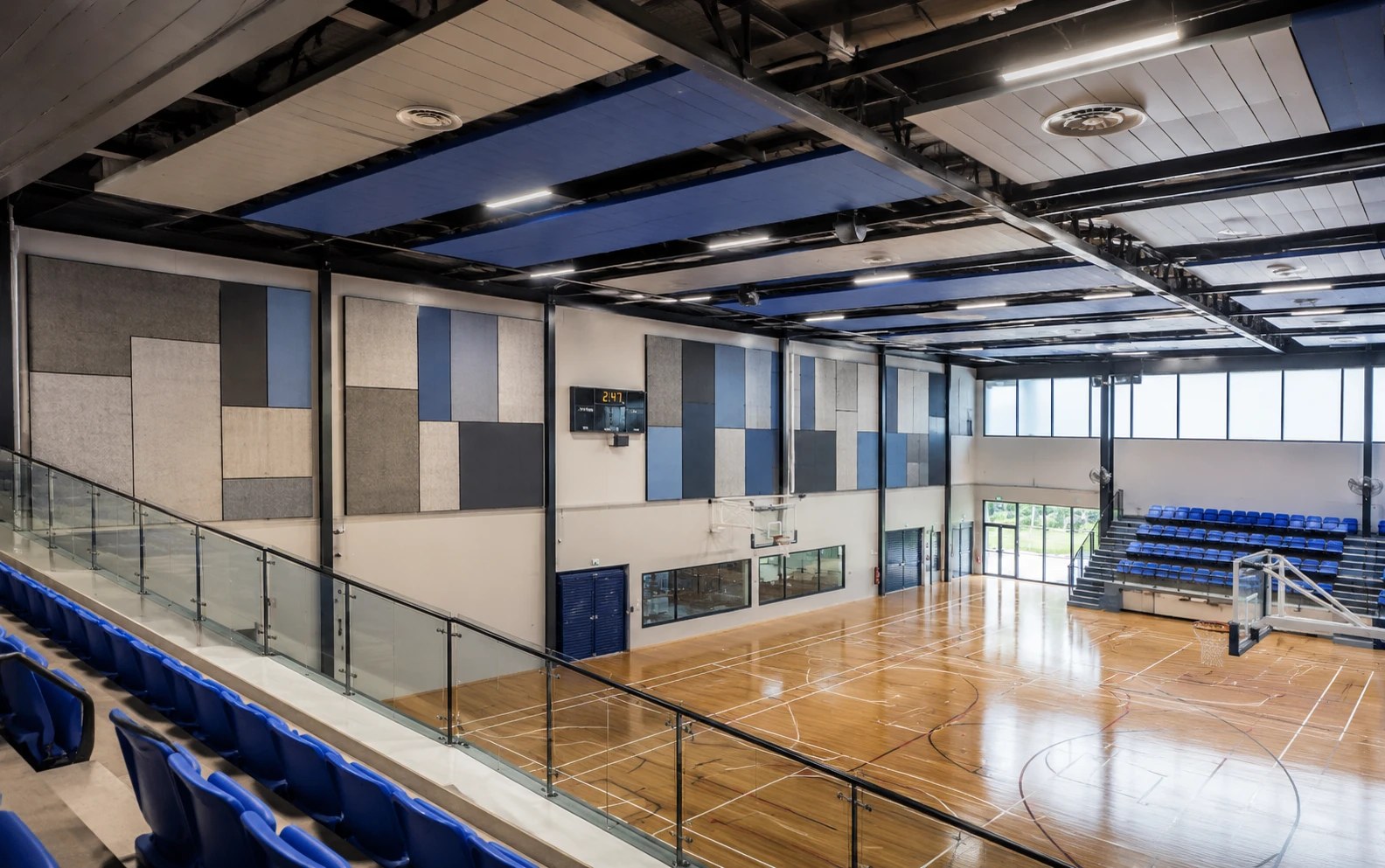
Acoustic Panels for an Indoor Sports Centre or Stadium
Learn which acoustic panels work best in indoor sports centres and stadiums, how ceiling baffles reduce reverberation, and what to consider for Class 9b fire compliance.
Indoor sports centres and stadiums are some of the most acoustically challenging spaces in any commercial or community facility.
They are large, tall and dominated by hard surfaces. Concrete floors, blockwork walls, glazed areas, metal roofing and exposed structural elements all reflect sound rather than absorb it. Once whistles, bouncing balls, crowd noise, music and PA announcements are added, the space can quickly become overwhelming.
The result is excessive reverberation, poor speech intelligibility and a harsh acoustic environment for players, spectators, staff and officials.
The most effective way to control this is to introduce sound absorption where it can work without interfering with the function of the venue. In most indoor sports centres, this means prioritising ceiling-mounted acoustic treatment, suspended baffles and upper-wall absorption.
For Australian projects, fire performance also needs to be considered carefully. Indoor sports centres and assembly-type venues are generally treated as Class 9b buildings under the National Construction Code, so the selected lining system must satisfy the relevant fire requirements for the project.
Why Do Indoor Sports Centres Get So Loud?
The acoustics of a sports centre are shaped by two things: the size of the space and the amount of hard, reflective surface area.
Unlike offices, classrooms or hospitality venues, sports halls usually contain very little furniture, soft flooring or other materials capable of absorbing sound.
Instead, they commonly include:
- Concrete or timber sports floors
- Masonry or blockwork walls
- Large glazed areas
- Steel structures
- High metal ceilings
- Retractable seating
- Hard doors and partitions
Every sound generated inside the hall reflects from these surfaces.
A whistle, for example, may continue bouncing around the room well after it was blown. The same is true for basketballs, squeaking shoes, crowd reactions and amplified announcements.
When these reflections overlap, the overall noise level rises and speech becomes increasingly difficult to understand.
The larger the venue, the more significant this problem can become.
Why Good Acoustics Matter in Sports Facilities
Acoustics in sports centres are not just about comfort.
Poor reverberation can affect communication, safety and the overall user experience.
Common problems include:
- PA announcements becoming difficult to understand
- Coaches and officials needing to shout
- Instructions being missed
- Spectator discomfort during large events
- Increased perceived noise levels
- Poorer event atmosphere
- Reduced clarity during presentations or ceremonies
In emergency situations, clear announcements are particularly important.
A well-designed acoustic strategy helps improve speech intelligibility so that information can be communicated more effectively across the venue.
It also reduces the sense of constant noise build-up, making the space more comfortable during training sessions, competitions and community events.
How Acoustic Panels Improve Sports Hall Acoustics
Acoustic panels absorb sound energy before it can continue reflecting around the space.
When sound reaches an absorptive surface, part of that energy is captured rather than reflected back into the hall.
This helps:
- Reduce reverberation
- Improve PA clarity
- Lower perceived noise levels
- Improve speech intelligibility
- Create a more comfortable environment
In large-volume spaces, the goal is not to make the hall quiet.
Instead, the objective is to control the amount of reflected sound so that announcements and instructions remain clear while the space still feels active and appropriate for sport.
Which Acoustic Products Work Best?
Sports centres require a slightly different approach from offices or meeting rooms because the walls and lower areas are often exposed to impact.
For this reason, ceiling-based treatment usually does most of the acoustic work.
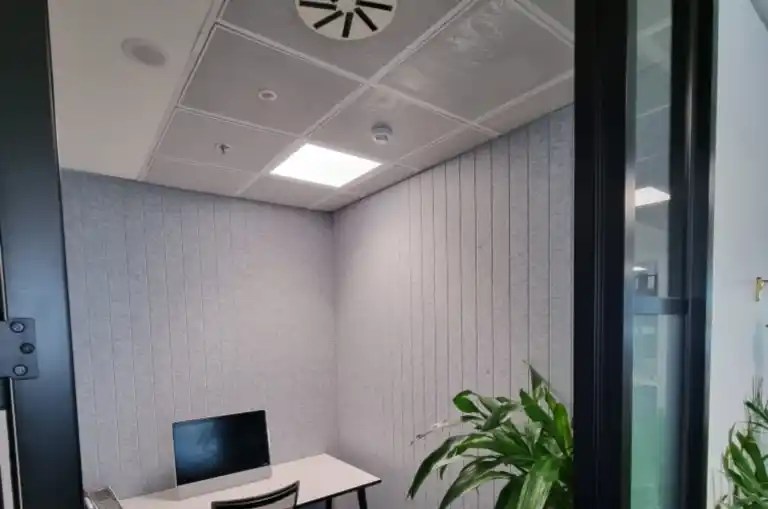
Acoustic Ceiling Panels
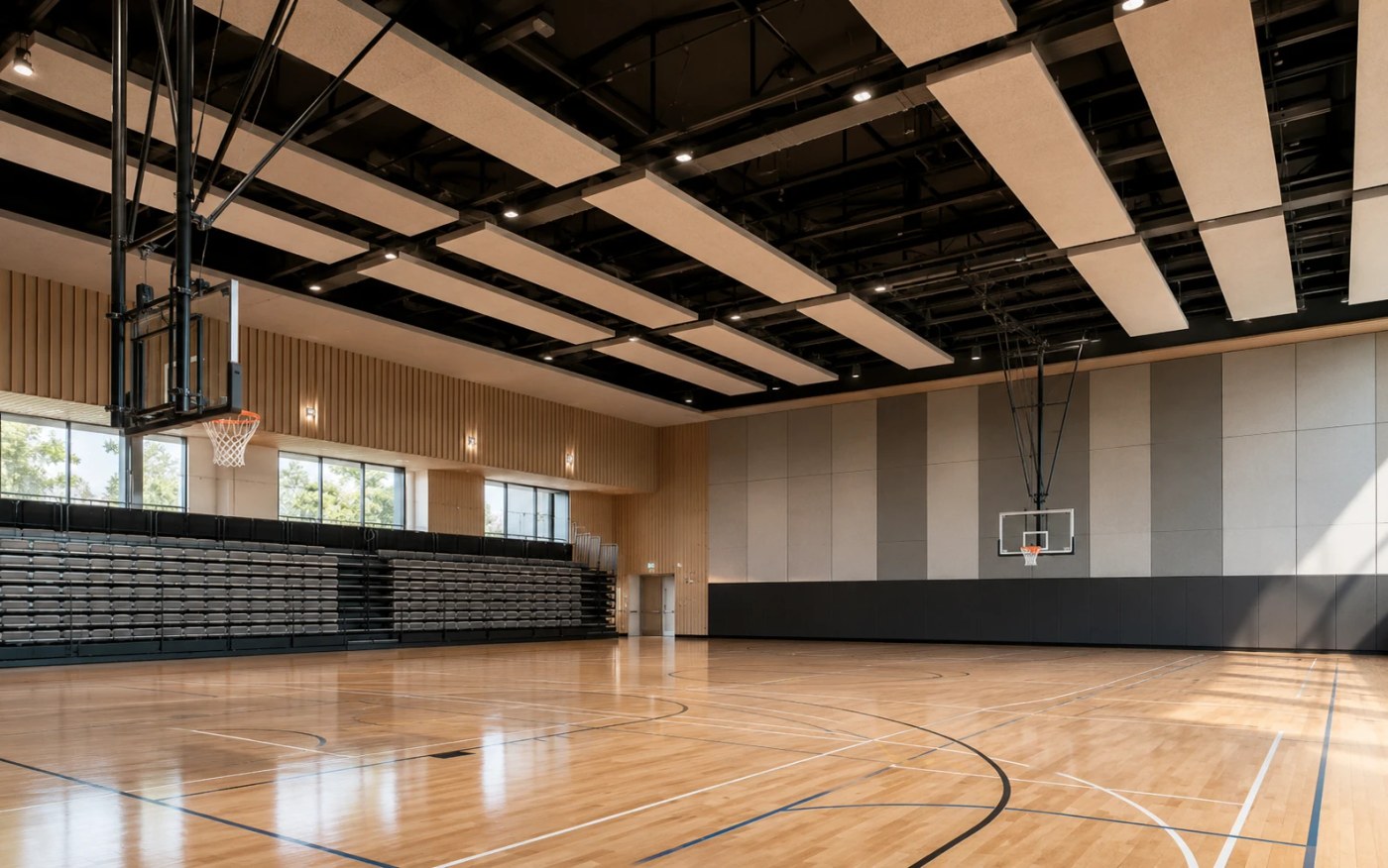
The ceiling is often the largest uninterrupted reflective surface in a sports hall.
Installing acoustic panels overhead can create a significant improvement because the ceiling is exposed to sound from almost every activity taking place below.
Ceiling treatment is particularly effective where:
- Wall space is limited
- Walls are glazed
- Lower walls are exposed to ball impact
- The venue has a very high ceiling
- The roof structure is highly reflective
By introducing absorption overhead, sound is reduced before it continues circulating through the entire volume of the room.
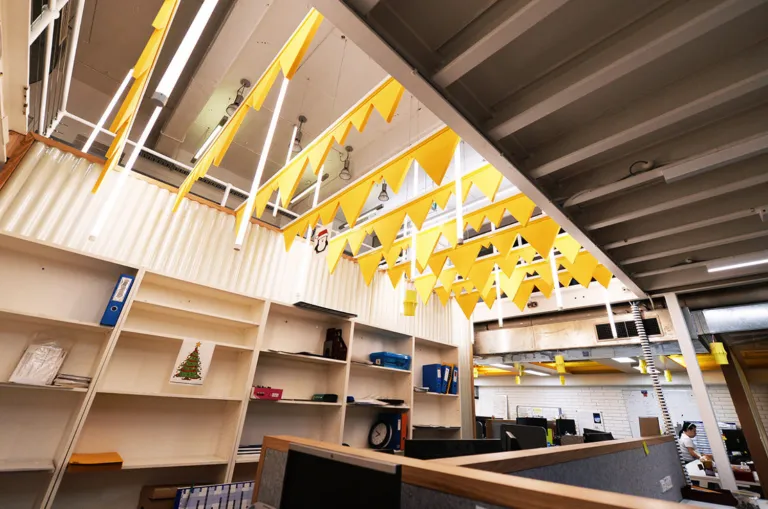
Suspended Acoustic Baffles
Suspended acoustic baffles are especially useful in sports centres with exposed ceilings or complex services.
Because both faces of the baffle are exposed, they can provide a large amount of absorptive surface area without requiring a continuous ceiling system.
They also allow acoustic treatment to be positioned around:
- Lighting
- Sprinklers
- Mechanical services
- Structural beams
- Scoreboards
This makes them a flexible option for both new buildings and retrofit projects.
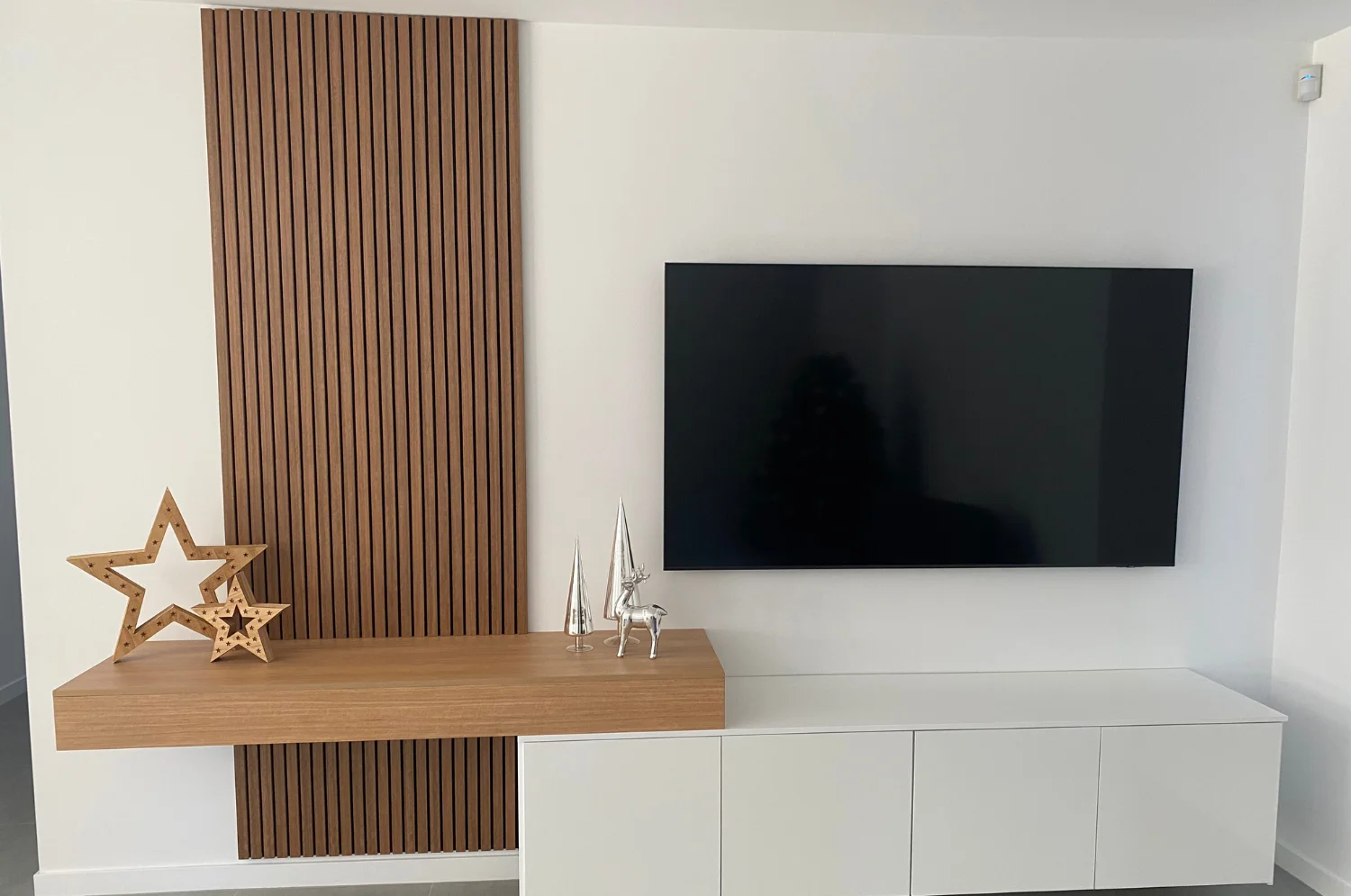
Upper-Wall Acoustic Treatment
Where possible, additional absorption can be installed on upper-wall areas that are less likely to experience direct impact.
This helps reduce horizontal reflections between opposing walls and can complement the ceiling treatment.
Upper-wall panels can be particularly useful in:
- Spectator zones
- Above retractable seating
- Behind goals or courts where impact risk is low
- Large end walls
The key is to keep vulnerable treatment away from high-impact areas unless the product is specifically designed for those conditions.
Why Ceiling Treatment Usually Delivers the Biggest Gain
In many indoor sports facilities, the ceiling provides the best opportunity for acoustic improvement per square metre.
There are several reasons for this.
First, it faces the entire room.
Second, it is usually free from direct ball impact.
Third, it is often one of the largest continuous hard surfaces in the building.
This means acoustic ceiling panels or baffles can absorb reflected sound generated across the whole venue rather than addressing only one localized area.
For this reason, ceiling treatment is usually the first area to assess when planning an acoustic upgrade.
Working With Impact-Prone Walls
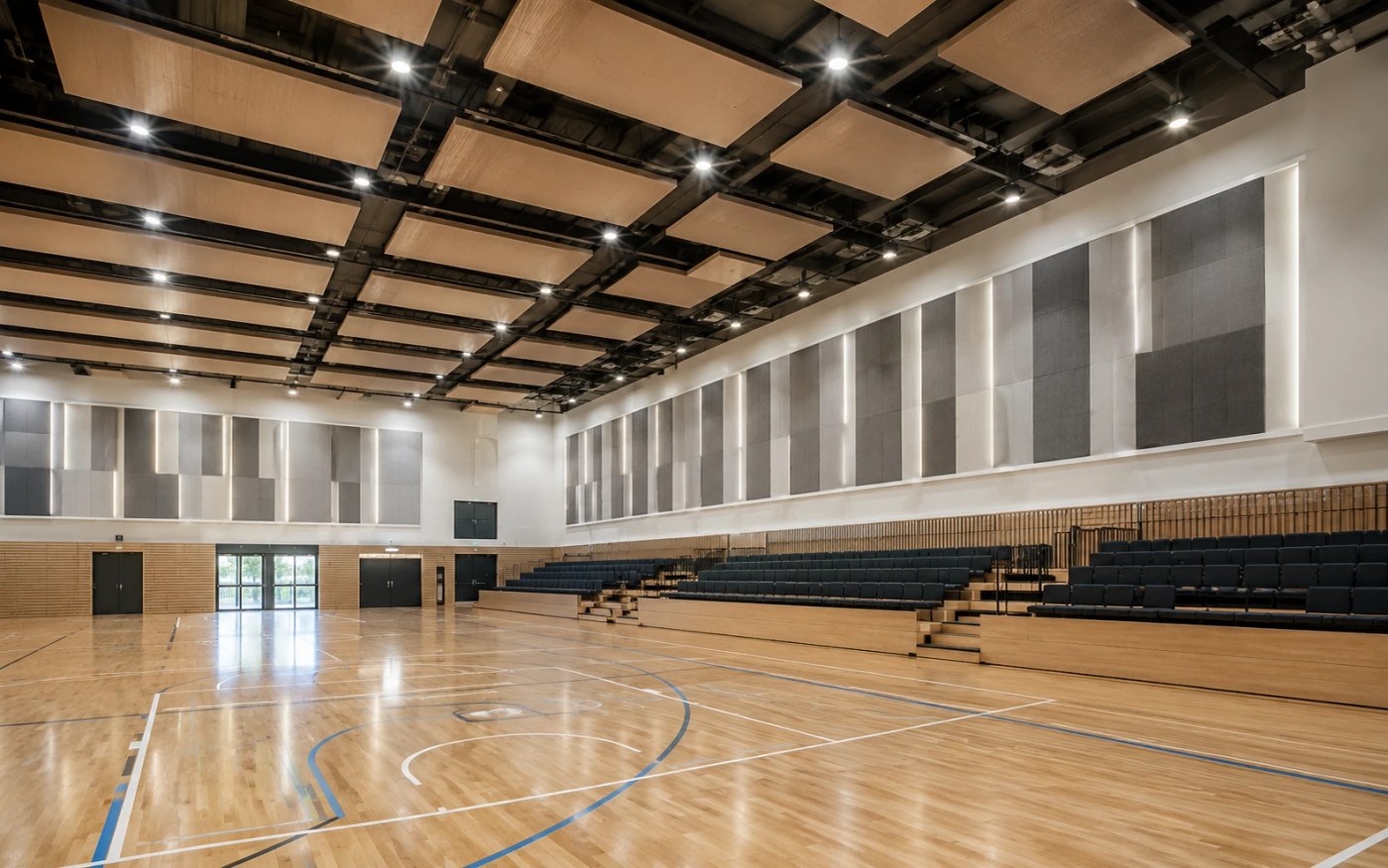
Walls in sports centres present a particular challenge.
Lower wall areas are frequently exposed to:
- Basketballs
- Volleyballs
- Indoor soccer balls
- Equipment
- Trolleys
- General contact
They may also need to remain durable, washable or resistant to damage.
This means a standard decorative acoustic wall panel may not be appropriate in every location.
A better strategy is often to keep the lower wall zone robust and concentrate sound absorption in:
- The ceiling
- Suspended baffles
- Upper walls
- Spectator areas
- Non-impact zones
Where wall-mounted acoustic products are used, their suitability for the specific impact conditions should be confirmed before specification.
How Much Acoustic Treatment Does a Sports Centre Need?
There is no single coverage percentage that works for every sports facility.
The amount of treatment required depends on:
- Floor area
- Ceiling height
- Total room volume
- Number of courts
- Existing finishes
- Spectator capacity
- Intended use
- PA requirements
- Current reverberation time
A single-court community sports hall will require a different solution from a multi-court stadium with seating and large events.
In very large spaces, treating only a small area may have little noticeable effect.
This is why acoustic design should consider the entire room rather than relying on isolated panels.
Understanding Reverberation in Sports Halls
Reverberation time is one of the key measures used to assess how a sports hall sounds.
It describes how long sound continues to decay after the original source has stopped.
In a highly reflective indoor stadium, reverberation can remain for several seconds.
This is what causes announcements to smear together and makes the venue feel excessively loud.
Reducing reverberation allows new sounds to be heard more clearly.
This is particularly important for:
- PA systems
- Coaching instructions
- Referee calls
- Emergency announcements
- Presentations and ceremonies
Where formal acoustic targets apply, an acoustic consultant may model the room and determine the amount of absorption required.
Fire Performance for Indoor Sports Centres and Stadiums
Acoustic performance must be considered alongside fire compliance.
Indoor sports centres, gymnasiums and assembly spaces commonly fall under Class 9b of the National Construction Code.
This classification can require internal wall and ceiling linings to satisfy specific Group Number requirements depending on the location and building configuration.
For many Class 9b applications, Group 1 fire-rated linings are commonly specified.
Because acoustic products can cover large ceiling or wall areas, it is important to verify that the fire documentation relates to the actual product and installation method proposed.
Before specifying a product, project teams should check:
- Fire classification
- Relevant test report
- Product construction
- Mounting method
- NCC requirements
- Certifier or fire engineer requirements
Fire compliance should never be assumed based on marketing descriptions alone.
Common Mistakes When Treating Sports Hall Acoustics
Several mistakes can limit the effectiveness of an acoustic upgrade.
These include:
- Installing too little absorption
- Treating only one small wall
- Ignoring the ceiling
- Using products that are vulnerable to impact
- Failing to coordinate panels with services
- Selecting products without suitable fire performance
- Assuming PA upgrades alone will solve reverberation
A better PA system can improve amplification, but it cannot remove excessive reflected sound from the room.
If reverberation is the underlying problem, acoustic absorption is still required.
Choosing the Right Acoustic Solution
Every sports centre has a different combination of size, structure and operational requirements.
The most effective solution usually combines several elements, such as:
- Acoustic ceiling panels
- Suspended acoustic baffles
- Upper-wall acoustic panels
- Impact-resistant finishes in vulnerable zones
The design should also coordinate with lighting, mechanical systems, sprinklers, structural framing and court layouts.
Early planning makes this coordination far easier and helps avoid retrofitting products after the facility is already in use.
Why Choose Acoustic Panels Australia?

Acoustic Panels Australia works with architects, builders, education providers, councils and commercial clients to deliver acoustic solutions for large-volume spaces.
Our Australian-made range includes ceiling panels, suspended baffles and wall-mounted acoustic products suitable for sports, education and assembly environments.
We can assist project teams with:
- Product selection
- Panel configuration
- Acoustic performance data
- Fire documentation
- Layout considerations
- Specification support
For complex venues, we can also work alongside independent acoustic consultants to support the required performance targets.
Create a Clearer, More Comfortable Sports Environment
Indoor sports centres will always be lively spaces, but they do not need to be painfully loud.
By reducing excessive reverberation, acoustic ceiling panels and suspended baffles can improve PA clarity, reduce noise build-up and create a more comfortable environment for athletes, spectators and staff.
The most effective strategy is usually to treat the ceiling first, then add absorption to upper-wall areas where appropriate.
Contact Acoustic Panels Australia today to discuss the acoustic requirements of your indoor sports centre or stadium project.