Acoustic Panels for a Data Centre
Learn how acoustic wall panels, ceiling panels and baffles reduce reverberation in data centre control rooms, staff areas and other occupied spaces.
Data centres are built around performance, reliability and continuous operation. Servers, cooling systems, UPS equipment and mechanical services can run around the clock, creating a constant background of fan noise, airflow and equipment hum.
Inside equipment halls, that noise may be expected. The problem is what happens when it reflects from hard walls, ceilings and floors and begins to build up in adjoining occupied spaces.
Control rooms, staff areas, corridors and monitoring spaces can become uncomfortable places to work when sound is allowed to bounce repeatedly around enclosed rooms.
Acoustic panels and suspended baffles can help by absorbing reflected sound and reducing reverberant build-up in occupied areas. They are particularly useful where the goal is to improve comfort, speech clarity and the general acoustic environment around equipment halls.
However, acoustic treatment has an important limitation: it does not replace equipment noise control, engineering measures or hearing protection where noise levels are high.
For data centre projects, the best strategy is usually to treat the occupied areas around the equipment halls first while addressing major noise sources separately.
Why Are Data Centres So Noisy?
Data centres contain a high concentration of equipment designed to operate continuously.
Common noise sources include:
- Server cooling fans
- CRAC and CRAH units
- Air-handling systems
- Chillers and pumps
- UPS systems
- Electrical equipment
- Backup infrastructure
- High-velocity airflow
Individually, each source may seem manageable. Together, they can create a continuous broadband noise environment.
The problem is made worse by the construction of many technical spaces.
Data centres often include:
- Concrete floors
- Metal equipment racks
- Hard wall linings
- Exposed ceilings
- Limited soft finishes
These surfaces provide very little sound absorption.
As equipment noise reaches the walls and ceiling, much of it is reflected back into the space. The result is a combination of direct equipment noise and reverberant sound that can make the environment feel significantly louder.
Why Reverberation Matters in Staff and Control Areas
Reverberation is not the same thing as the original equipment noise.
It is the reflected sound that remains in the room after sound has reached hard surfaces.
In a control room or staff area, excessive reverberation can make normal conversations more difficult because speech competes with both the equipment noise and its reflections.
This can affect:
- Speech intelligibility
- Radio communication
- Phone calls
- Monitoring activities
- Concentration
- General workplace comfort
Even when the equipment itself cannot be made substantially quieter, reducing reflected sound can make occupied areas feel more controlled.
This is where acoustic absorption becomes useful.
How Acoustic Panels Help in Data Centres
Acoustic panels are designed to absorb sound energy rather than reflect it.
When sound reaches the panel, a portion of the energy is absorbed within the material. This reduces the amount of sound that continues circulating around the room.
In data centre environments, acoustic treatment can help:
- Reduce reverberant build-up
- Improve speech clarity
- Lower perceived background noise
- Improve comfort in occupied areas
- Reduce harsh reflections from hard surfaces
This is particularly useful in spaces such as:
- Control rooms
- Monitoring rooms
- Security areas
- Staff workspaces
- Corridors
- Meeting areas adjacent to equipment halls
The objective is not to make the data centre silent.
It is to improve the acoustic quality of the spaces where people need to communicate and work.
Which Acoustic Products Work Best?
The right product depends on the layout of the facility and the amount of available wall and ceiling space.
Acoustic Wall Panels
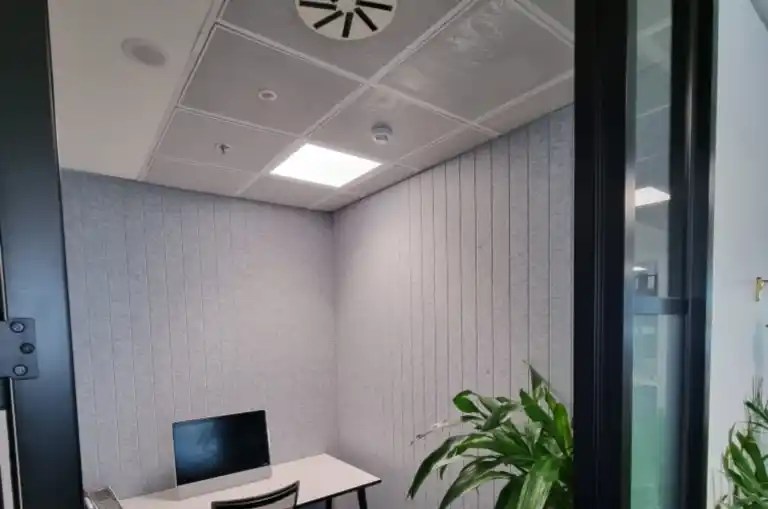
Wall-mounted acoustic panels can be useful in control rooms, meeting spaces and staff areas where walls are otherwise hard and reflective.
They can help reduce horizontal reflections between opposing walls and improve speech intelligibility.
Wall panels are particularly useful where:
- Staff spend long periods of time
- Conversations and phone calls are common
- The room has large plasterboard or concrete surfaces
- Ceiling access is limited
Acoustic Ceiling Panels
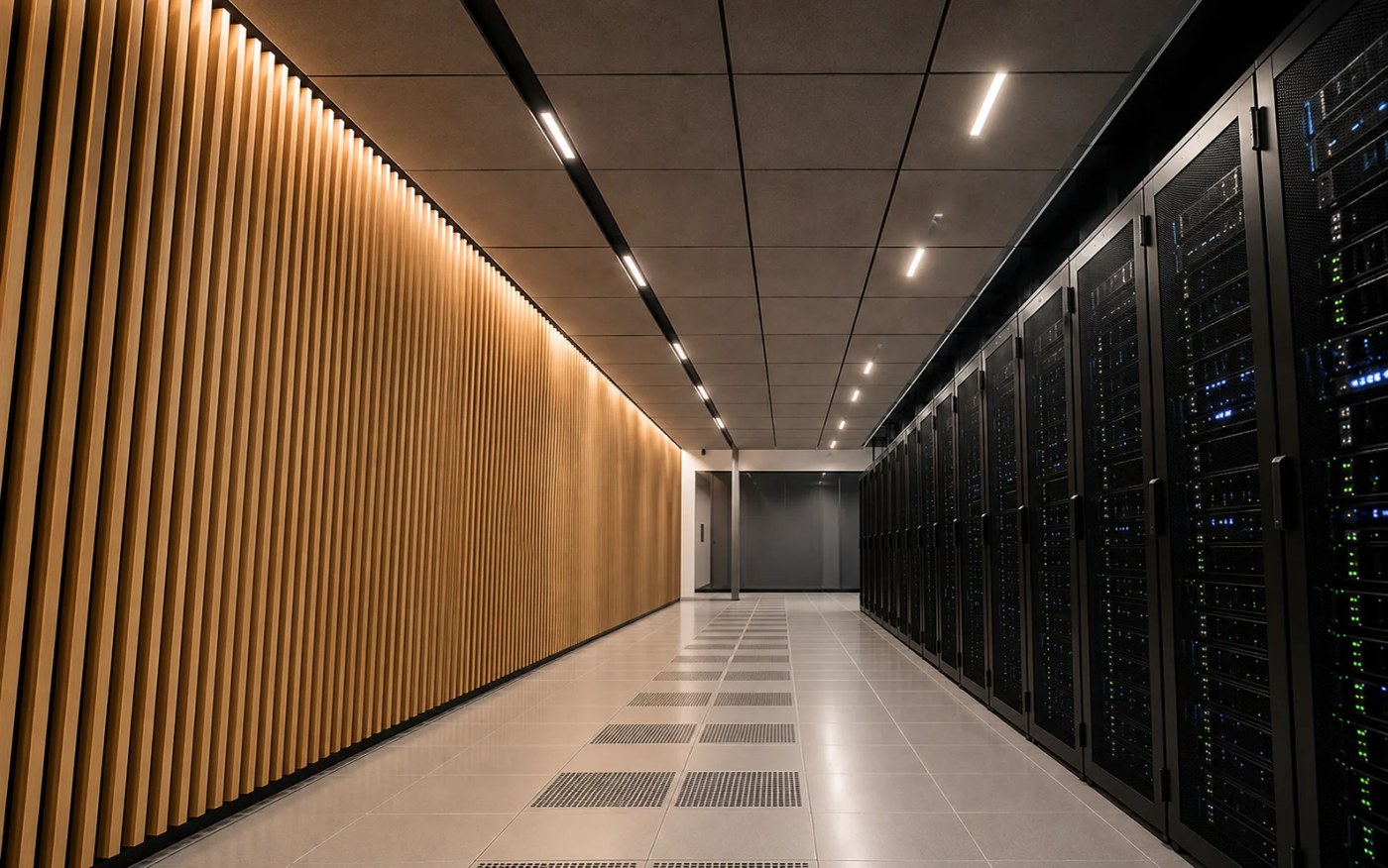
Ceilings are often one of the largest uninterrupted reflective surfaces in a control or staff area.
Installing acoustic ceiling panels can provide broad sound absorption without taking up valuable wall space.
This can be particularly effective in rooms with:
- Hard flooring
- Large glazed sections
- Minimal furnishings
- Limited wall area
Suspended Acoustic Baffles
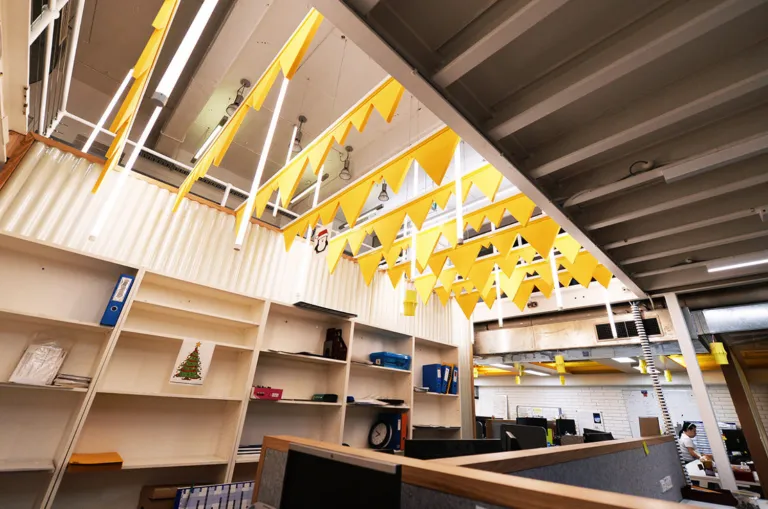
Baffles can work well where the ceiling is exposed or contains a large number of mechanical and electrical services.
Because both faces of a suspended baffle are available to absorb sound, they can provide useful acoustic surface area while allowing access to overhead systems.
They can also be positioned around:
- Cable trays
- Lighting
- Ductwork
- Sprinklers
- Other building services
Any installation in technical areas should, of course, be coordinated with operational, maintenance and fire requirements.
Acoustic Panels Versus Equipment Noise Control
This distinction is one of the most important things to understand when treating a data centre.
Acoustic panels reduce reflected sound. They do not stop noise being generated at the source.
If a cooling unit, fan or generator is producing excessive noise, acoustic wall panels alone will not solve that problem.
Source-control measures may include:
- Quieter equipment selection
- Equipment enclosures
- Duct attenuation
- Vibration isolation
- Acoustic barriers
- Silencers
- Mechanical system modifications
These solutions are typically assessed by an acoustic consultant or mechanical engineer.
Acoustic panels complement these measures by reducing the reverberant component of the noise once it enters an occupied room.
In simple terms:
Source control addresses where the noise starts.
Acoustic absorption addresses what happens after the sound enters the room.
Both may be required.
Acoustic Panels Are Not a Substitute for Hearing Protection
Data centre noise can sometimes reach levels where occupational noise exposure becomes a concern.
In those situations, installing acoustic panels should not be treated as a substitute for:
- Noise exposure assessment
- Engineering controls
- Safe work procedures
- Hearing protection
- Occupational health requirements
If employees are working near high-noise equipment for extended periods, the appropriate workplace noise assessment should be carried out.
Acoustic treatment may still improve the environment, but it forms only one part of a broader noise-control strategy.
Which Areas Should You Treat First?
For many data centre projects, the most effective starting point is not the equipment hall itself.
These may include:
- Network operations centres
- Control rooms
- Monitoring stations
- Security rooms
- Staff offices
- Meeting rooms
- Entry corridors
- Breakout areas
Treating these occupied zones first can provide an immediate improvement in comfort and communication.
It also allows acoustic treatment to be positioned in areas where it is less likely to interfere with equipment access, airflow or maintenance.
Why Equipment Halls Need a Different Approach
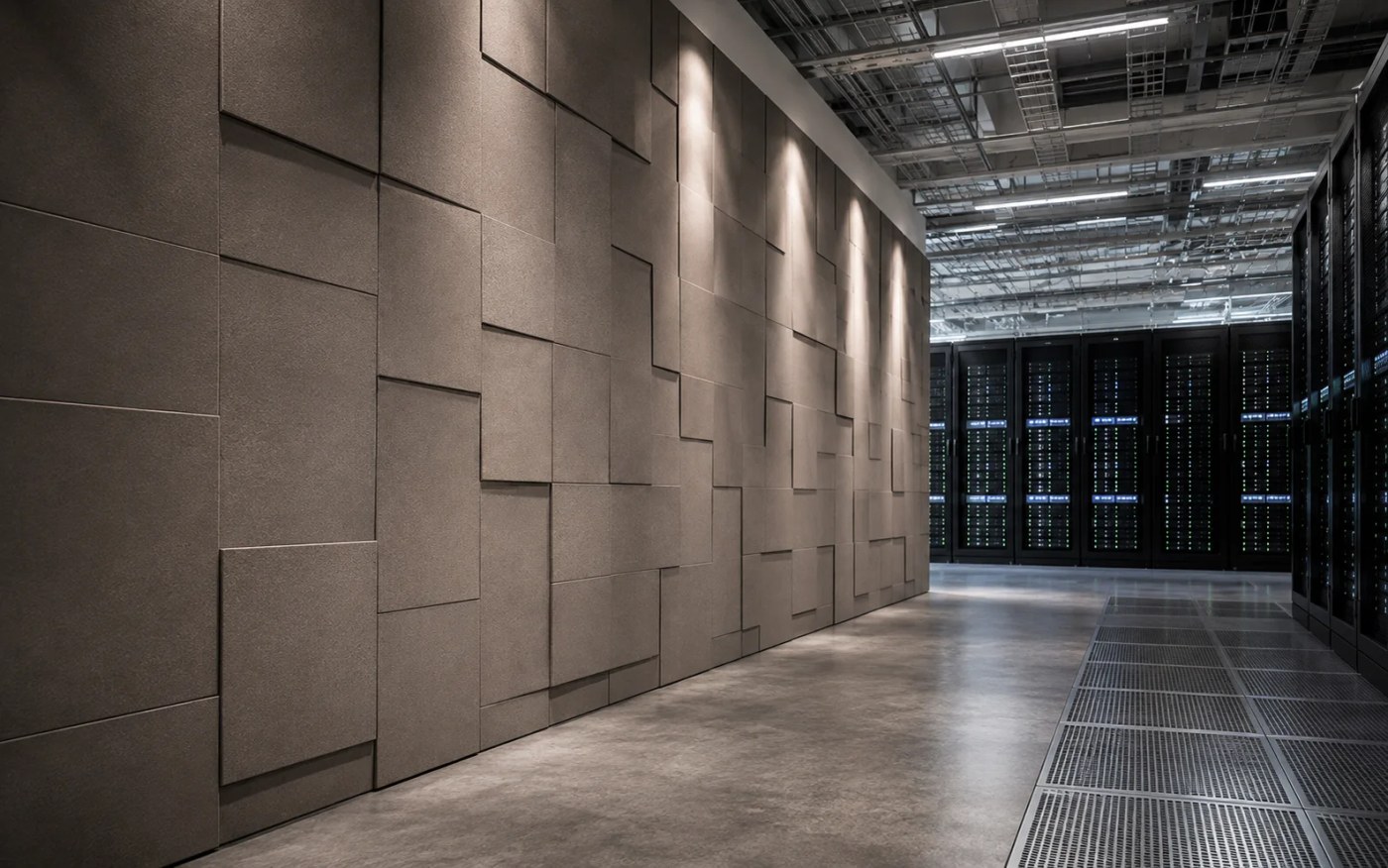
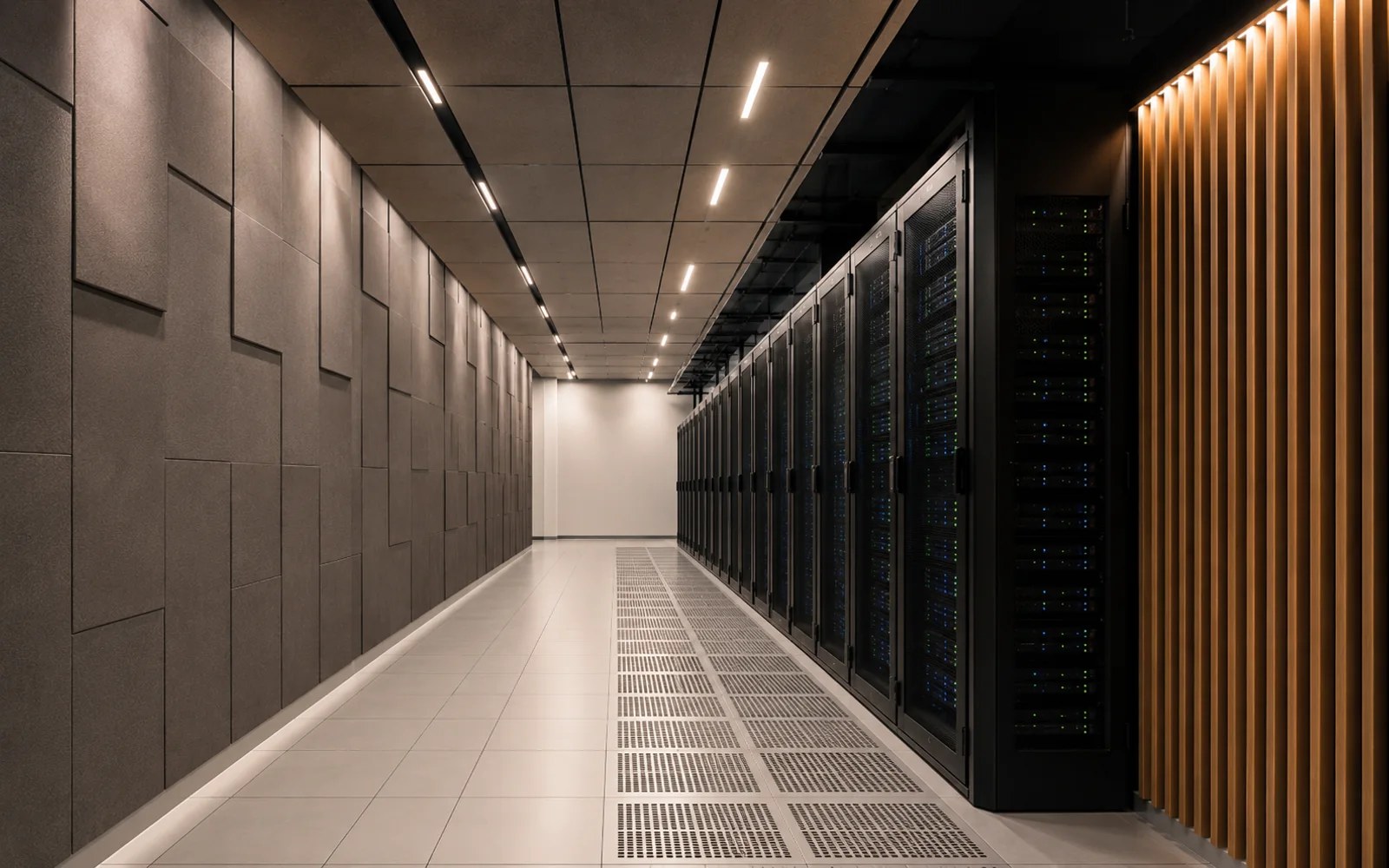
Large server halls present additional challenges.
They contain dense equipment layouts, high airflow requirements and strict operational constraints.
Wall or ceiling treatment in these spaces may need to account for:
- Air movement
- Fire systems
- Cable management
- Access requirements
- Cleaning
- Static control
- Equipment maintenance
- Thermal performance
For this reason, acoustic products should not simply be added to an equipment hall without considering the wider engineering requirements.
In many projects, the best approach is to focus decorative or conventional acoustic treatment on adjoining occupied spaces while specialist engineering solutions address equipment noise inside the hall.
How Much Acoustic Treatment Does a Data Centre Need?
There is no single coverage rule for every project.
The quantity of acoustic treatment depends on:
- Room dimensions
- Ceiling height
- Existing finishes
- Equipment noise levels
- Distance from equipment halls
- Occupancy
- Desired speech clarity
- Available wall and ceiling area
A smaller control room with hard walls may require only targeted treatment.
A large operations centre may need a combination of ceiling and wall absorption.
Where the project has formal acoustic targets or significant noise exposure, an acoustic consultant should assess the space and determine the required treatment.
Fire and Technical Requirements
Data centres are technically demanding environments, so acoustic products must be selected with more than sound absorption in mind.
Depending on the application, the project team may need to consider:
- Fire performance
- Smoke development
- Product durability
- Access to services
- Maintenance requirements
- Compatibility with mechanical systems
- Installation method
The appropriate fire classification should be confirmed against the National Construction Code and the project's specific building classification and fire strategy.
Product documentation should also relate to the exact construction and installation proposed.
Common Mistakes When Treating Data Centre Noise
Several common mistakes can limit the effectiveness of an acoustic upgrade.
These include:
- Treating reverberation as if it were the original noise source
- Installing panels instead of addressing noisy equipment
- Ignoring occupied control and staff areas
- Installing products without considering airflow or services
- Using too little acoustic absorption
- Failing to assess occupational noise exposure
- Assuming acoustic panels will replace hearing protection
The strongest solution usually combines appropriate engineering controls with targeted room acoustic treatment.
Choosing the Right Acoustic Solution
Every data centre has a different operational layout.
The right acoustic strategy depends on where people work, where the noise originates and how sound travels between spaces.
For occupied areas, a combination of:
- Acoustic wall panels
- Acoustic ceiling panels
- Suspended acoustic baffles
can help reduce reflected sound and improve comfort.
For equipment-generated noise, specialist source-control measures may also be required.
Considering both aspects from the beginning gives project teams a much clearer path to an effective solution.
Why Choose Acoustic Panels Australia?

Acoustic Panels Australia works with architects, builders, designers and commercial project teams to deliver acoustic treatment for technically demanding environments.
Our Australian-made range includes wall panels, ceiling products and suspended acoustic systems that can be incorporated into control rooms, staff areas and other occupied commercial spaces.
Our team can assist with:
- Product selection
- Acoustic performance information
- Panel layout considerations
- Specification support
- Fire documentation
- Coordination with project consultants
Where equipment noise or occupational exposure requires specialist engineering, we can also provide product information to support the appointed acoustic consultant.
Improve Acoustic Comfort Around Your Data Centre
Data centres will always contain significant mechanical and equipment noise, but the spaces where people work do not need to feel excessively harsh or reverberant.
By adding sound absorption to control rooms, staff areas and adjoining occupied spaces, acoustic panels and baffles can reduce reflected sound, improve speech clarity and create a more comfortable working environment.
The key is to use acoustic treatment for what it does best: controlling reverberation, while using engineering measures to address excessive noise at the source.
Contact Acoustic Panels Australia today to discuss the acoustic requirements of your data centre project.