
Do You Need an Acoustic Consultant for Your Project? An Honest Guide
Learn when a commercial project needs an independent acoustic consultant, when manufacturer support is enough, and how to make the right decision for your acoustic specification.
When planning a commercial project, there are countless decisions to make. From selecting materials and coordinating trades to meeting compliance requirements and staying within budget, every decision can affect the final outcome.
One question that often arises during the design and specification process is whether an independent acoustic consultant is necessary.
The honest answer is it depends.
Some projects genuinely require specialist acoustic engineering to achieve compliance or meet demanding performance targets. Others simply need practical advice on selecting the right acoustic products and placing them correctly.
Knowing the difference can save both time and money.
This guide explains what an acoustic consultant actually does, when hiring one is essential, when in-house technical support is sufficient, and how to determine the best approach for your project.
What Does an Acoustic Consultant Actually Do?
An acoustic consultant is an independent specialist who analyses how sound behaves within and around buildings.
Their role extends far beyond recommending acoustic panels. Depending on the project, they may assess environmental noise, building services, room acoustics, speech privacy, façade performance, vibration control and compliance with Australian Standards.
Typical responsibilities include:
- Acoustic modelling
- Reverberation time calculations
- Environmental noise assessments
- Building services noise analysis
- Speech intelligibility studies
- Compliance reporting
- Performance specifications
- Construction verification
- Commissioning and post-installation testing
For many commercial developments, the acoustic consultant becomes part of the broader design team, working alongside architects, mechanical engineers and fire consultants.
However, not every project requires this level of involvement.
Four Project Types Where an Acoustic Consultant Is Essential
There are situations where independent acoustic advice isn't simply helpful—it's critical.
1. Projects Requiring Formal Acoustic Compliance
Many developments must demonstrate compliance with Australian Standards or planning requirements before approval.
These may include:
- Schools
- Universities
- Hospitals
- Healthcare facilities
- Residential developments
- Mixed-use buildings
- Public assembly spaces
Formal reports prepared by qualified acoustic consultants are often required as part of the approval process.
2. Complex Commercial Buildings
Large commercial projects frequently contain multiple acoustic challenges occurring simultaneously.
Examples include:
- Open-plan offices
- Meeting suites
- Auditoriums
- Hospitality venues
- Mechanical plant rooms
- Shared tenancy walls
These projects benefit from coordinated acoustic modelling during the design stage rather than relying solely on product selection.
3. Projects With Strict Performance Targets
Some clients specify measurable acoustic outcomes rather than simply requesting acoustic treatment.
Examples include:
- Reverberation time targets
- Speech privacy requirements
- Noise criteria (NC)
- Building certification requirements
- Green Star objectives
- WELL Building certification
An acoustic consultant can calculate, model and verify these performance outcomes.
4. Projects Involving Environmental Noise
Acoustic panels solve internal reverberation problems.
They do not solve issues such as:
- Traffic noise
- Aircraft noise
- Rail corridors
- Industrial neighbours
- Mechanical plant noise
- External environmental impacts
Where these issues are involved, specialist acoustic engineering is essential.
When In-House Technical Support Is Enough
Many commercial fit-outs don't require an independent acoustic consultant.
For straightforward projects, experienced manufacturer support can provide all the guidance needed to achieve excellent acoustic outcomes.
Examples include:
- Standard office fit-outs
- Boardrooms
- Meeting rooms
- Reception areas
- Restaurants
- Cafés
- Retail stores
- Hospitality refurbishments
- Education refurbishments
- Community facilities
Where the objective is simply reducing reverberation or improving speech clarity, product manufacturers often have extensive experience recommending suitable acoustic solutions.
In these situations, technical support from the manufacturer can provide practical advice without the additional cost of independent consultancy.
The Cost-Benefit Calculation
Hiring an acoustic consultant should always deliver value.
The decision isn't simply about project size—it should be based on project complexity and risk.
An independent consultant may save substantial costs by:
- Preventing costly design mistakes
- Optimising product quantities
- Improving compliance documentation
- Avoiding construction delays
- Reducing retrofit requirements
- Supporting planning approvals
On the other hand, employing a consultant for a relatively simple office refurbishment may add unnecessary cost where manufacturer expertise is already sufficient.
The key question isn't:
"Can we hire an acoustic consultant?"
It's:
"Will this project benefit from independent acoustic engineering?"
What Acoustic Panels Australia Provides at No Additional Cost
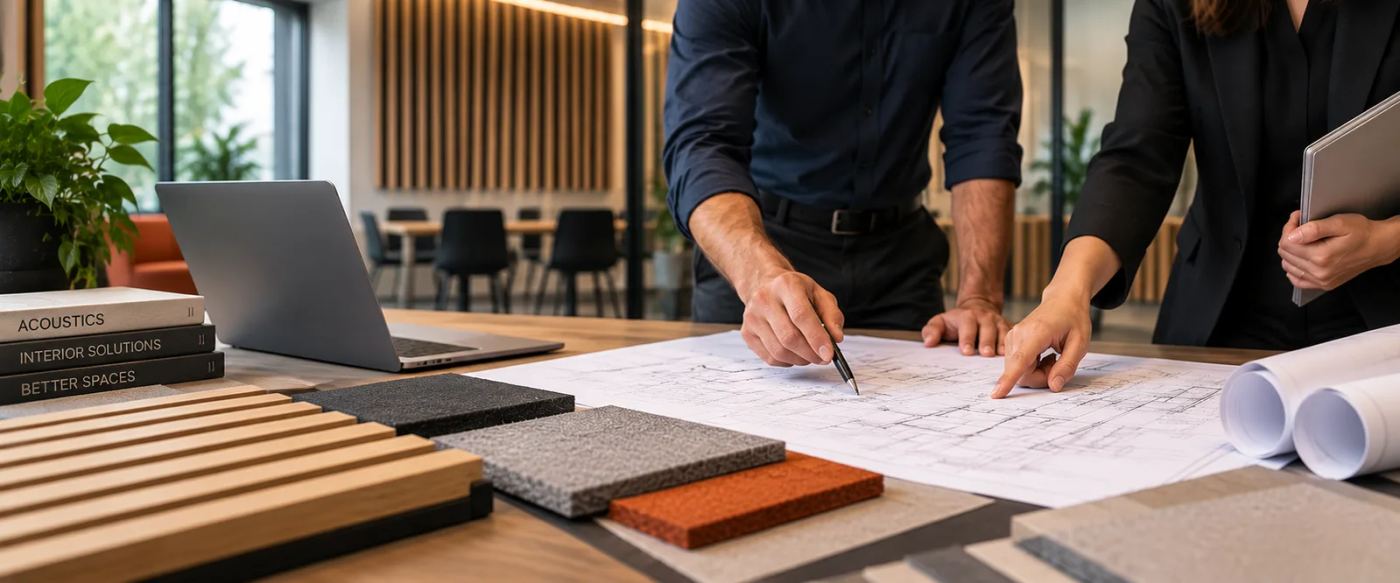
Many clients are surprised by the amount of technical support available directly from Acoustic Panels Australia.
For suitable commercial projects, our team can assist with:
- Product recommendations
- Preliminary acoustic advice
- Site walk-throughs
- Panel layout suggestions
- NRC guidance
- Octave band performance data
- Product comparisons
- Fire compliance information
- Material samples
- Specification assistance
This level of support helps architects, designers and builders confidently select appropriate products for many commercial applications without requiring formal acoustic consultancy.
Where a project genuinely requires independent engineering, we're equally happy to work alongside the appointed acoustic consultant.
How to Brief an Acoustic Consultant
If your project does require an acoustic consultant, providing clear information at the beginning will improve both the quality of advice and the efficiency of the project.
A useful project brief should include:
- Building type
- Intended room functions
- Architectural drawings
- Ceiling heights
- Wall finishes
- Floor finishes
- Occupancy numbers
- Mechanical services information
- Performance objectives
- Relevant compliance requirements
- Project programme
The more information available early, the more accurate the acoustic recommendations will be.
When Should You Bring an Acoustic Consultant Into the Project?
Timing makes a significant difference.
The best time to engage an acoustic consultant is during the schematic design stage, before major design decisions have been finalised.
Early involvement allows acoustics to be coordinated with:
- Ceiling design
- Mechanical services
- Lighting
- Room layouts
- Interior finishes
- Partition construction
- Building services
Waiting until construction is complete often limits the available solutions and increases costs.
Unfortunately, many projects only consider acoustics after employees, students or customers begin complaining about noise.
By then, retrofitting acoustic treatment is almost always more expensive than designing it into the project from the outset.
Working Together for Better Acoustic Outcomes
Successful commercial projects don't rely on one source of expertise.
Architects, interior designers, builders, product manufacturers and acoustic consultants all play important roles in delivering comfortable, high-performing spaces.
For many projects, manufacturer technical support provides everything needed to select effective acoustic products.
For more complex developments, independent acoustic consultants provide specialist engineering that complements product expertise rather than replacing it.
Understanding when each approach is appropriate leads to better project outcomes and more efficient use of project budgets.
Why Choose Acoustic Panels Australia?

Acoustic Panels Australia works with architects, builders, interior designers and acoustic consultants across Australia to deliver acoustic solutions for commercial projects.
Our Australian-made range includes acoustic wall panels, ceiling panels, suspended baffles and architectural acoustic systems suitable for offices, education, hospitality, healthcare and public buildings.
Whether your project requires simple product guidance or coordination with an independent acoustic consultant, our technical team can provide the information needed to support informed specification decisions.
From early design discussions through to product selection and technical documentation, we're committed to helping clients achieve practical, compliant and visually appealing acoustic outcomes.
Choosing the Right Level of Acoustic Expertise
Not every project requires an independent acoustic consultant—but every commercial project should consider acoustics early in the design process.
Simple fit-outs often benefit from experienced manufacturer support, while larger or more complex developments may require specialist acoustic engineering to achieve compliance and performance objectives.
Understanding the difference allows project teams to invest where it matters most while avoiding unnecessary costs.
If you're unsure whether your project needs an acoustic consultant or simply expert product advice, Acoustic Panels Australia is here to help.
Contact Acoustic Panels Australia today to discuss your project and determine the most appropriate acoustic solution for your commercial fit-out.