
Group 1 Fire Rating Explained: What AS/NZS ISO 9705-2003 Actually Tests
Learn what a Group 1 fire rating means under AS/NZS ISO 9705:2003, how the room corner test works, where it's required under the NCC, and how to verify compliant acoustic panels.
When specifying interior finishes for a commercial project, acoustic performance is only one part of the decision-making process. Fire compliance is equally important, and for many Australian architects, designers and builders, one question appears on almost every specification checklist:
"What is the fire rating of this product?"
If you're specifying acoustic wall panels, ceiling panels or decorative architectural finishes, you've likely come across the term Group 1 fire rating. While it's widely referenced in product brochures and technical specifications, many people aren't entirely sure what it actually means, how it's tested or how to verify that a product genuinely meets the required standard.
Understanding fire classifications isn't simply about compliance—it helps ensure the products installed in commercial buildings perform as expected if a fire occurs.
This guide explains, in plain English, what Group 1 fire ratings mean under the National Construction Code (NCC), how AS/NZS ISO 9705:2003 testing works, where Group 1 products are commonly required and what to look for before specifying acoustic panels for your next project.
What Do Group 1, Group 2, Group 3 and Group 4 Mean?
Australia classifies many interior wall and ceiling linings according to how they behave during a fire.
Under the National Construction Code (NCC), materials are grouped into four classifications based on fire performance testing.
Generally speaking:
Group 1
Group 1 represents the highest level of fire performance for wall and ceiling lining materials.
Products achieving this classification contribute the least to fire growth and smoke development during testing.
Group 2
Group 2 products still demonstrate good fire performance but allow a greater level of fire development than Group 1 materials.
Group 3
Group 3 materials provide a lower level of fire performance and are generally suitable only where permitted by the relevant building classification and NCC requirements.
Group 4
Group 4 materials represent the lowest classification and are generally unsuitable for many commercial wall and ceiling lining applications.
It's important to remember that the appropriate classification depends on:
- Building classification
- Occupancy type
- Building height
- Intended use
- NCC requirements
Always refer to the National Construction Code and your project's fire engineer or certifier when determining the required fire performance.
AS/NZS ISO 9705:2003 — The Room Corner Test Explained
The fire group classification isn't determined by simply exposing a small material sample to a flame.
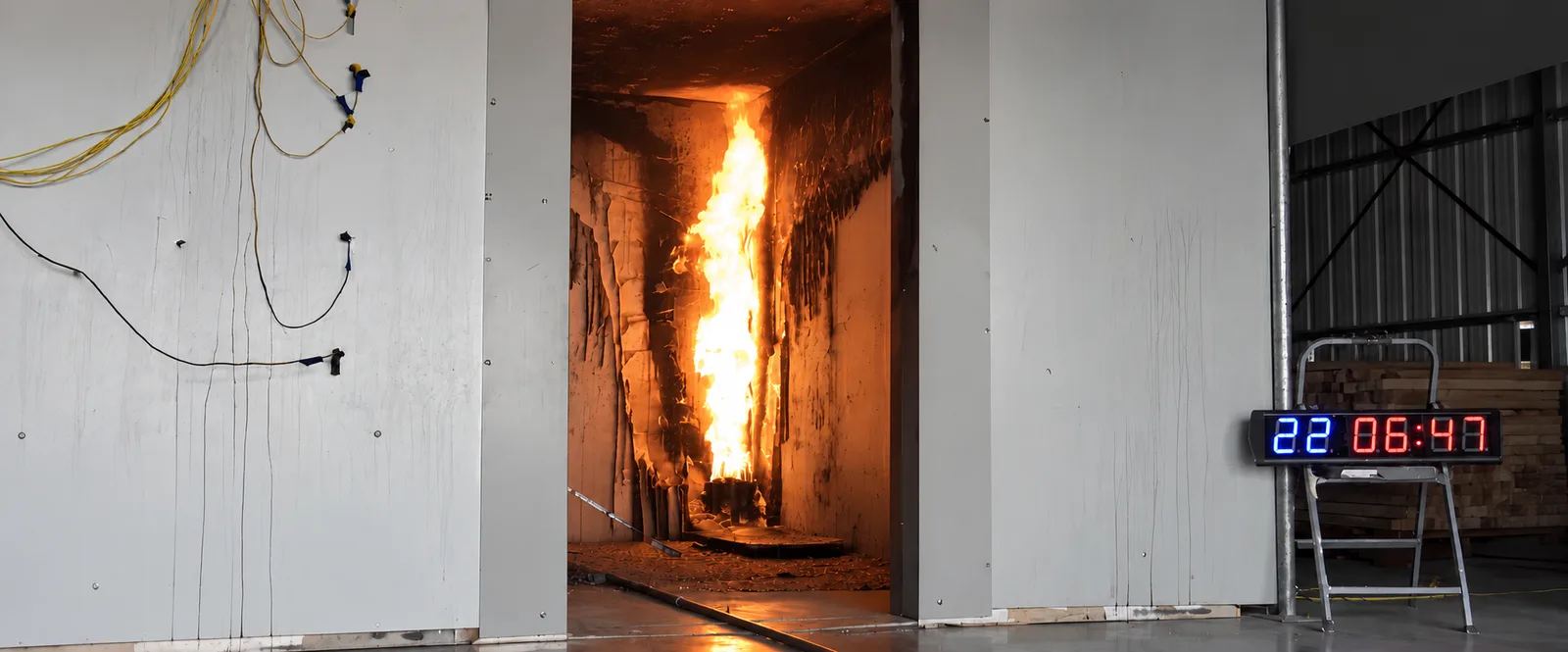
Instead, one of the principal methods uses the AS/NZS ISO 9705:2003 Room Corner Test, which evaluates how a lining material behaves within a realistic room environment.
During the test, the product is installed on the walls and ceiling of a full-scale test room.
A controlled burner is placed in one corner of the room to simulate the early stages of a developing fire.
Rather than measuring whether the material burns, the test examines how the lining contributes to fire growth over time.
The assessment considers factors such as:
- Heat release
- Fire growth
- Smoke development
- Flame spread
- Overall fire behaviour within the room
These measurements are then used to determine the appropriate Group Number under the NCC.
This approach provides a much more representative assessment than small-scale laboratory flame tests because it evaluates how materials behave in conditions closer to real building environments.
Why Fire Ratings Matter for Acoustic Panels
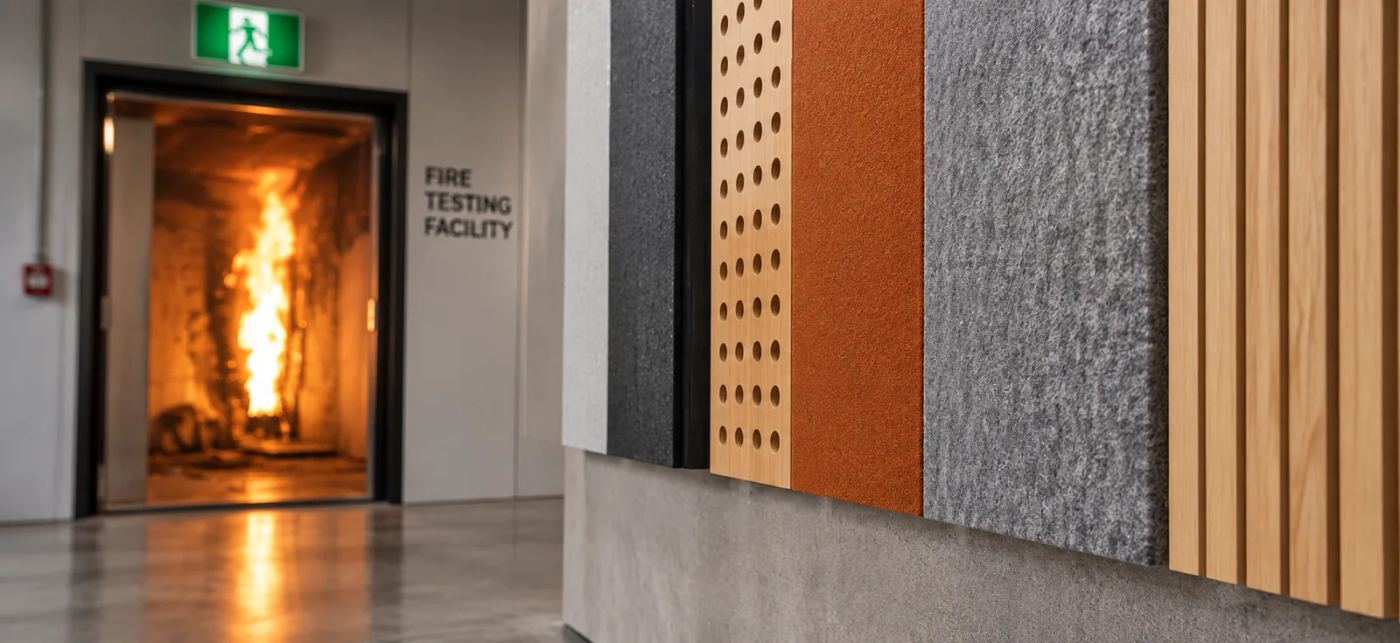
Acoustic panels are frequently installed over large wall and ceiling areas.
Because these products become part of the building's internal lining system, their fire performance is an important consideration during specification.
Choosing products that have been appropriately tested provides confidence that the materials satisfy the project's fire performance requirements while still delivering effective acoustic control.
For architects and builders, selecting compliant products early also helps avoid delays during documentation, certification and construction.
Where Is Group 1 Required?
The National Construction Code sets different fire performance requirements depending on the type of building and its intended use.
Group 1 products are commonly specified for projects involving:
- Commercial office buildings
- Education facilities
- Healthcare buildings
- Hotels
- Hospitality venues
- Public buildings
- Assembly spaces
- High-occupancy environments
In many other commercial applications, Group 1 products are considered best practice even where another classification may technically satisfy the code.
Using higher-performing products can simplify future refurbishments and provide greater confidence throughout the approval process.
However, every project is different.
The required Group Number should always be confirmed against:
- Building classification
- NCC provisions
- Fire engineering advice
- Building certifier requirements
Why Imported Test Reports Don't Always Tell the Full Story
One of the most common areas of confusion involves imported products.
Many overseas manufacturers provide fire testing completed under international standards.
While these tests may be valuable, they don't automatically demonstrate compliance with Australian requirements.
Differences may include:
- Test methods
- Classification systems
- Product construction
- Manufacturing processes
- Material substitutions
- Installation methods
Even products that appear visually identical may perform differently if manufactured using different substrates, adhesives, finishes or coatings.
For this reason, Australian specifiers should ensure the fire performance information relates to the actual product being supplied—not simply a similar product tested overseas.
Five Checks Before You Specify a Group 1 Product
Fire compliance should always be verified rather than assumed.
Before specifying acoustic panels, consider asking suppliers the following questions.
1. Has the product been tested to AS/NZS ISO 9705:2003?
The supplier should be able to identify the applicable test method supporting the Group classification.
2. Is the Group Number based on the product supplied?
Testing should relate to the actual construction, finish and material being specified.
Changes to substrates, laminates or coatings may affect fire performance.
3. Can the supplier provide the fire test documentation?
A reputable manufacturer should be able to provide relevant technical documentation supporting their fire performance claims.
4. Does the tested configuration match the intended installation?
Installation methods can influence fire performance.
The tested configuration should align with how the product will be installed on your project.
5. Has the specification been reviewed against the NCC?
Ultimately, compliance depends on the complete project rather than the product alone.
Confirm that the selected acoustic panel satisfies the relevant NCC requirements for your particular building.
Understanding the Compliance Chain
Fire compliance is more than simply having a test report.
Three elements work together:
The Test Report
Independent testing establishes the fire performance of the product under controlled conditions.
The Product As Supplied
The supplied product should match the tested construction, materials and finish.
Changing any component may alter performance.
The Installed System
Correct installation is equally important.
Installation methods, substrates and fixing systems should align with the tested configuration and manufacturer's recommendations.
Only when these three elements remain consistent can the original fire performance be relied upon.
How Acoustic Panels Australia Delivers Fire-Compliant Solutions
At Acoustic Panels Australia, fire performance is considered alongside acoustic performance from the beginning of product development.
Our acoustic wall panels, ceiling panels and architectural systems are available with fire-tested options suitable for Australian commercial applications.
Working closely with architects, designers and builders, we help ensure the selected products meet both acoustic objectives and project-specific fire compliance requirements.
Where documentation is required during specification, our team can assist with the relevant technical information to support the approval process.
Fire Compliance Starts at the Specification Stage
Fire compliance should never be left until products are being ordered.
By considering fire performance during the schematic and specification stages, project teams can avoid unnecessary redesign, certification delays and costly substitutions later in the project.
The right acoustic panel should deliver more than excellent sound absorption—it should also provide confidence that the product has been appropriately tested and is suitable for its intended application.
When acoustics, aesthetics and fire performance are considered together, projects achieve better outcomes for designers, builders and building occupants alike.
Specify Fire-Tested Acoustic Panels with Confidence
Choosing acoustic panels isn't just about improving sound quality—it's about specifying products that satisfy performance, design and compliance requirements.
Understanding what Group 1 fire ratings mean, how AS/NZS ISO 9705:2003 testing works and what documentation to request allows architects and specifiers to make informed decisions throughout the project.
Whether you're designing an office, education facility, hospitality venue or public building, Acoustic Panels Australia can help you select acoustic solutions that combine outstanding acoustic performance with fire-tested compliance for Australian commercial projects.
Contact Acoustic Panels Australia today to discuss your project's acoustic and fire compliance requirements.