Can You Supply Replacement or Matching Acoustic Panels for an Extension or Repair?
Need replacement acoustic panels or extending an existing fit-out? Learn how we identify and match existing panels, colours, profiles and sizes.
Commercial interiors change over time.
An office may expand into the tenancy next door. A meeting room may be reconfigured. A hospitality venue might undergo a partial refurbishment. Or an individual acoustic panel may simply become damaged during maintenance or other building works.
When that happens, replacing an entire acoustic installation just to maintain a consistent finish usually isn't the most practical solution.
A common question we receive at Acoustic Panels Australia is:
Can you supply replacement or matching acoustic panels for an existing installation?
In many cases, yes.
Because our acoustic panels are manufactured in Australia, existing products, profiles and finishes can often be reordered or closely matched for extensions, repairs and later stages of a project.
The first step is identifying what was originally installed. If you have the original product name, colour and dimensions, that's ideal. If not, photographs, previous project information or a physical sample can help us identify the product and determine the closest current match.
This can allow you to maintain the original design intent without unnecessarily replacing acoustic panels that are still performing perfectly well.
Matching Acoustic Panels for Extensions and Repairs
Replacement panels aren't only needed when something gets damaged.
Commercial fit-outs are regularly modified throughout the life of a building, and the existing acoustic treatment may need to change with them.
Common situations include:
- Extending an existing office fit-out
- Adding new meeting rooms
- Expanding a reception or waiting area
- Reconfiguring a tenancy
- Extending an acoustic feature wall
- Replacing panels damaged during other works
- Replacing individual ceiling panels
- Completing another stage of a project
- Refurbishing only part of an existing space
In each situation, maintaining consistency with the original installation is usually preferable to introducing a completely different product.
Where the original product and finish remain available, additional panels may simply be reordered.
Where something has changed since the original installation, we can review the existing product and determine the closest suitable current option.
Why Australian Manufacturing Helps With Matching
The ability to source replacement products can become particularly important several years after the original fit-out has been completed.
Imported products can change, become unavailable or be discontinued by overseas suppliers. Even relatively small changes to a product range can make later extensions more difficult.
Because Acoustic Panels Australia manufactures locally, we have greater visibility over our products, profiles, manufacturing processes and finish options.
This can make it easier to investigate what was originally supplied and determine whether it can be reproduced or closely matched.
For architects, builders, contractors and facility managers, this provides an important advantage when an existing project needs to be modified.
Instead of beginning with:
"Do we need to replace everything?"
The first question can be:
"Can we match what is already there?"
That can result in a much more practical and cost-effective solution.
Protecting the Original Specification
Matching an acoustic panel isn't simply about finding something that looks approximately the same colour.
The original product may have been specified to satisfy several requirements at once.
These could include:
- Acoustic performance
- Panel thickness
- Dimensions
- Profile or pattern
- Colour
- Surface finish
- Fire performance
- Installation method
- Architectural layout
Introducing an unrelated replacement product could affect both the appearance of the installation and the intent of the original specification.
Where possible, maintaining the same panel system helps preserve continuity across the project.
This becomes particularly important with highly visible architectural treatments.
A slightly different profile or panel thickness may be noticeable when installed directly beside the original product, even if the colour itself is relatively close.
For feature walls and patterned installations, alignment and continuity become even more important.
Can an Existing Acoustic Panel Be Matched Exactly?
Sometimes an exact reorder is possible.
In other situations, the best solution may be the closest current match.
There are several reasons why an exact visual match cannot always be guaranteed.
Over time, existing panels may change slightly due to:
- Exposure to natural light
- UV exposure
- Cleaning
- General wear
- Environmental conditions
- Ageing of the finish
There can also be natural variations between manufacturing batches, particularly where timber or other natural materials are involved.
Product ranges and finish options can evolve as well.
This means a newly manufactured panel may not necessarily appear identical to one that has been installed for several years—even when the original specification is still available.
For this reason, we recommend reviewing the existing installation before confirming the replacement.
What Information Do We Need to Match Your Panels?
The more information you can provide, the easier it is to identify the original product and determine the best replacement option.
Ideally, provide the following.
1. Original Product
If you know the Acoustic Panels Australia product that was originally installed, send us the product name.
The information may be available in:
- Original specifications
- Architectural schedules
- Quotations
- Purchase orders
- Invoices
- Project handover documentation
Even an old product reference can help us identify the installation.
2. Colour or Finish
If available, provide the original colour or finish reference.
This is especially important where a product was available in several colours, timber finishes or surface options.
If you don't know the colour reference, clear photographs or a physical sample can help.
3. Panel Dimensions
Measure the existing panel where possible.
Useful measurements include:
- Length
- Width
- Thickness
- Profile dimensions
- Spacing between panels
For patterned, grooved or three-dimensional products, photographs showing the complete profile are also useful.
4. Project Information
If the panels were originally supplied by Acoustic Panels Australia, provide any information you have about the project.
For example:
- Project name
- Approximate installation date
- Builder or contractor
- Original quotation or order reference
This information may help identify what was originally manufactured.
5. Photos or a Physical Sample
Don't have the original paperwork?
That's okay.
Send us clear photographs of the existing installation.
Ideally, provide:
- An image of the entire wall or ceiling
- A close-up of the panel surface
- A photograph of the edge or profile
- An image showing the installation method, if visible
For more difficult colour or material matches, providing a physical sample may give us a better reference.
What If You Don't Know Which Product Was Originally Installed?
This happens frequently, particularly when a new builder, contractor or facility manager inherits an existing commercial space.
You don't necessarily need to know the original product before contacting us.
Start with whatever information you have.
A few good photographs can reveal characteristics such as:
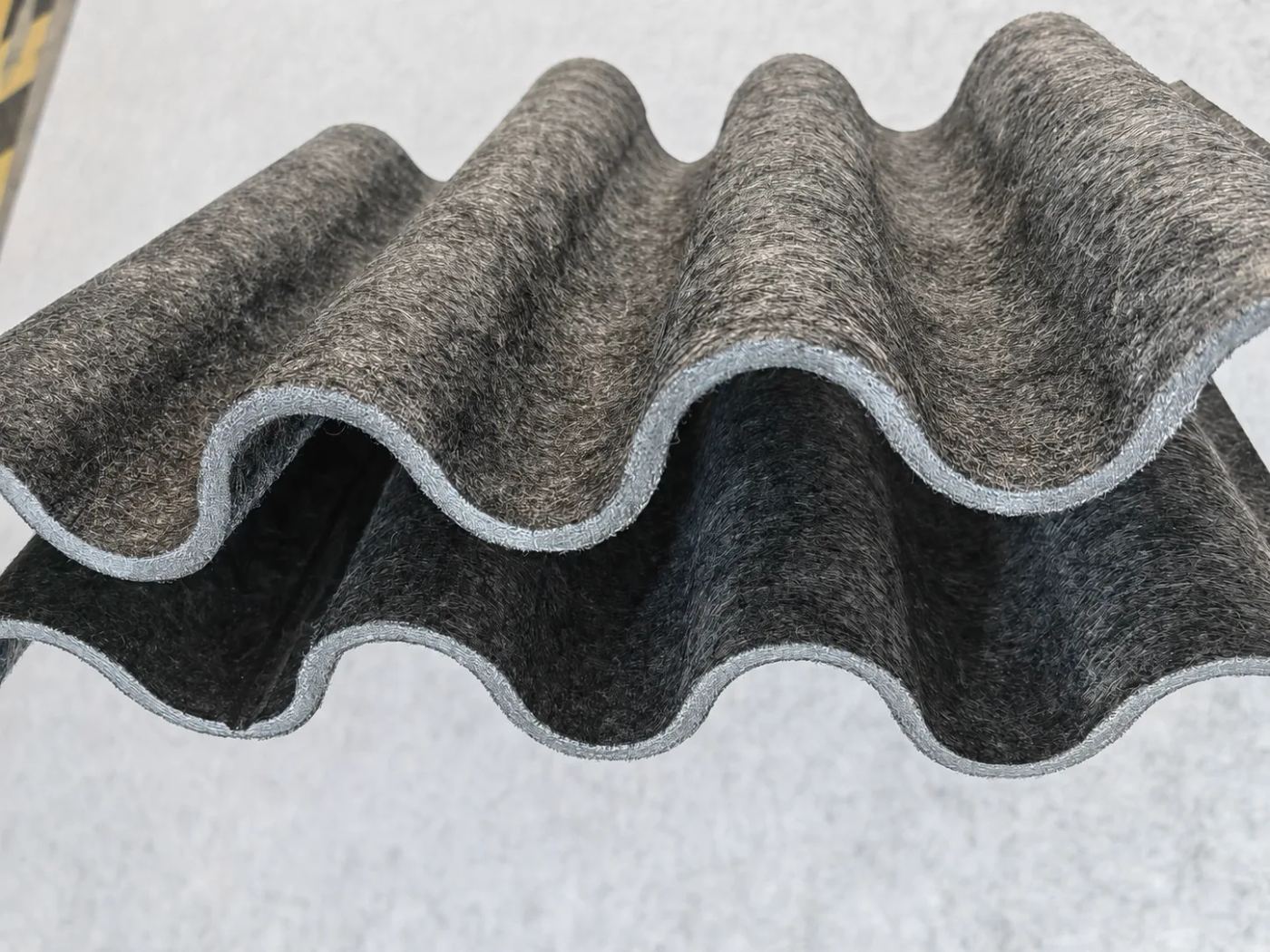
- Panel construction
- Surface texture
- Perforation pattern
- Groove pattern
- Edge detail
- Thickness
- Profile
- Installation arrangement
Approximate dimensions and the age of the fit-out can also help narrow down the possibilities.
We can then assess whether the existing product can be identified and advise on the next step.
Extending an Existing Acoustic Installation
Extending an acoustic installation requires slightly more planning than replacing a single damaged panel.
If an existing feature wall or ceiling treatment needs to continue into a new area, the new panels should work visually with what is already installed.
This means considering:
- Panel orientation
- Joint positions
- Pattern continuity
- Panel dimensions
- Existing spacing
- Edge details
- Fixing method
- Transitions between old and new areas
For patterned products, the starting position of the new panels can also influence whether the extension looks continuous.
This should ideally be considered before ordering rather than resolved during installation.
Replacing Individual Damaged Panels
Sometimes the problem is much simpler.
One or two panels may have been damaged while the rest of the installation remains in excellent condition.
In this situation, targeted replacement can be much more sensible than replacing the complete acoustic treatment.
Before ordering, however, the contractor should determine how the existing panels were installed.
Check:
- Whether individual panels can be removed
- How they are fixed
- Whether surrounding panels need to be disturbed
- Whether the substrate remains suitable
- Whether existing hardware can be reused
- Whether replacement fixings are required
This is particularly important for installations where panels interlock, use concealed fixing systems or form part of a continuous pattern.
Matching Panels Can Protect Your Original Budget
Replacing an entire acoustic wall or ceiling because a small section has been damaged can create unnecessary cost.
The same applies when extending a fit-out.
If the existing installation is still performing correctly, keeping it and adding matching panels can help protect the investment already made in the project.
Targeted replacement may help:
- Reduce unnecessary material costs
- Avoid replacing serviceable panels
- Maintain the original design
- Reduce installation time
- Minimise disruption
- Limit unnecessary material waste
It is a straightforward approach:
Keep what still works and replace only what needs to change.
Plan for Future Replacement From the Beginning
The easiest replacement panel to match is one that has been properly documented.
Architects, builders and facility managers can make future extensions and repairs significantly easier by retaining accurate product information at project handover.
Useful records include:
- Product name
- Colour and finish
- Panel dimensions
- Approved shop drawings
- Product specification
- Installation drawings
- Fixing information
- Original quotation or order details
For larger commercial projects, including this information in the facility management or handover documentation can save considerable time years later.
This is particularly useful for workplaces, education facilities and other commercial interiors that are likely to be altered during their lifetime.
Why Choose Acoustic Panels Australia?
Acoustic Panels Australia manufactures acoustic solutions locally for commercial projects across Australia.
Our involvement doesn't necessarily end once the original panels have been delivered.
When an existing project needs to be extended, repaired or modified, our team can help identify what was originally installed and determine whether additional panels can be reordered or closely matched.
Local manufacturing also gives us greater flexibility when investigating project-specific requirements.
For architects, builders and facility managers, that means there may be an alternative to removing an otherwise functional acoustic installation simply because one section needs to change.
Need Replacement or Matching Acoustic Panels?
If you're repairing an existing installation or extending a commercial fit-out, don't assume you need to replace everything.
Start by sending us the original product, colour and panel dimensions if you have them.
If you don't have the original specification, send clear photographs, project details or a physical sample where possible.
We'll review the information and confirm whether the original product can be reordered or recommend the closest current match for your extension or repair.
Contact Acoustic Panels Australia to specify replacement or matching acoustic panels for your project.