AUS Moulding: Decorative Tongue-and-Groove Acoustic Panels
Discover AUS Moulding, Australian-made tongue-and-groove acoustic panels combining seamless decorative wall and ceiling finishes with sound absorption.
Acoustic treatment doesn't always need to look like a collection of individual panels attached to a finished wall.
For interiors where continuity, detail and material expression matter, the acoustic surface can become part of the architecture itself.
AUS Moulding from Acoustic Panels Australia is a decorative acoustic panel system featuring tongue-and-groove jointing, creating a continuous finish across walls and ceilings while helping control reflected sound.
The seamless jointing gives the system a more refined appearance than conventional individual panel layouts. Instead of visible breaks between each panel dominating the installation, adjoining sections connect to create a more unified surface.
This makes AUS Moulding particularly suited to hospitality, retail and premium commercial interiors where acoustic performance needs to sit comfortably alongside a strong design concept.
Australian-made and available with finish options, AUS Moulding provides an alternative to plain wall and ceiling linings for projects that want texture, continuity and acoustic performance from the same surface.
What Does Tongue-and-Groove Moulding Offer?
Tongue-and-groove construction uses interlocking edges that allow adjacent panels to connect neatly.
For an architectural acoustic lining, this has an important visual advantage.
Rather than treating every panel as a separate object, the jointing helps create the impression of a continuous designed surface.
This can be particularly valuable across larger wall or ceiling areas where visible panel joints might otherwise interrupt the design.
AUS Moulding can therefore be considered where the project calls for:
- Continuous wall treatments
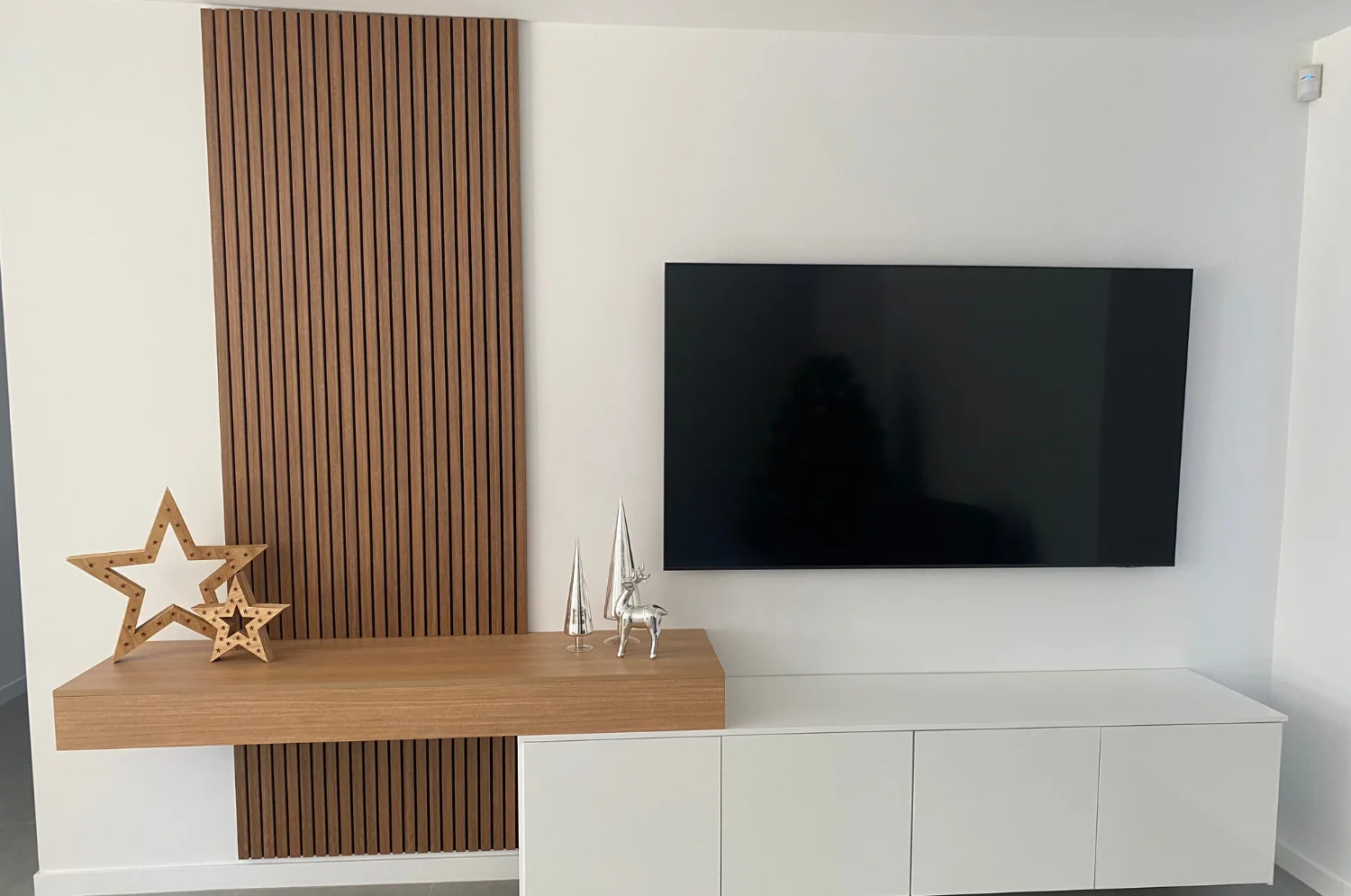
- Feature walls
- Decorative ceiling treatments
- Textured architectural surfaces
- Integrated acoustic finishes
- More refined transitions between panels
The result is an acoustic lining that feels deliberately incorporated into the architecture rather than added afterwards.
Why Does a Seamless Finish Matter?
In premium interiors, small details can have a large impact on the finished result.
Panel alignment, joints, edges and transitions all influence how a wall or ceiling is perceived.
A conventional acoustic panel installation may intentionally celebrate individual panels through spacing, shapes or contrasting colours.
AUS Moulding takes a different approach.
Its tongue-and-groove format is intended to create greater visual continuity between adjoining sections.
That makes it particularly useful when the design calls for a wall or ceiling to read as one complete architectural treatment.
This can work well in spaces where the acoustic lining needs to complement detailed joinery, furniture, lighting and other carefully selected finishes.
The Acoustic Build Behind the Decorative Face
The appearance of AUS Moulding is only one part of the system.
Behind the decorative surface, the acoustic construction is designed to help manage reflected sound.
This matters because many of the interiors where a moulded or textured finish looks particularly effective also contain significant amounts of hard material.
Think of a restaurant with:
- Hard flooring
- Glass
- Timber tables
- Solid counters
- Plasterboard ceilings
Or a retail space with:
- Display joinery
- Hard floors
- Glazed shopfronts
- Open ceilings
- Reflective fixtures
These surfaces reflect sound rather than providing significant absorption.
As conversations, music and general activity increase, reflected sound can build up and contribute to excessive reverberation.
An architectural acoustic lining introduces absorption while still allowing the wall or ceiling to contribute to the visual identity of the space.
Decorative Panels That Do More Than Decorate
There is an important difference between a decorative wall lining and a decorative acoustic wall lining.
A conventional decorative surface may add texture but remain highly reflective.
That can produce an attractive interior without addressing the acoustic environment.
AUS Moulding is intended to bring these requirements together.
The decorative face provides the architectural character, while the acoustic build contributes to controlling reflected sound.
This makes it possible to consider the treatment as part of the original material palette instead of completing the fit-out and later asking:
"Where can we add some acoustic panels?"
When acoustics are incorporated earlier, they have a much better opportunity to become part of the design.
Where Does AUS Moulding Work Best?
AUS Moulding is particularly suited to interiors where the finish of the wall or ceiling has a strong influence on the overall experience.
Hospitality
Restaurants, bars, cafés and hotel interiors frequently combine hard, durable surfaces with high occupancy.
The result can be visually impressive but acoustically challenging.
A decorative acoustic lining can introduce sound absorption while supporting the atmosphere of the venue.
Potential applications include:
- Restaurant feature walls
- Bar surrounds
- Hotel reception areas
- Dining areas
- Hospitality ceilings
- Function spaces
Retail
Retail interiors often depend heavily on visual presentation.
Acoustic products therefore need to integrate carefully with branding, displays and merchandising.
A continuous moulded acoustic wall can provide a more architectural alternative to individual absorptive panels while helping control reflected sound from customers, music and general activity.
Reception and Lobby Areas
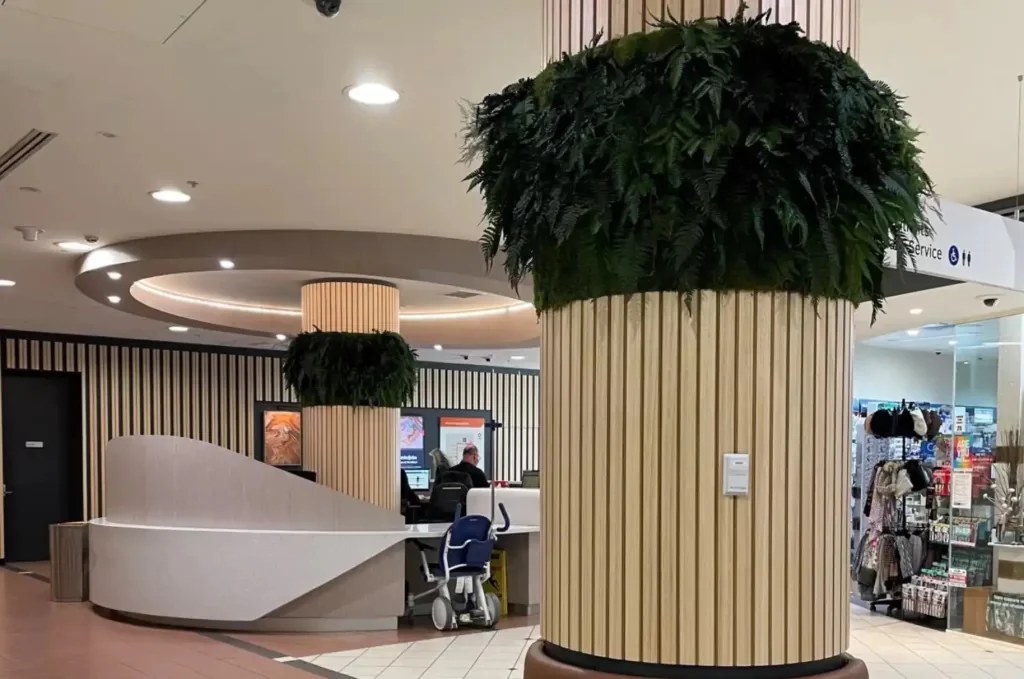
Reception spaces are often dominated by hard finishes because they need to create a strong first impression.
Stone, glass, timber, tiles and hard flooring can all contribute to the visual concept—but they also reflect sound.
AUS Moulding can allow an available wall or ceiling surface to become both an architectural feature and part of the acoustic strategy.
Premium Commercial Interiors
Boardrooms, executive spaces, client areas and premium workplaces may require acoustic treatment without the appearance of a conventional office acoustic panel.
Here, texture and continuous jointing can help the treatment sit more naturally alongside high-quality joinery and interior finishes.
Wall Applications
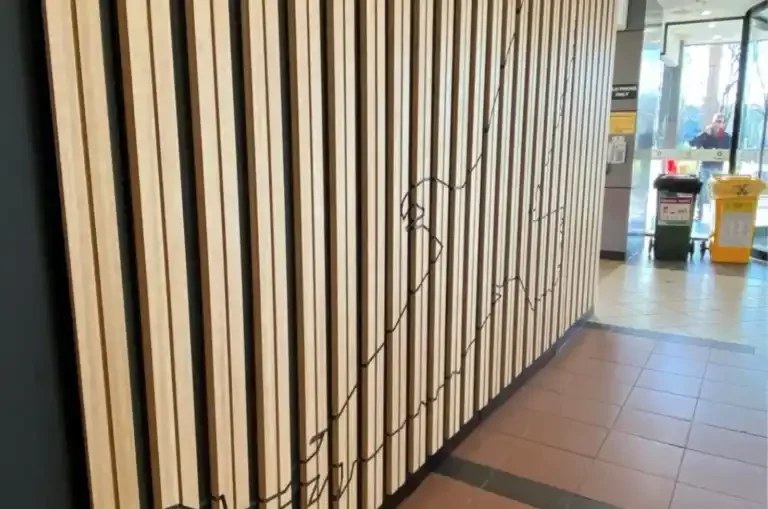
Large walls provide an opportunity to use AUS Moulding as a significant architectural element.
Instead of installing several isolated acoustic panels, the wall can be developed as a continuous textured surface.
This can be particularly effective:
- Behind reception desks
- Along restaurant walls
- In meeting and boardrooms
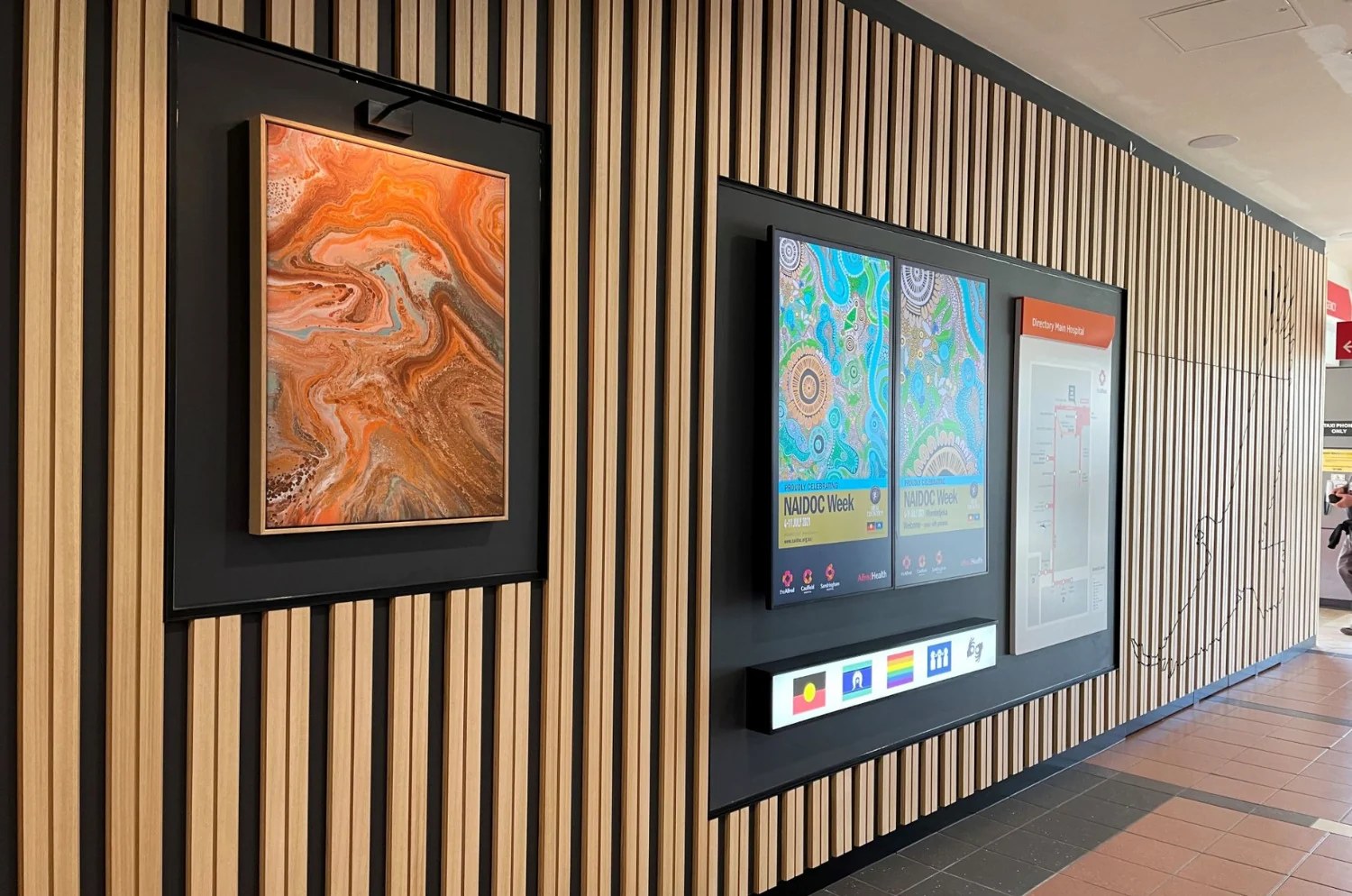
- Across lobby feature walls
- Within retail interiors
- In client-facing commercial spaces
From an acoustic perspective, substantial wall coverage can also provide more meaningful absorption than a small decorative panel arrangement.
The amount required should still respond to the room's size, finishes and acoustic requirements.
Ceiling Applications
AUS Moulding can also be considered for ceiling applications where the project calls for a more integrated architectural finish overhead.
Ceiling treatment is particularly valuable in spaces where wall area is limited by:
- Glazing
- Displays
- Joinery
- Artwork
- Doors
- Other architectural elements
Because ceilings often represent one of the largest surfaces in a room, incorporating acoustic performance overhead can contribute substantially to the overall treatment strategy.
A continuous decorative ceiling can also create a very different visual result from suspended acoustic baffles or conventional ceiling tiles.
The appropriate solution depends on the architectural intent and acoustic requirements of the project.
Texture Without Visual Clutter
One of the strengths of a moulded surface is its ability to introduce detail without relying on multiple colours, graphics or separate decorative elements.
Texture itself becomes the feature.
This can work particularly well in interiors where the material palette is intentionally restrained.
Rather than introducing another competing element, AUS Moulding can add:
- Depth
- Shadow
- Repetition
- Linear rhythm
- Surface variation
Lighting can further influence the result.
Directional or grazing light across a textured surface can emphasise the profile and create changing shadows throughout the space.
This makes coordination between acoustic treatment, lighting and interior design particularly valuable.
Choosing the Right Finish
The finish of an architectural acoustic system should be considered in the context of the complete interior.
The right selection may depend on:
- Flooring
- Joinery
- Furniture
- Branding
- Lighting
- Adjacent wall finishes
- Ceiling materials
- Desired atmosphere
A hospitality project might use a finish that adds warmth and texture.
A retail environment may require a stronger visual identity.
A commercial reception might favour a restrained finish that coordinates with surrounding materials.
Samples can be particularly useful when making this decision because colour and texture can appear different under actual project lighting than they do on a screen.
How Much AUS Moulding Should Be Used?
A decorative acoustic lining shouldn't be specified solely according to the size of the available feature wall.
The acoustic requirement still matters.
The amount of treatment needed can depend on:
- Room dimensions
- Ceiling height
- Room volume
- Existing finishes
- Amount of glazing
- Occupancy
- Intended use
- Other absorptive materials
- Acoustic performance of the selected system
A small reception and a busy restaurant may both suit AUS Moulding visually, but their acoustic requirements can be very different.
Where the project has a specific reverberation target, the treatment area should be developed around that performance requirement.
For more complex spaces, an acoustic consultant may be needed to establish the acoustic criteria.
Combining AUS Moulding With Other Acoustic Treatments
AUS Moulding doesn't necessarily need to provide all the absorption in a project.
It can form part of a wider acoustic strategy.
For example, a hospitality interior might combine:
- AUS Moulding on a feature wall
- Acoustic ceiling treatment elsewhere
- Suspended baffles in open areas
- Other acoustic panels in secondary spaces
Similarly, a commercial workplace might use AUS Moulding in the reception and boardroom while using different acoustic solutions throughout open-plan areas.
This allows each space to receive treatment appropriate to its acoustic requirements and architectural character.
Fire Performance and Commercial Specification
As with any wall or ceiling lining in a commercial project, fire performance needs to be considered during specification.
The applicable requirements depend on the building classification, location, material configuration and relevant National Construction Code provisions.
Project teams should confirm:
- Building classification
- Required fire performance
- Panel location
- Selected configuration
- Substrate and finish
- Relevant fire-test documentation
The fire classification should relate to the actual system being specified rather than being assumed from another product or configuration.
Acoustic Panels Australia can provide relevant technical and fire-performance information for AUS Moulding to assist the project team during specification.
Plan the Panel Layout Early
The seamless appearance of a tongue-and-groove system makes early planning particularly important.
Before manufacture or installation, consider:
- Overall wall or ceiling dimensions
- Panel direction
- Starting and finishing points
- Corners
- Doors
- Windows
- Joinery
- Power outlets
- Lighting
- Building services
- Other penetrations
A beautifully detailed panel can still look poorly resolved if the layout hasn't been coordinated with the surrounding architecture.
Planning the system early allows the tongue-and-groove treatment to read as an intentional part of the room rather than a finish fitted around whatever space remains.
Australian-Made for Project-Specific Interiors
AUS Moulding is Australian-made, providing a locally manufactured option for commercial interiors requiring a more detailed acoustic finish.
This is particularly useful for projects where acoustic treatment needs to coordinate with specific architectural requirements.
Rather than selecting a generic decorative lining and a separate acoustic product, AUS Moulding allows the project team to consider surface design and acoustic performance together.
Finish selection, panel configuration and project requirements can be discussed during specification so the final system is appropriate for the intended space.
When Should You Specify AUS Moulding?
AUS Moulding is worth considering when:
- You need acoustic absorption on a wall or ceiling.
- A standard flat acoustic panel doesn't suit the design.
- You want a more continuous architectural finish.
- Visible panel joints need to be minimised.
- Texture is an important part of the interior concept.
- The acoustic treatment needs to become a feature.
- The project is hospitality, retail or another premium commercial interior.
- Australian-made acoustic treatment is preferred.
It is particularly relevant when the design brief asks for more than simply an absorptive panel.
Why Choose Acoustic Panels Australia?

Acoustic Panels Australia manufactures acoustic solutions for commercial interiors across Australia.
With AUS Moulding, the focus is on integrating acoustic performance into a more refined architectural surface.
Our team can assist architects, designers, builders and specifiers with:
- AUS Moulding product selection
- Wall and ceiling applications
- Panel layout and configuration
- Finish options
- Samples
- Acoustic performance information
- Fire-performance documentation
- Integration with other acoustic treatments
- Project-specific specification support
The result is an acoustic system that can be considered alongside the other architectural finishes from the beginning of the project.
Considering AUS Moulding for Your Project?
If your project needs acoustic treatment but conventional flat panels don't suit the design, AUS Moulding provides a more architectural approach.
Its tongue-and-groove jointing creates a refined, continuous surface, while the acoustic build behind the decorative face helps control reflected sound.
For hospitality, retail, reception areas and premium commercial interiors, it offers a way to introduce acoustic performance without giving up texture or visual continuity.
Send us your plans, elevations, dimensions and finish requirements, and our team can help determine an appropriate AUS Moulding configuration.
Contact Acoustic Panels Australia to specify AUS Moulding for your project.