AUS Mesh: Acoustic Mesh Tiles for Lay-In Ceiling Grids
Discover AUS Mesh acoustic mesh tiles for standard lay-in ceiling grids — coloured acoustic backing, new fit-outs and retrofits, and what to check before ordering.
Suspended grid ceilings are practical for commercial interiors. They provide straightforward access to services, accommodate lighting and mechanical systems, and make individual ceiling tiles easy to replace.
But practical doesn't have to mean visually ordinary.
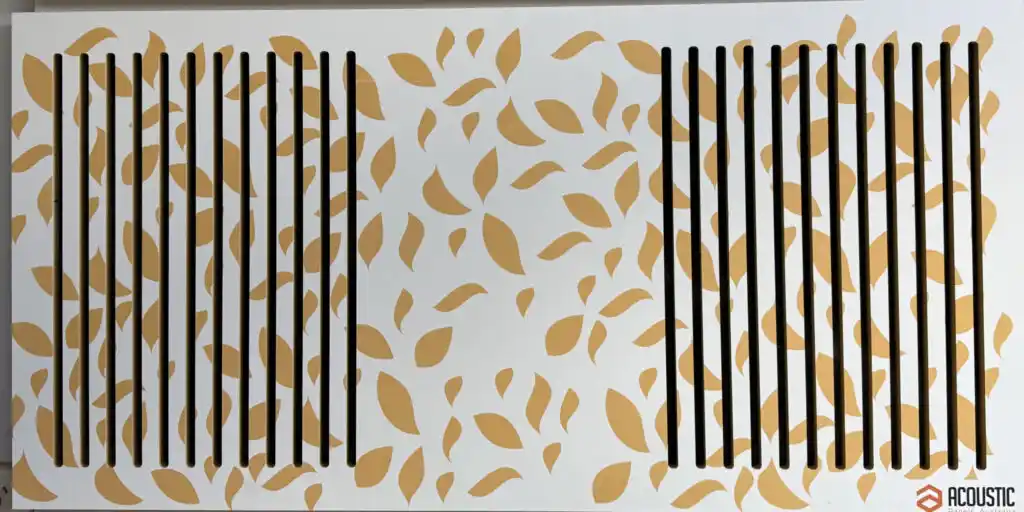
AUS Mesh from Acoustic Panels Australia is an acoustic mesh tile system designed for standard lay-in ceiling grids, combining a decorative mesh face with a coloured acoustic backing.
The result is a ceiling treatment that performs two roles at once.
The acoustic backing introduces sound absorption to help control reverberation, while the mesh creates a more architectural finish than a conventional plain ceiling tile.
Because the tiles are configured for lay-in grid systems, AUS Mesh can suit both new commercial ceilings and upgrades to existing suspended ceiling grids.
For offices and other commercial interiors where the ceiling needs to contribute to both acoustic performance and design, AUS Mesh provides another way to make the overhead plane part of the interior concept.
What Is a Lay-In Mesh Acoustic Tile?
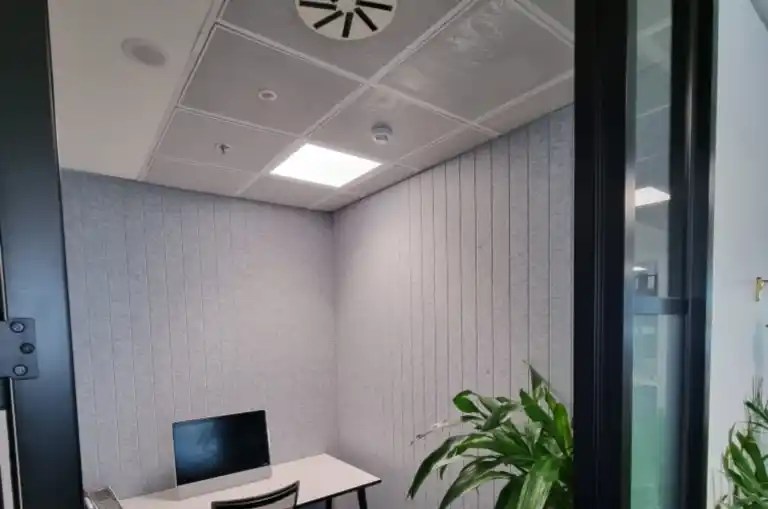
A lay-in ceiling uses a suspended grid that supports individual ceiling tiles.
Rather than permanently fixing each panel directly to the ceiling structure, the tiles sit within the grid.
This system is common across commercial interiors because individual tiles can generally be lifted when access is required to services above the ceiling.
AUS Mesh takes this familiar format and gives it a different architectural character.
Instead of presenting a conventional flat tile surface, the system combines a mesh face with acoustic backing.
The mesh becomes the visible design element, while the acoustic material behind it contributes sound absorption.
This makes AUS Mesh particularly relevant where the project already calls for a suspended grid ceiling but the design team wants something more visually considered overhead.
Why Acoustics Matter at Ceiling Level
The ceiling is one of the largest continuous surfaces in many commercial interiors.
That makes it valuable acoustically.
Consider a typical workplace with:
- Glass partitions
- Hard flooring
- Plasterboard walls
- Large windows
- Joinery
- Open circulation areas
Many of these finishes reflect sound.
Speech, phones, meetings and everyday workplace activity create sound energy that travels towards the surrounding surfaces. When those surfaces are predominantly hard, reflections can contribute to excessive reverberation.
Introducing absorption across the ceiling can help reduce the amount of sound reflected back into the occupied space.
Because the ceiling extends across a substantial area, it also provides an opportunity to distribute acoustic treatment throughout the room rather than concentrating it on a small section of wall.
AUS Mesh uses this available ceiling area while retaining the practical advantages of a lay-in grid.
The Role of the Coloured Acoustic Backing
One of the defining features of AUS Mesh is the coloured acoustic backing behind the mesh face.
It isn't simply there to fill the space behind the decorative tile.
The backing performs two important functions.
Acoustic Performance
The acoustic layer helps absorb sound energy that would otherwise contribute to reflections within the room.
This can help reduce reverberation and support a more comfortable acoustic environment.
Visual Character
Because the backing is visible through the mesh, colour becomes part of the ceiling design.
Instead of acoustic material being something that needs to disappear behind another finish, it contributes directly to the appearance of the tile.
The relationship between the mesh and backing creates depth, texture and contrast overhead.
This makes the ceiling an active part of the interior palette rather than simply a neutral background.
Acoustic Treatment That Doesn't Have to Look Acoustic
One of the challenges with acoustic specification is integrating absorption without making the finished interior feel overly technical.
AUS Mesh approaches that problem differently.
The acoustic component sits behind a decorative architectural face.
From below, the visual emphasis is on the mesh, pattern and colour relationship rather than on a conventional absorptive panel.
This can be particularly useful in spaces where the ceiling has a strong visual presence, including:
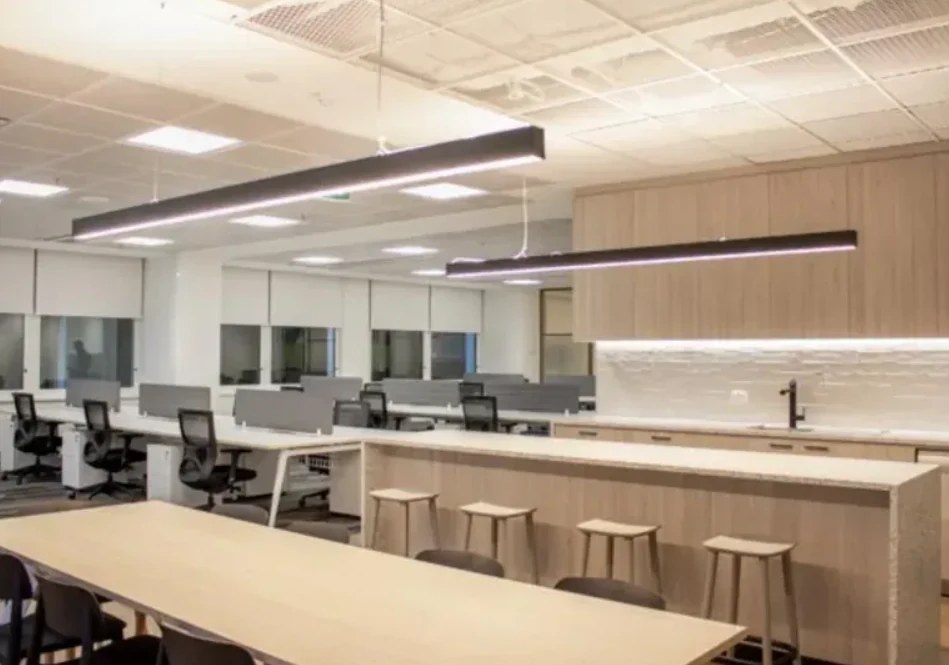
- Commercial offices
- Reception areas
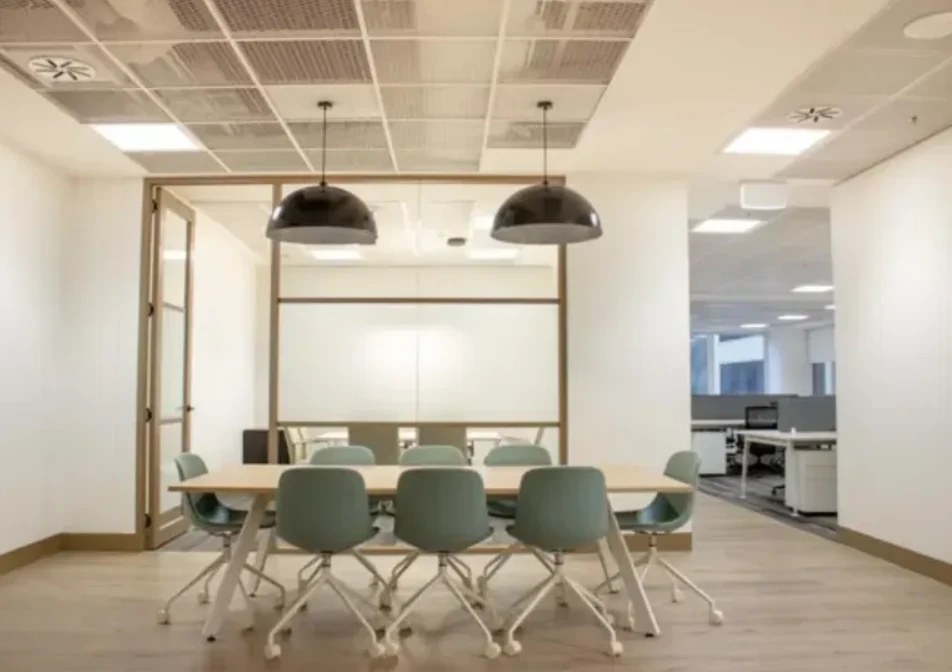
- Meeting spaces
- Breakout areas
- Collaboration zones
- Retail environments
- Hospitality spaces
- Other commercial interiors
The ceiling can therefore contribute to the overall architectural language while performing an acoustic function at the same time.
Designed for Standard Lay-In Ceiling Grids
A key advantage of AUS Mesh is its compatibility with standard lay-in ceiling grid systems.
This makes the product relevant to projects where a suspended grid is already part of the design.
Rather than introducing a completely separate suspended acoustic system, AUS Mesh can be incorporated into the ceiling grid itself.
That can simplify coordination with other ceiling elements such as:
- Lighting
- Air-conditioning
- Sprinklers
- Access points
- Speakers
- Other building services
The grid establishes the ceiling module, while AUS Mesh provides the finished acoustic tile within that system.
For new projects, this means the acoustic and decorative ceiling treatment can be considered from the beginning.
For existing spaces, it also opens up retrofit possibilities.
AUS Mesh for New Fit-Outs
In a new commercial fit-out, ceiling design is often developed alongside lighting, services, partitions and furniture.
This is the ideal time to consider acoustics.
Specifying AUS Mesh early allows the project team to coordinate:
- Ceiling grid layout
- Tile configuration
- Acoustic requirements
- Colour selection
- Lighting
- Mechanical services
- Other ceiling components
Rather than adding acoustic treatment after the fit-out has already been designed, the ceiling itself can form part of the acoustic strategy.
This is particularly valuable where available wall area is limited by glazing, joinery or architectural finishes.
Using the ceiling for absorption allows those wall surfaces to remain available for other design requirements.
Retrofitting an Existing Grid Ceiling
AUS Mesh can also be useful when an existing commercial space already has a suspended lay-in grid.
This can provide a practical opportunity to update both the appearance and acoustic function of the ceiling without necessarily abandoning the existing ceiling concept.
For example, an older office may have a conventional grid ceiling but experience excessive reverberation after a refurbishment introduces:
- More glazing
- Hard flooring
- Open-plan work areas
- Hard furniture finishes
- Reduced soft furnishings
Rather than approaching acoustics as a completely separate installation, compatible acoustic mesh tiles may be incorporated into the existing ceiling strategy.
However, existing grids should always be assessed before retrofit.
The project team should confirm dimensions, grid condition, structural suitability, services and other installation requirements before ordering replacement tiles.
Do You Need to Replace Every Ceiling Tile?
Not every project necessarily needs the same treatment approach.
Depending on the acoustic requirements and design intent, AUS Mesh may form a broader ceiling treatment or be incorporated strategically within the ceiling layout.
The appropriate coverage depends on factors including:
- Room size
- Ceiling height
- Existing finishes
- Current ceiling performance
- Amount of glazing
- Occupancy
- Room use
- Required acoustic conditions
- Performance of the selected system
A large open-plan office with extensive hard surfaces will have different requirements from a smaller meeting or reception area.
The quantity of treatment should therefore be based on the room and required acoustic outcome rather than simply replacing an arbitrary number of ceiling tiles.
Where Does AUS Mesh Work Best?
AUS Mesh is particularly suited to commercial spaces where a suspended grid ceiling is appropriate and the project wants more from the ceiling visually.
Offices
In open-plan workplaces, ceiling absorption can help control reflected sound generated by conversations and general activity.
The mesh and coloured backing also provide an opportunity to introduce more visual character than a conventional ceiling tile.
Meeting and Collaboration Areas
These spaces depend heavily on speech.
Adding absorption overhead can help reduce reverberation, particularly where walls are occupied by glazing, screens or whiteboards.
Reception Areas
A reception ceiling is often one of the first large architectural surfaces visitors see.
A decorative acoustic tile can allow this area to contribute both visual texture and sound absorption.
Commercial Refurbishments
Existing grid ceilings can provide an opportunity to introduce a new ceiling aesthetic while improving acoustic treatment as part of the refurbishment.
How AUS Mesh Differs From Suspended Acoustic Baffles
Both systems can introduce absorption at ceiling level, but they suit different design conditions.
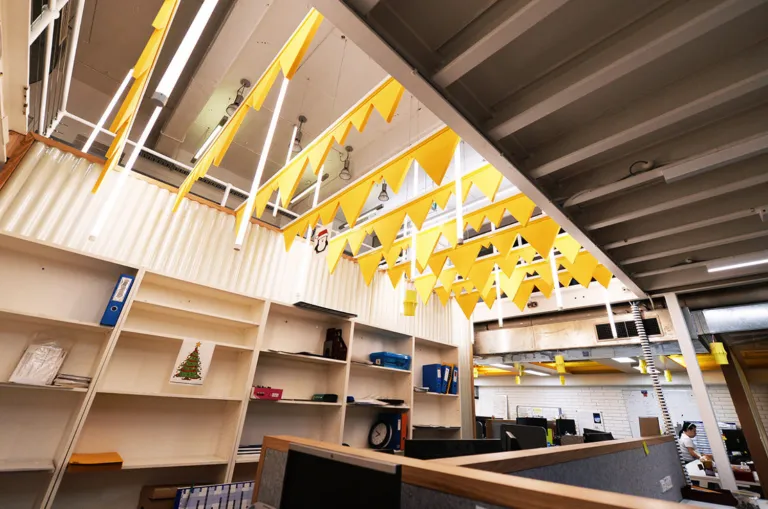
Suspended acoustic baffles hang below the ceiling or structure and are particularly useful for open and exposed ceilings.
AUS Mesh, by comparison, is designed around the lay-in grid format.
That makes AUS Mesh particularly relevant where:
- A suspended grid already exists
- A grid ceiling is specified for the new fit-out
- Access above the ceiling needs to be maintained
- The project wants a more integrated ceiling plane
- A decorative mesh appearance suits the design
The choice should therefore respond to the architecture of the space rather than simply comparing acoustic products in isolation.
Look and Performance Overhead
Ceilings are sometimes treated as purely functional surfaces.
But in many commercial interiors, they occupy a large proportion of the visible field and can have a significant influence on how the space feels.
AUS Mesh turns that surface into a design opportunity.
The combination of the mesh face and coloured acoustic backing can create:
- Visual depth
- Pattern
- Contrast
- Colour
- Texture
This can help connect the ceiling with other elements of the fit-out.
A backing colour might complement branding, furniture or joinery, for example, while the mesh creates a consistent architectural layer across the ceiling.
The acoustic treatment therefore becomes part of the design rather than something applied after it.
Acoustic Performance Should Still Drive the Specification
Appearance is important, but AUS Mesh is still an acoustic system.
The amount of treatment required should respond to the room's acoustic needs.
Factors such as room volume, occupancy, finishes and intended use all influence how much absorption may be required.
Where a project has a specific reverberation target, the ceiling treatment should be considered as part of the overall acoustic calculation.
For more demanding spaces, project teams should review the relevant acoustic performance data and, where required, work with an acoustic consultant.
A visually impressive ceiling is only successful as an acoustic solution if it also delivers the performance the room requires.
Fire Performance and Commercial Specification
Acoustic ceiling systems also need to satisfy the relevant project and building requirements.
The required fire performance depends on factors including:
- Building classification
- Ceiling location
- Product materials
- Selected configuration
- Applicable NCC provisions
Project teams should review the relevant fire-performance documentation for the exact product configuration being specified.
Fire classification shouldn't be assumed solely because a product is intended for commercial interiors.
Acoustic Panels Australia can provide the appropriate technical and fire-performance information for AUS Mesh to assist architects, builders and specifiers during the specification process.
What to Check for an Existing Ceiling Grid
When AUS Mesh is being considered as a retrofit, start by documenting the existing ceiling.
Useful information includes:
- Grid module and tile dimensions
- Ceiling height
- Existing tile size
- Condition of the grid
- Lighting layout
- Air-conditioning outlets
- Sprinklers
- Speakers
- Access requirements
- Room dimensions
- Existing finishes
Photos and reflected ceiling plans can also help establish how the new tiles will interact with the existing layout.
Don't assume that every suspended ceiling uses exactly the same configuration.
Confirming these details before ordering can prevent unnecessary installation problems later.
Australian-Made Acoustic Ceiling Solutions
AUS Mesh is an Australian-made acoustic ceiling solution.
Local manufacture can be particularly useful for commercial projects where the ceiling needs to coordinate with a wider fit-out programme.
It also allows project teams to discuss the required tile configuration, acoustic backing and design requirements directly with Acoustic Panels Australia during specification.
For both new construction and refurbishment projects, this helps move the conversation beyond simply selecting a generic ceiling tile.
The ceiling can instead be developed around the requirements of the actual project.
Choosing AUS Mesh for Your Project
Before specifying AUS Mesh, consider:
- Is the project using a standard lay-in ceiling grid?
- Is it a new ceiling or an existing grid?
- What are the grid and tile dimensions?
- How much acoustic treatment does the room require?
- Which areas of the ceiling should be treated?
- What acoustic backing is appropriate?
- Which colour best suits the interior?
- How will the tiles coordinate with lighting and services?
- What fire performance is required?
- Does the project have a specific reverberation target?
These questions help ensure that the system is being selected for both its acoustic function and architectural contribution.
Why Choose Acoustic Panels Australia?
Acoustic Panels Australia manufactures acoustic solutions for commercial interiors across Australia.
With AUS Mesh, the goal is to make a familiar suspended ceiling format work harder—combining acoustic absorption with a more considered architectural finish.
Our team can assist architects, designers, builders and specifiers with:
- AUS Mesh product selection
- Lay-in ceiling applications
- New and retrofit installations
- Acoustic backing options
- Colour and finish selection
- Ceiling layouts
- Acoustic performance information
- Fire-performance documentation
- Samples
- Project-specific specification support
This allows the ceiling to be considered as both an acoustic surface and a design element from the beginning of the project.
Considering AUS Mesh for a New or Existing Ceiling?
If your project already uses—or is planning to use—a standard suspended ceiling grid, AUS Mesh provides a straightforward way to combine sound absorption, colour and architectural texture overhead.
It can be incorporated into new fit-outs or considered as part of an upgrade to an existing compatible lay-in ceiling system.
Send us your reflected ceiling plan, grid dimensions, room details and design requirements, and our team can help you determine an appropriate AUS Mesh configuration.
Contact Acoustic Panels Australia to specify AUS Mesh for your project.
_Itinalaga kay davidb@apacoustics.com.au_